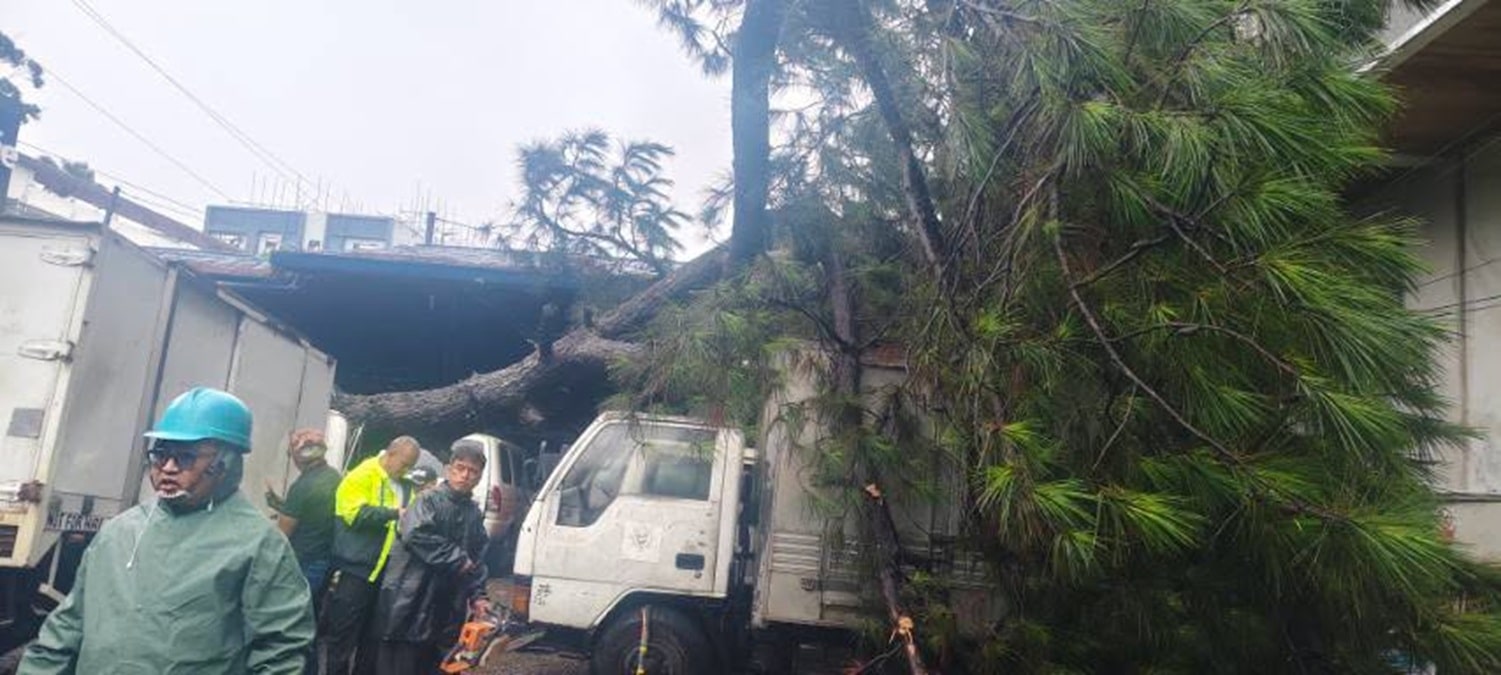
Typhoon Inday's Fury: Fallen Trees Wreck Vehicles in Baguio City
Environment
2026年7月11日
4
Inquirer NewsInfo

Typhoon Inday's Fury: Fallen Trees Wreck Vehicles in Baguio City

AI サマリー

Strong winds from Typhoon Inday (international name: Bavi) battered Baguio City, toppling trees that crushed vehicles. No injuries were immediately reported, but authorities are urging vigilance.

Typhoon Inday (international name: Bavi) has left a trail of destruction in Baguio City, northern Luzon, as strong winds toppled numerous trees that crushed parked vehicles on Friday (July 10). Fortunately, no injuries have been reported at this time. Authorities in Baguio City have been quick to respond, clearing fallen trees that obstructed roads, particularly in Legarda and Kennon roads. Residents are being urged to remain vigilant for possible falling trees, landslides, and other weather-related hazards. Intermittent heavy rains and gusty winds have been observed in Baguio City due to the enhanced southwest monsoon, intensified by Typhoon Inday. Officials are closely monitoring the water level at City Camp Lagoon, noting that continuous rainfall has heightened the threat of landslides and localized flooding. While the lagoon's water level temporarily rose, it has since shown signs of receding, indicating that flooding may be subsiding despite persistent rainfall. City officials are urging residents, especially those in communities near waterways and on steep slopes, to remain alert as prolonged rainfall could still trigger landslides, falling trees, and localized flooding. The City Disaster Risk Reduction and Management Council (CDRRMC) has implemented preemptive measures, including drainage declogging, tree-trimming, and canal clearing, to mitigate the impact of heavy rains. According to the Philippine Atmospheric, Geophysical and Astronomical Services Administration (PAGASA), Typhoon Inday and the enhanced southwest monsoon are expected to continue bringing occasional to frequent rains, thunderstorms, and gusty winds over the Cordillera Administrative Region and the rest of northern Luzon. Flooding and rain-induced landslides are possible in areas experiencing prolonged or intense rainfall.

多角的分析

経済的影響

台風によるインフラ被害は、復旧・復興のための公共支出を増加させる。特に、倒木処理や道路補修には直接的なコストがかかる。また、観光都市であるバギオ市への影響は、短期的な観光収入の減少につながる可能性がある。これは、地域経済の回復力に影響を与える要因となりうる。

投資家心理

自然災害は、フィリピンにおけるインフラ関連企業や保険会社にとって、リスクと機会の両方をもたらす。短期的な投資は、復旧・復興プロジェクトに関連する企業に集中する可能性がある。しかし、頻繁な自然災害は、長期的な投資環境における不確実性を高める要因ともなりうる。

社会的影響

バギオ市では、倒木による車両被害が発生したが、幸いにも人命に関わる被害は報告されていない。しかし、これは、都市部におけるインフラの脆弱性、特に強風や大雨に対する樹木の管理体制の課題を浮き彫りにしている。住民は、日々の生活の中で、いつ、どこで危険が生じるかという不安を抱えながら生活している。

市民の声

バギオ市民は、台風による直接的な被害だけでなく、それに伴う交通の混乱や、災害への備えに関する当局からの情報に注意を払う必要がある。特に、過去の地滑りや洪水のリスクがある地域に住む人々にとっては、継続的な警戒が求められる。

背景・歴史的文脈

フィリピンは、太平洋の「火の輪」と呼ばれる地震多発地帯に位置し、台風銀座とも呼ばれる地域に属しているため、自然災害のリスクが常に高い。特に、都市部では、急速な人口増加と都市化に伴い、インフラ整備が追いつかず、災害に対する脆弱性が高まっている。過去にも、多くの台風や地震によって甚大な被害が発生しており、政府は災害リスク削減・管理計画を策定・実施しているが、その実効性や、気候変動の影響による災害の激甚化への対応が常に課題となっている。

原文ソース

Inquirer NewsInfo

原文を読む