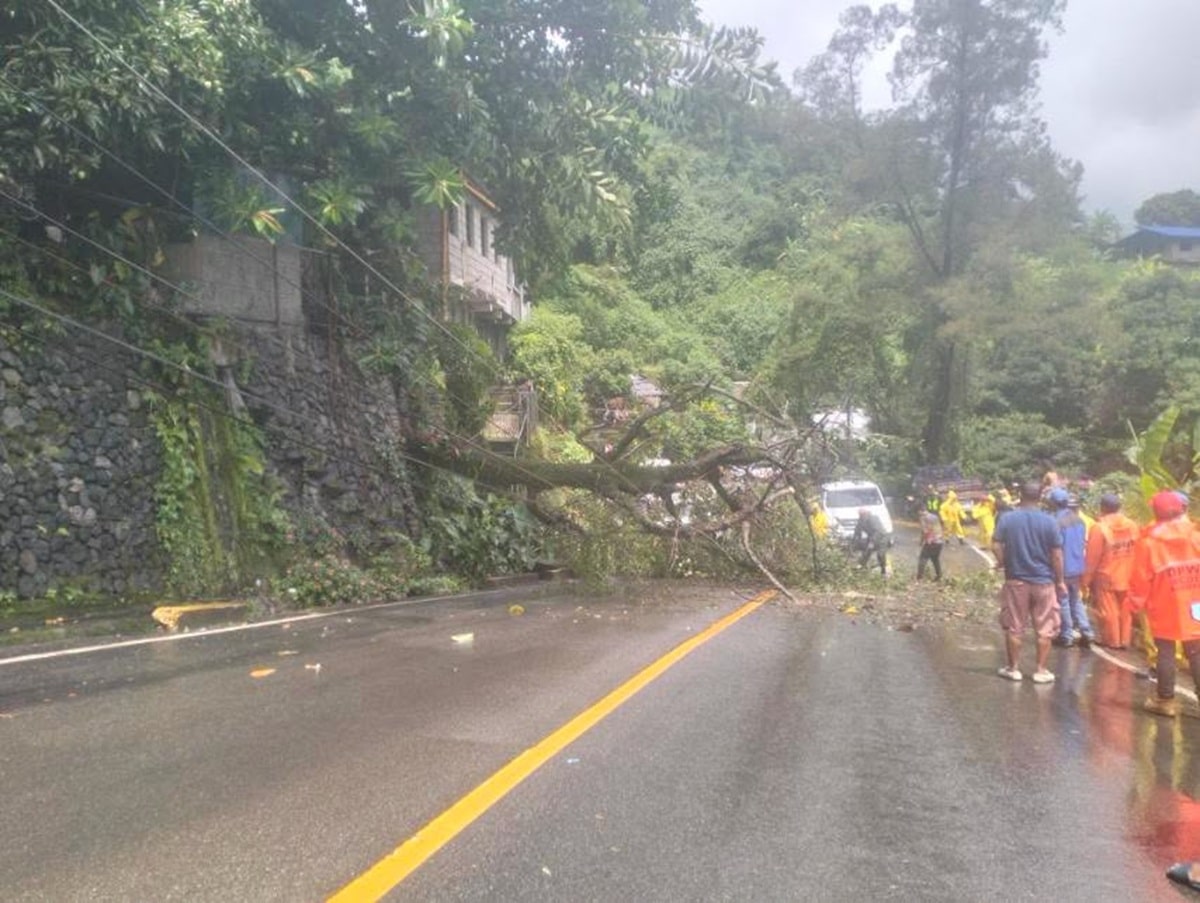
Naguilian Road in Baguio Briefly Flooded Due to Typhoon Inday; Traffic Restored
Heavy rains from Typhoon Inday (Bavi) caused temporary flooding on Naguilian Road in Baguio City, disrupting traffic. Emergency clearing operations have since reopened the road, though caution is advised. Fallen trees also caused disruptions elsewhere.
BAGUIO CITY — Flooding along a section of Naguilian Road on Friday briefly disrupted traffic after heavy rains brought by Typhoon Inday (international name Bavi) inundated an ongoing drainage improvement project, prompting emergency clearing operations by city and public works personnel. The flooding occurred at the Department of Public Works and Highways (DPWH) project site in Barangay Irisan, where a cross-drainage structure is being widened to address recurring flooding. Crews immediately cleared clogged drainage channels, allowing floodwaters to recede. By late afternoon, the DPWH announced that Naguilian Road (Quirino Highway) had been reopened to all vehicles, although motorists were advised to exercise caution due to continuing rains. READ: Typhoon Inday topples trees, crushes vehicles in Baguio The City Disaster Risk Reduction and Management Council (CDRRMC) also cleared fallen trees in Camp 7, Legarda Road, Kennon Road, Quezon Hill, Marcos Highway, and the Recoletos Compound leading to Coyeesan. Some incidents affected power lines and required coordination with the Benguet Electric Cooperative (Beneco). Earlier, Mayor Benjamin Magalong activated the CDRRMC and all barangay disaster councils as Typhoon Inday threatened Northern Luzon. The city’s Emergency Operations Center and frontline response agencies have been on Blue Alert since July 8 to ensure continuous monitoring and rapid emergency response. Authorities urged residents to remain vigilant, monitor official weather advisories, and call 911 in case of emergencies. /das
多角的分析
今回の浸水は、進行中のインフラプロジェクトの現場で発生しており、インフラ整備の遅れや不備が、自然災害による被害を増幅させる可能性を示唆しています。バギオ市のような山岳都市では、地盤の脆弱性や急峻な地形から、排水インフラの整備が特に重要であり、その遅延は経済活動への影響も懸念されます。インフラ投資の効率性と、気候変動への適応策としての排水対策の強化が求められます。
インフラプロジェクトの遅延や、それに伴う交通障害は、物流コストの増加やサプライチェーンの寸断リスクを高めるため、投資家にとっては懸念材料となり得ます。特に、バギオ市は観光地としても重要であり、インフラの脆弱性は観光客の足にも影響を与える可能性があります。投資判断においては、インフラのレジリエンス(回復力)と、自然災害への対策がどの程度講じられているかを評価することが重要です。
バギオ市では、豪雨による浸水や倒木が、住民の日常生活に直接的な影響を与えました。特に、道路の寸断は通勤・通学や物資の輸送を困難にし、電力供給への影響は生活基盤を揺るがします。市当局は早期の復旧に努めましたが、このような自然災害への脆弱性は、地域住民の安全と安心を脅かす、公共の課題として継続的に取り組む必要があります。特に、インフラプロジェクトの遅延が住民生活に与える影響は、地域社会の信頼にも関わる問題です。
ナギリアン道路が一時的に閉鎖されたことは、バギオ市に住む多くの市民にとって、通勤や日常の移動に不便をもたらしました。特に、公共交通機関の利用者や、この道路を日常的に利用するドライバーは、迂回や遅延による影響を受けました。また、倒木による電力供給の寸断は、家庭での生活にも支障をきたしたと考えられます。市当局の迅速な対応は評価されるべきですが、インフラ整備の遅れが市民生活に与える影響は、今後も注視していく必要があります。
背景・歴史的文脈
フィリピンは、台風銀座と呼ばれるほど多くの台風が通過する地域であり、豪雨による洪水や土砂災害のリスクが常に存在します。特にバギオ市のような山岳地帯では、急峻な地形と集中的な降雨が、排水インフラへの負荷を増大させます。過去にも、インフラ整備の遅れや不備が原因で、自然災害による被害が拡大した事例が報告されており、今回のナギリアン道路の浸水も、その構造的な問題の一端を示唆しています。政府は、気候変動への適応策として、インフラの強靭化を重点課題としていますが、その実行には依然として課題が残されています。
原文ソース
Inquirer NewsInfo