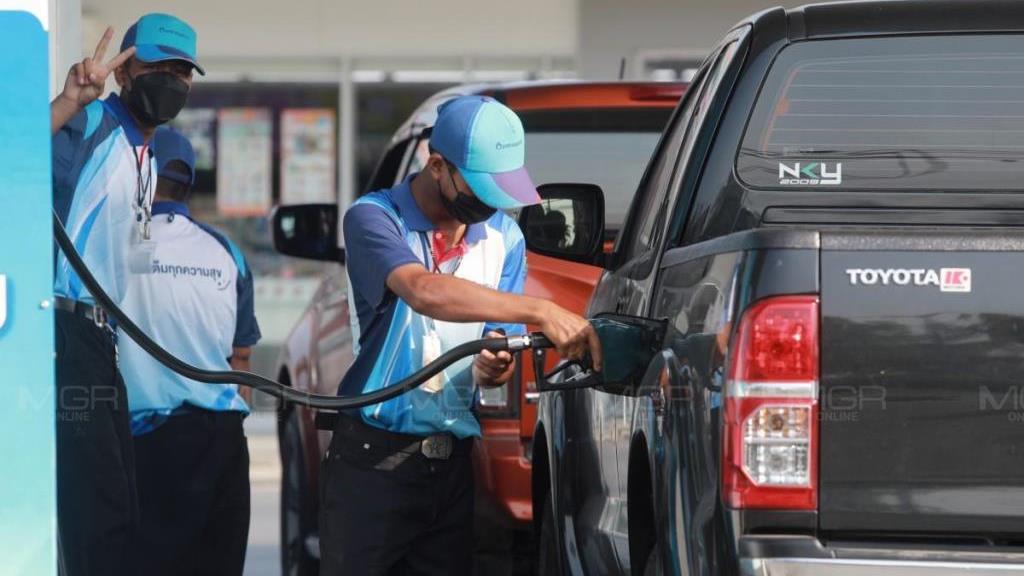
Thailand to Significantly Lower Fuel Prices Tomorrow
The Thai government has decided to significantly reduce fuel prices for all types starting tomorrow. Diesel will be lowered by 2.56 baht per liter, and all gasoline types by 2.51 baht per liter. This is likely part of measures to support public livelihood and economic activities.
The Thai government has decided to significantly reduce fuel prices for all types starting tomorrow, aiming to alleviate the burden on public livelihood and stimulate economic activity. Under this decision, diesel fuel will be lowered by 2.56 baht per liter, and all gasoline types (regular, premium, E20, etc.) will also be reduced by 2.51 baht per liter. The specific implementation date is tomorrow. This fuel price reduction is seen as a measure considering multiple factors, including fluctuations in global crude oil prices, domestic inflationary pressures in Thailand, and the need to maintain public purchasing power. The government is expected to aim for reduced logistics costs, promotion of personal consumption, and further inflation control effects. While the tourism sector is recovering, the Thai economy remains susceptible to domestic and international economic conditions. Stabilizing fuel prices is expected to facilitate cost management for businesses and, consequently, contribute to price stability. Source: MGR Online (Business)
多角的分析
燃料価格の引き下げは、タイ経済におけるインフレ圧力緩和と消費刺激の両面で効果が期待される。特に、物流コストの削減は、製造業や小売業の収益性改善に直結し、サプライチェーン全体での価格安定に寄与するだろう。過去にも、政府は原油価格高騰時に同様の価格調整を行い、経済への急激な悪影響を抑制してきた実績がある。
燃料価格の低下は、運輸・物流セクターや、燃料費の比率が高い製造業のコスト構造改善につながり、投資家にとって魅力が増す可能性がある。ただし、原油価格の国際的な動向や、タイバーツの為替レートの変動リスクも考慮する必要がある。長期的な視点では、エネルギー効率の高い産業への投資がより重要になるだろう。
燃料価格の引き下げは、ガソリンスタンド周辺の地域経済や、公共交通機関の利用者に直接的な恩恵をもたらす。特に、地方部では自動車への依存度が高いため、家計の負担軽減効果は大きい。一方で、この措置が持続可能かどうか、また、再生可能エネルギーへの移行を遅らせる可能性はないか、といった議論も社会的に問われる可能性がある。
燃料価格の引き下げは、バンコクの通勤者や地方のドライバーにとって、日々の生活費を直接的に節約できる朗報となる。ガソリン代やディーゼル代の負担が軽くなることで、可処分所得が増え、他の消費に回す余裕が生まれることが期待される。しかし、物価全体への波及効果は、他の商品・サービスの価格動向にも左右されるため、注視が必要である。
背景・歴史的文脈
タイ政府は、国民経済の安定と国民生活の支援のため、過去にも燃料価格への介入を行ってきた。特に、原油価格が急騰した際には、財政赤字のリスクを抱えつつも、価格補助金や税制優遇措置などを通じて、燃料価格の上昇を抑制する政策を実施してきた。今回の決定も、そうした過去の政策の流れを汲むものと考えられる。石油依存度の高いタイ経済において、燃料価格の安定は、インフレ抑制と経済成長の維持にとって重要な要素である。
原文ソース
MGR Online (Business)