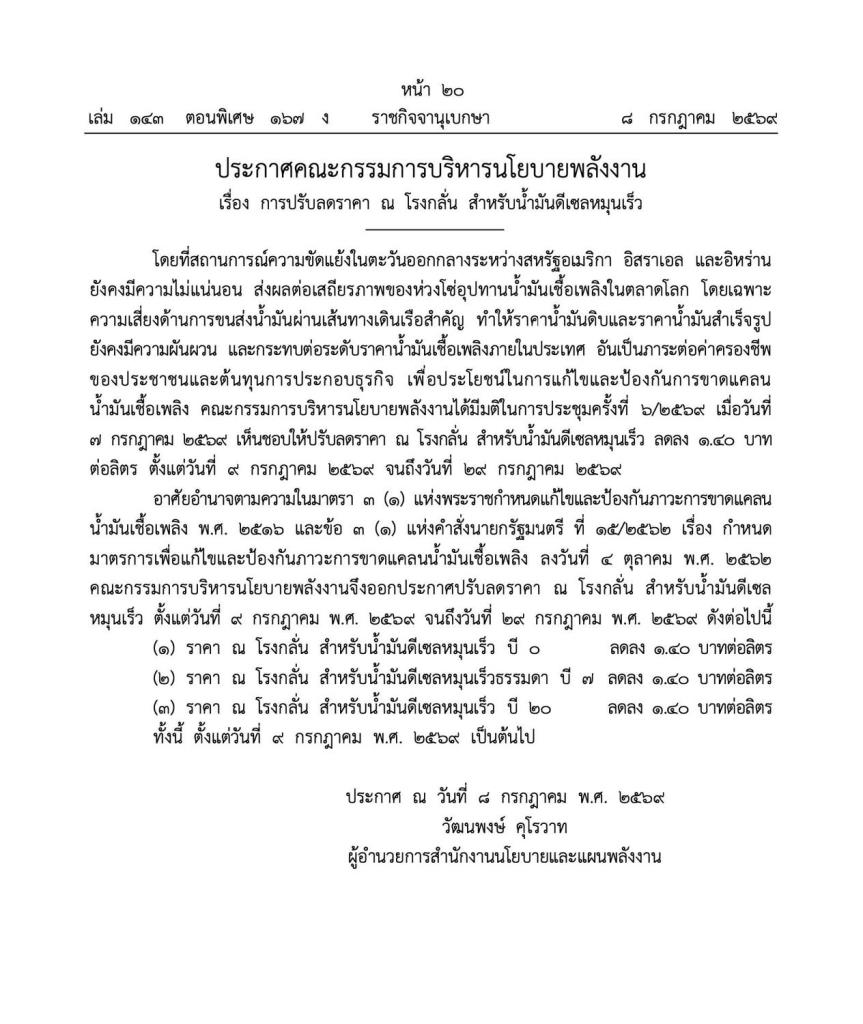
Thailand to Cut Fuel Prices by 2.50 Baht/Liter from July
The Thai government announced a reduction of 2.50 baht per liter for gasoline prices, effective from July 9 to 29. Of this reduction, 1.40 baht will be sourced from excess profits from refineries. This measure is intended to alleviate the burden on citizens and stimulate the economy.
The Ministry of Energy of Thailand has announced a temporary reduction in gasoline prices by 2.50 baht per liter, effective from July 9 to July 29. This measure is part of the government's efforts to alleviate the cost of living burden on citizens. Specifically, 1.40 baht of this reduction will be funded by excess profits generated by domestic refineries. This price cut is seen as a government intervention aimed at mitigating the impact of rising fuel prices, influenced by fluctuations in crude oil and international conditions, on Thailand's consumer prices and stimulating economic activity. Gasoline is an essential energy source for the daily lives and economic activities of many Thai citizens, thus its price fluctuations directly affect household budgets and business operations. The Thai government has consistently strived to maintain stability in people's lives and sustain economic growth through stabilizing energy prices. This latest measure is positioned as part of that ongoing policy framework. Although temporary, it is expected to help maintain citizens' purchasing power and reduce transportation costs, thereby contributing to price stability. Source: MGR Online (Business)
多角的分析
タイ政府によるガソリン価格の引き下げは、インフレ抑制と個人消費刺激を狙った政策であると考えられる。製油所の超過利益を充当するという点は、政府が市場介入を通じて価格をコントロールする意思の表れであり、短期的な物価安定に寄与する可能性がある。しかし、製油所の利益圧迫は、将来的な設備投資や供給体制に影響を与えるリスクも孕む。また、この措置が恒久的なものではなく、期間限定である点も、消費者の長期的な購買行動に与える影響は限定的かもしれない。
製油所の超過利益からの価格引き下げは、製油会社の収益性を一時的に圧迫する要因となり得る。投資家は、この措置が製油会社の四半期決算に与える影響を注視する必要がある。一方で、ガソリン価格の低下は、消費者心理の改善を通じて自動車関連産業や小売業など、広範な経済活動を刺激する可能性があり、これらのセクターへの投資妙味が増すことも考えられる。ただし、補助金頼みの価格設定は、市場の歪みを生じさせるリスクも否定できない。
ガソリン価格の2.50バーツ/リットル引き下げは、タイ国民、特に自動車を日常的に利用する層や、物流コストに影響を受ける食品・日用品の価格に恩恵をもたらす可能性がある。例えば、バンコク近郊の通勤者や、地方で自家用車を使用する人々は、毎月の燃料費負担の軽減を実感できるだろう。また、物流コストの低下は、間接的に食料品などの価格安定に繋がり、低所得者層の家計を支える効果も期待される。しかし、この措置が期間限定であるため、中長期的な家計計画への影響は限定的となる可能性がある。
今回のガソリン価格引き下げは、タイ国民、特に自動車を日常的に利用する層にとって、一時的な朗報となるだろう。バンコク都心部や郊外で働く人々は、毎日の通勤にかかる燃料費の負担が軽減されるため、家計に多少の余裕が生まれることが期待される。しかし、この措置が7月29日までという期間限定であるため、長期的な生活設計に大きな影響を与えるものではない。国民としては、恒常的な物価安定策を政府に期待したいところである。
背景・歴史的文脈
タイにおけるエネルギー価格の変動は、同国の経済に大きな影響を与える。特に、原油価格の国際的な動向は、タイの輸入物価やインフレ率に直接的に作用する。過去、タイ政府はエネルギー価格の安定化のため、石油基金の活用や補助金政策を度々実施してきた。2022年には、世界的な原油高騰を受けて、ガソリン価格が一時高騰し、国民生活に大きな負担となった。これに対し、政府は石油基金からの補助金や、製油所への協力要請など、複数の対策を講じてきた経緯がある。今回の措置は、こうした過去の経験を踏まえ、期間限定ながらも国民負担軽減を図るための政策と位置づけられる。
原文ソース
MGR Online (Business)