General articles are free for 24 hours after publish.
Ho Chi Minh City to Invest Over VND 26 Trillion for Metro Line Connecting Tan Son Nhat Airport to Long Thanh Airport
Ho Chi Minh City plans to spend over VND 26 trillion for compensation, support, and resettlement for Metro Line 6, connecting Tan Son Nhat Airport to Phu Huu. This project aims to enhance connectivity to the future Long Thanh International Airport.
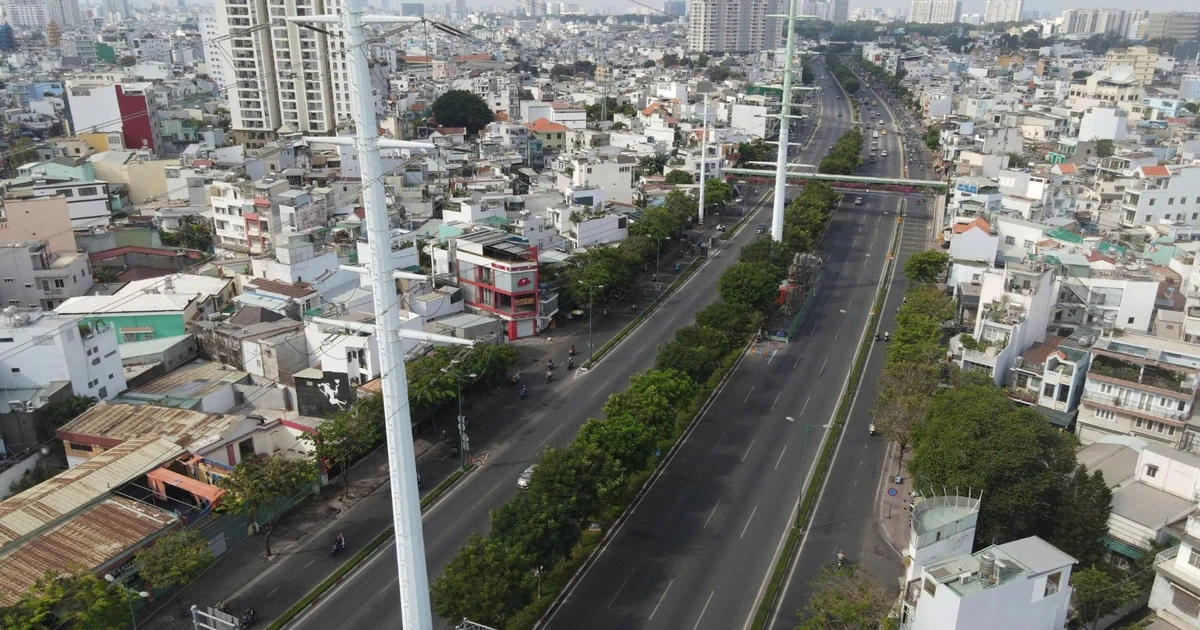
Ho Chi Minh City is moving forward with extensive land acquisition and resettlement plans for the construction of Metro Line 6, which will connect Tan Son Nhat Airport to Phu Huu. The municipal Department of Agriculture and Environment has initiated a review process to gather feedback from relevant agencies on the feasibility study report for compensation, support, and resettlement. This metro line, slated for completion by 2030, aims to bolster connectivity to the Long Thanh New International Airport, a crucial transportation hub for Southern Vietnam. According to the Ho Chi Minh City Urban Railway Management Board, the 23km line will traverse 15 wards, requiring the acquisition of over 95 hectares of land. This is expected to affect 2,501 households and organizations, with an estimated total cost of over VND 26.336 trillion (approximately USD 1 billion) for compensation, support, and resettlement. Around 2,256 cases are projected to involve full land expropriation. The route will feature approximately 19km of underground sections, with the remainder being elevated. It begins at Ba Queo Station (ST01) near the intersection of Tan Ky Tan Quy and Truong Chinh, connecting to the Ben Thanh-Tham Luong metro line. From there, it will go underground through Tan Son Nhat Airport, then connect to Hong Ha and Pham Van Dong streets, cross the Saigon River, and continue along Vo Nguyen Giap Street and Ring Road 2, gradually transitioning from underground to elevated sections. Finally, the line will split into two branches: one leading to the terminal station in the Phu Huu area, and the other connecting to the Thu Thiem-Long Thanh railway line, heading towards Long Thanh Airport. The Department of Agriculture and Environment has requested that relevant agencies review the route alignment, land acquisition scope, and assess potential connections with other infrastructure projects in the vicinity. This proactive review aims to prevent overlaps and conflicts, ensuring smooth project implementation. Ho Chi Minh City has set a goal to develop approximately 255km of metro lines by 2030. By 2035, an additional seven lines or sections are planned, adding about 277km and bringing the total planned urban railway network length to around 532km. Source: Nhan Dan
Original source
Nhan Dan