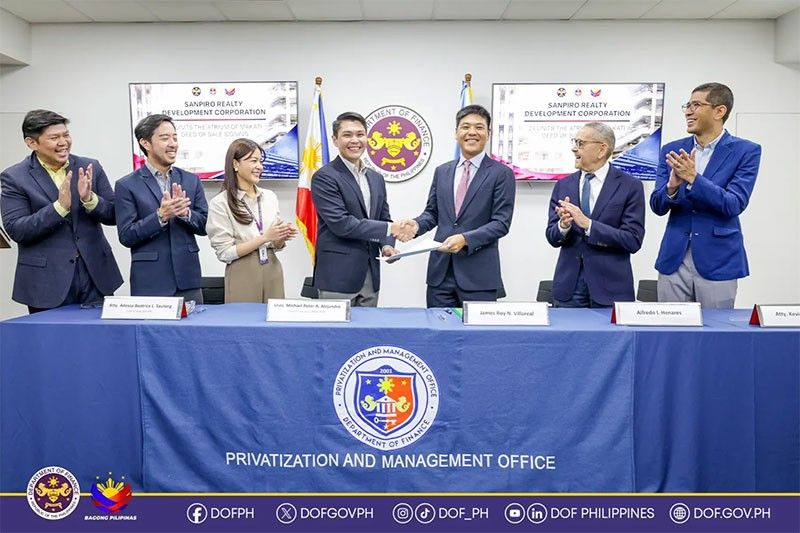
Philippines Government Secures Over P1 Billion from Sale of Idle Makati Asset
Politics
2026年7月17日
3
Philstar Business

Philippines Government Secures Over P1 Billion from Sale of Idle Makati Asset

AI サマリー

The Philippine government has successfully sold its idle asset, the Atrium of Makati, for over P1 billion, as part of its accelerated efforts to boost privatization revenues. The Department of Finance is looking to dispose of other major government properties to sustain this momentum.

MANILA, Philippines — The Marcos administration has sealed the P1-billion sale of Atrium of Makati to Sanpiro Realty Development Corp., one of the four idle assets lined up for disposal in 2026 as the government accelerates efforts to raise privatization revenues. The Department of Finance (DOF), through its Privatization and Management Office (PMO), has completed the sale of the building’s fifth floor, covering 24 condominium units and 21 parking slots. The PMO serves as the marketing arm of the government in terms of transferred assets, government corporations and other properties assigned to it by the Privatization Council for disposition. Finance Undersecretary and chief privatization officer Michael Peter Alejandro said the P1-billion sale of the Makati units fetched more than double the P400 million initial value. “The successful sale of our Atrium of Makati units reflects the PMO’s continued efforts to bring idle government assets to the market through well-planned and competitive transactions. We will build on this momentum as we pursue other properties for disposition in the pipeline,” Alejandro said. This sale propelled the PMO collections to P1.87 billion in the first half of 2026. Sanpiro was able to purchase the units by exercising its right of first refusal as the Atrium’s master developer, as stated in the condominium’s master deed. The Department of Finance is aiming to raise an “ambitious target” of P101 billion this year from the sale of government assets, with the PMO lining up big ticket disposals to sustain momentum. Alejandro said the agency is working to sell Food Terminal Inc. (FTI), the Mile Long Complex and shares in South Luzon Expressway Corp. (SLEX). The government currently holds a 20 percent stake in San Miguel Corp.’’s SLEX Inc. “We’re endeavoring to hit that P101 billion. Obviously, a lot of costs have to happen. FTI, Mile Long and we have shares in SLEX – that’s also our target to sell,” he said, noting valuation and market appetite remain key considerations. The Mile Long Complex in Makati, roughly estimated at P10 billion based on zonal value, is slated for sale by the third quarter. FTI’s property in Taguig is expected to fetch around P20 billion, while the government’s 725 million SLEX shares are targeted for disposal in the fourth quarter. The SLEX shares of stock are valued between P12.04 billion and P24.8 billion or P16.61 to P34.21 per share, based on previous PMO documents.

多角的分析

経済的影響

フィリピン政府による遊休資産の売却は、財政赤字の削減とインフラ投資のための資金確保という二重の目的を持つ。特に、P1010億ペソという野心的な目標は、政府の財政状況の逼迫を示唆している。過去にも同様の資産売却は行われてきたが、今回のように大型資産を複数同時に売却しようとする動きは、経済の不確実性の中で、迅速な歳入確保を優先する姿勢の表れと考えられる。売却価格が当初評価額を大幅に上回ったことは、市場の潜在的な需要を示唆する一方、資産の適正評価と市場への影響を慎重に見極める必要がある。

投資家心理

今回の資産売却は、政府が保有する遊休資産の流動化を促進する意向を示しており、潜在的な投資機会を提供する。特に、サンピロ・リアルティ・デベロップメント社が優先購入権を行使してアトリウム・オブ・マカティを取得した事例は、既存のデベロッパーにとって有利な条件が提示される可能性を示唆している。今後、FTIやマイルロング・コンプレックス、SLEXといった大型資産の売却が進めば、不動産開発業者やインフラ関連企業にとって、新たな投資機会が生まれる可能性がある。ただし、P1010億ペソという目標達成のためには、市場の状況や資産の評価額、そして政府の売却プロセスにおける透明性が、投資家の信頼を得る上で重要な要素となるだろう。

社会的影響

フィリピン政府による遊休資産の売却は、その資産が本来、公共のために活用されるべきであったという視点から、社会的な議論を呼ぶ可能性がある。例えば、マイルロング・コンプレックスのような土地は、本来であれば公共施設や低所得者向け住宅などに活用されることで、社会的な便益を生み出すことが期待されていたかもしれない。しかし、政府は財政収入の確保を優先し、これらの資産を市場に放出している。この政策決定は、都市部における土地利用のあり方や、政府の資産管理の効率性、そして公共の利益と経済的利益のバランスについて、国民の間で継続的な議論を促すだろう。

市民の声

今回の遊休資産売却は、国民生活に直接的な影響を与えるものではないかもしれないが、間接的な影響は無視できない。政府が資産売却によって得た収益を、インフラ整備や公共サービスの向上に充てるのであれば、国民はより良い生活環境を享受できる可能性がある。しかし、売却された資産が、例えば公共交通機関の利便性向上や、手頃な価格の住宅供給に貢献する可能性があった場合、その機会損失を懸念する声も上がるだろう。また、売却プロセスにおける透明性や公平性についても、国民の関心は高い。特に、マカティのような中心部にある土地の売却は、その後の都市開発の方向性にも影響を与えるため、市民の監視が重要となる。

背景・歴史的文脈

フィリピン政府は、過去数十年間にわたり、財政赤字の削減と国営企業の効率化のために、保有資産の売却や民営化を進めてきた。特に、1990年代以降、世界銀行やIMFの構造調整プログラムの影響もあり、政府は非中核資産の処分を加速させた。アトリウム・オブ・マカティのような遊休資産は、維持管理コストがかかる一方で収益を生み出さないため、政府にとっては負担となっていた。今回の売却は、こうした過去の政策の流れを汲みつつ、マルコス政権下で歳入増加と財政健全化をより一層推進しようとする動きの一環と位置づけられる。

原文ソース

Philstar Business

原文を読む