General articles are free for 24 hours after publish.
Philippine Inflation Eases to 6.2% in July, But Household Pressures Persist
Philippine inflation eased to 6.2% in July, a slight slowdown from the previous month, but remains significantly above the government's target. The poor are particularly affected by rising rice prices.
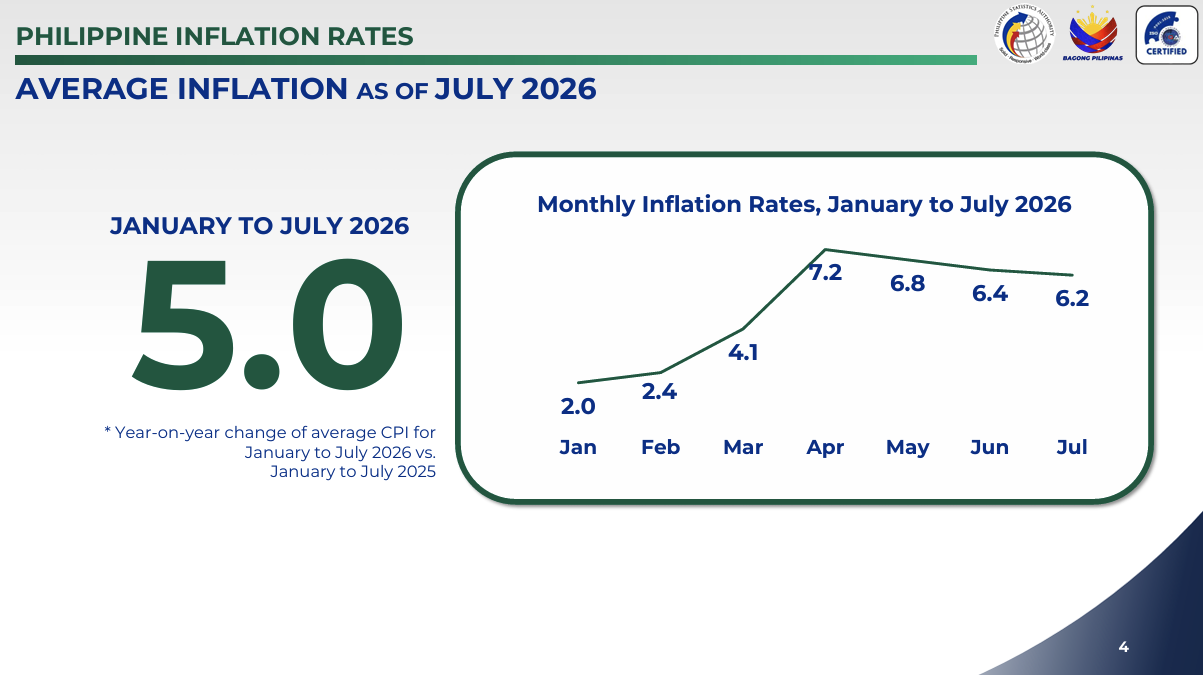
MANILA, Philippines – Inflation in the Philippines softened to 6.2% in July as the relative slowdown in transport helped temper overall price increases, the Philippine Statistics Authority reported on Wednesday, August 5. This was slightly slower than the 6.4% recorded in June, marking the third straight month of easing inflation after the rate hit a three-year high of 7.2% in April. Average inflation for January to July stood at 5%, remaining well above the government’s target range of 2% to 4%. Transport was the biggest source of the slowdown, accounting for 57.4% of the decline in the headline rate. Transport inflation eased to 11.9% in July from 12.8% in June as price increases slowed for gasoline, passenger transport by road, and some vehicle maintenance and repair services. Education inflation slowed to 1.9%, accounting for 29% of the deceleration, while restaurants and accommodation services eased to 6.8% and contributed the remaining 13.6%. Several major expenses continued to exert upward pressure. Inflation for housing, water, electricity, gas, and other fuels accelerated to 8.2% from 8.1%, driven by electricity inflation, which surged to 17% from 12.3%. Electricity inflation was the fastest since March 2023. (READ: Why your Meralco bill will be higher in July – and might rise again soon) Food and non-alcoholic beverage inflation remained unchanged at 5.2%, but rice inflation accelerated to 17.1%, its highest since July 2024, and contributed 1.2 percentage points to the overall rate. Regular milled rice averaged P49.55 per kilogram in July, slightly lower than around P50 in June but still far above P41.31 a year earlier. Core inflation, which excludes selected volatile food and energy items, eased to 4.2% from 4.4%. Rice inflation hits poorest households hard Despite the broader disinflation trend, inflation for the bottom 30% income households accelerated to 8.2% in July from 8% in June. Their average inflation rate from January to July stood at 5.9%, compared with the 5% for all households. National Statistician Dennis Mapa explained that it largely reflects spending patterns of poorer households, which affects how inflation is measured for them. “Kapag tumataas ‘yung presyo ng pagkain, talagang naaapektuhan sila. In particular, alam naman natin there’s one commodity na talagang nagmo-move ng inflation rate para doon sa bottom 30% income households, and that is the price of rice,” he said during Wednesday’s briefing. (When the price of food goes up, they’re really affected. In particular, we know there’s one commodity that always affects the inflation rate of the bottom 30% income households when it moves, and that is the price of rice.) Food accounts for 51.38% of the inflation basket for the bottom 30%, compared with 34.70% for all-income households. Rice alone has a weight of about 17.8% for poorer households, roughly double its 8.87% weight in the headline basket. Rice inflation for the bottom 30% reached 19.3% and contributed 2.6 percentage points to their overall rate. Housing and utility inflation also accelerated to 10.1%, leaving lower-income families more exposed to increases in electricity and other basic costs. In a statement, Economy, Planning, and Development Secretary Arsenio Balisacan acknowledged that challenges remain, “particularly in managing food price pressures.” The country’s chief economist highlighted the Department of Agriculture’s progress on completing 380 mechanical drying systems by 2027, which he said would help “[expand] post-harvest capacity to reduce grain losses, improve rice quality, raise farmers’ incomes, and strengthen domestic rice supply.” Meanwhile, the Bangko Sentral ng Pilipinas (BSP) is also monitoring inflation to get it back on track to the government’s 2% to 4% target. The BSP Monetary Board raised the benchmark interest rate by 25 basis points to 4.75% in June, its second consecutive increase, as the central bank sought to prevent elevated inflation from becoming more persistent. The BSP has raised rates by a total of 50 basis points in 2026 and is scheduled to hold its next policy meeting on August 27. BSP Governor Eli Remolona Jr. has said the economy could absorb another rate increase if further tightening is needed to bring inflation back toward target. – Rappler.com
Original source
Rappler Business