Rare White Monkey Sighted in Sultan Kudarat; Stricter Protection Measures Implemented
A rare white Philippine long-tailed macaque has been sighted in Sultan Kudarat, Philippines. Authorities have implemented strict protection measures, including temporary closure of its habitat, to safeguard the animal.
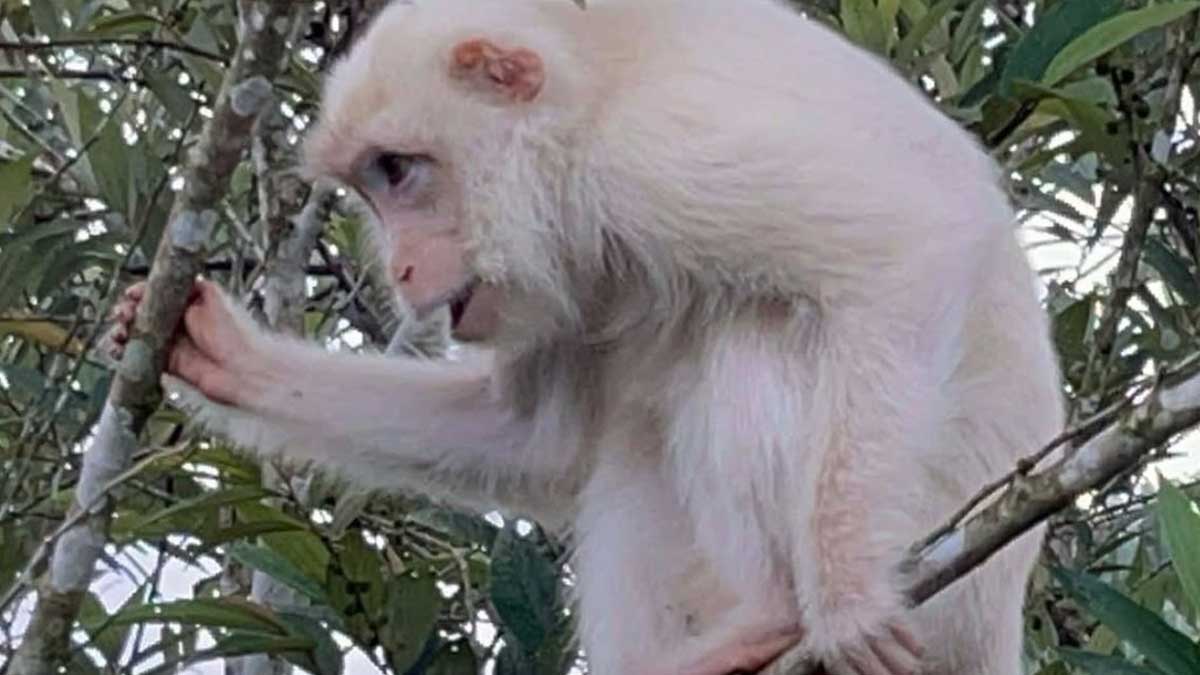
PROTECTED WILDLIFE A rare white Philippine long-tailed macaque is seen in a forest in Senator Ninoy Aquino, Sultan Kudarat. —DENR-12 photo KORONADAL CITY, SOUTH COTABATO, Philippines — Authorities have imposed stricter measures to protect a rare white Philippine long-tailed macaque sighted in the mountains of Senator Ninoy Aquino (SNA), Sultan Kudarat. The animal's habitat has been temporarily closed to the public. The monkey was spotted in a forested area in Barangay Bugso on July 1 and captured on video by tour guide John Danda, who reported the sighting to authorities. A resident of SNA said the white monkey has been regularly roaming the area since 2016 and is often seen around 6 a.m. The Department of Environment and Natural Resources in Region 12 (DENR-12) and the SNA local government agreed to immediately close the monkey’s habitat temporarily to prevent people from disturbing the animal. Environment and local officials said the increased public attention, if left unchecked, could expose the species to disturbance, illegal hunting, poaching, collection, or wildlife trafficking. SNA Mayor Rafael George Flauta III immediately ordered the temporary closure of the area where the monkey has frequently been observed to minimize disturbance and prevent illegal wildlife collection and other threats. Barangay Bugso Chair Eva Labi said the village immediately implemented the mayor’s directive by closing off the area where the monkey was sighted. Labi urged the public not to harm the monkey and protect its habitat. A DENR-12 assessment found the monkey’s brown eyes suggest it may have leucism, rather than albinism. However, DENR-12 Executive Director Maria Elvira Lumayag said wildlife experts must first verify this condition. —WITH A REPORT FROM AMIEL M. CAGAYAN
多角的分析
このニュース自体に直接的な経済的影響は少ないが、フィリピンの生物多様性保全への投資や、エコツーリズムの潜在的可能性を示唆している。野生生物保護区の管理や密猟対策には予算が必要であり、政府の優先順位が問われる。また、フィリピンは経済発展と環境保護のバランスを取る必要に迫られており、このような希少生物の発見は、持続可能な開発への関心を高めるきっかけとなりうる。
短期的な投資機会は限定的だが、フィリピンの環境・社会・ガバナンス(ESG)への関心が高まる兆候と捉えられる。野生生物保護への政府の取り組みは、環境意識の高い投資家にとってポジティブなシグナルとなりうる。長期的には、エコツーリズム関連のインフラ投資や、環境保護技術への関心が高まる可能性も考えられる。
SNAのBarangay Bugso地域住民にとって、この珍しい白いサルは地域への関心を高める存在となっている。しかし、その注目が過度な干渉や商業化につながる懸念もある。地元住民は、サルとその生息地を守る責任を負うと同時に、保護活動への協力を通じて地域コミュニティの結束を強める機会ともなりうる。野生生物保護は、地域住民の生活環境と密接に関わる公共の課題である。
Senator Ninoy Aquino (SNA) の住民は、長年この白いサルを目撃してきた経験から、地域への愛着を深めている可能性がある。今回の保護措置は、住民がサルやその生息地を直接観察する機会を一時的に奪うことになるが、それは将来にわたってサルを見続けられるようにするための必要な犠牲と理解されるだろう。住民は、サルを地域資源として誇りに思い、その保護に貢献する意識を持つことが期待される。
背景・歴史的文脈
フィリピンは世界有数の生物多様性国家であり、多くの固有種が生息している。しかし、森林破壊、違法伐採、密猟、生息地の分断化などにより、多くの野生生物が絶滅の危機に瀕している。フィリピンハナジロマカクも、生息地の減少や狩猟の対象となることで個体数が減少傾向にある。過去には、希少なフィリピンオオカミヘラジカやフィリピンオオコウモリなどが発見・保護されているが、継続的な保護活動と法執行が不可欠である。今回の白いサルは、遺伝子の突然変異(白化症)によるもので、その希少性から保護の必要性が高まっている。
原文ソース
Inquirer NewsInfo