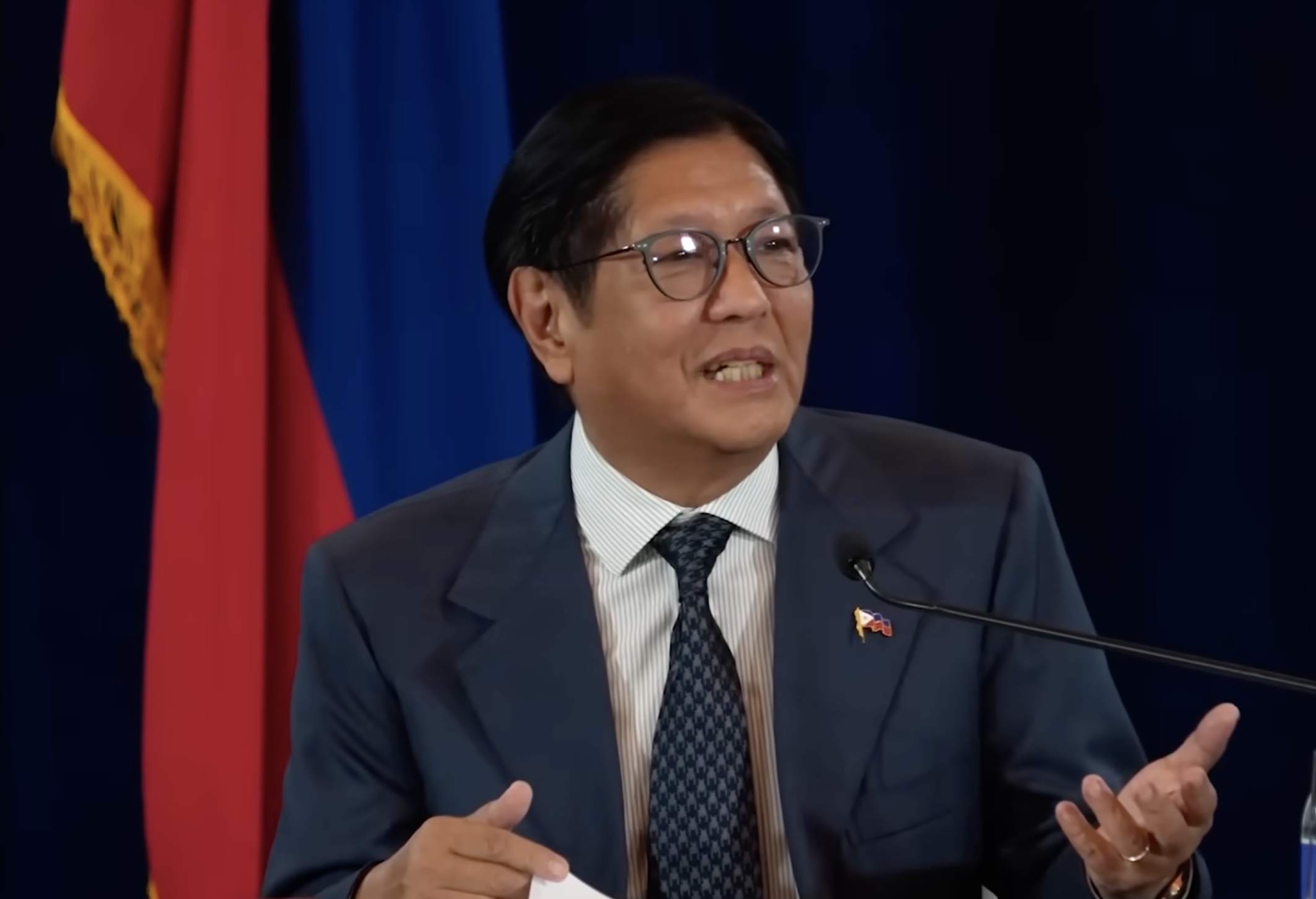
Marcos says VP Sara Duterte should attend impeachment trial
President Ferdinand Marcos Jr. believes Vice President Sara Duterte should attend her impeachment trial and answer allegations directly. Citing his own experience, the President stated he would insist on appearing even against legal advice. The trial is set to commence on July 6.
President Ferdinand Marcos Jr. on Sunday said Vice President Sara Duterte should attend her impeachment trial, which is set to begin on Monday, July 6. “Of course, it would be much easier to get to the bottom of everything if you [could] speak to the accused directly,” Marcos said during the Kapihan with the Media in Vancouver, Canada, before returning to Manila. The President added that if the accused can respond directly, not through secondary channels or lawyers, the process will become clearer and easier. Marcos, who served as a senator-judge during the 2012 impeachment trial of former Supreme Court chief justice Renato Corona, clarified that his remarks were merely his personal view and not a legal opinion. He stated that if he were in Duterte’s position, he would personally choose to appear before the impeachment court and answer the allegations himself, even if his lawyers advised against it. “But if I’m just trying to put myself in that position, I would probably, myself, if it was me being accused, almost insist — even over the advice of lawyers. If they advised me not to appear, I would insist on appearing. Kasi kaya ko naman sagutin, sige sagutin natin,” the President added. The Senate impeachment court has summoned Duterte to appear at the formal opening of her impeachment trial on July 6. In a notice dated July 2, Duterte was directed to appear before the impeachment court pursuant to Rule 7 of the Rules of Procedure on Impeachment Trials and in accordance with the writ of summons issued against her on May 19. The trial will initially be held weekly from Monday to Wednesday at 2 p.m. until Marcos’ fifth State of the Nation Address (SONA) on July 27. After the SONA, proceedings will shift to Tuesdays to Thursdays at 2 p.m. ‘We are not done yet’ During his fourth SONA last year, Marcos warned government officials involved in corruption, particularly those linked to flood control projects, that they would face legal consequences. Asked about his administration’s progress in combating corruption, Marcos said there is still much work to be done. “Well, I cannot say that we have done enough because we are not done yet. Unfortunately, the more we look, the more we find,” he said, indicating that the problems go back beyond his administration. Marcos said flood control project issues had been acknowledged by the previous administration but were not acted upon. “And back to about that time, 2017 to 2018, President Duterte acknowledged that there were great problems in terms of flood control projects. Pero wala namang nangyari. Having acknowledged it, it did not find accountability in anybody. So I guess that was left up to me to do. And so we are still doing it. We’re still working on it,” Marcos added. Responding to allegations of selective justice, Marcos said it was his administration that exposed the irregularities. “I’m the one who exposed all of this,” he said. He stated that his administration was the first to take concrete action against irregularities in flood control projects. “And I’m the only one [who] has started to do anything about this. Bakit ang mga nakaraang Pangulo, nakita pa kayong ginawang gano’n? Meron ba silang ikinulong? Meron ba silang pi-freeze na account? Meron ba silang mga investigation na ginawa? Wala. Sa akin lang,” he said. “Tapos sasabihin, ako daw ang may kagagawan. Eh kung talagang raket ko yun, ba’t ko sisiraan yung raket ko? Di ba? That makes absolutely no sense,” he added.
多角的分析
副大統領の弾劾裁判は、フィリピン経済への直接的な影響は限定的とみられる。しかし、政治的安定性への懸念は、海外からの投資意欲を減退させる可能性がある。特に、汚職撲滅への取り組みは、経済改革の進捗を示す指標となり得るため、裁判の結果やその後の政権の対応が注目される。洪水対策プロジェクトの遅延が指摘されている点は、インフラ投資や公共事業の効率性に対する疑問を投げかける。
投資家にとって、副大統領の弾劾裁判は政治リスクの増加要因となり得る。マルコス大統領が汚職撲滅に言及し、過去の政権の対応を批判している点は、国内のビジネス環境における透明性や法の支配への期待を高める一方で、政治的な駆け引きが投資判断に影響を与える可能性も示唆している。特に、インフラ関連プロジェクトの遅延は、長期的なインフラ投資の実行可能性に疑問符をつける。
副大統領の弾劾裁判は、国民の政治への関心を高める一方で、政治的分断を深める可能性もある。マルコス大統領が「まだ終わっていない」と汚職撲滅の必要性を強調したことは、国民の不正に対する不満の根深さを示唆している。また、過去の政権の怠慢を指摘することは、現政権への期待を高める狙いがあるが、これが政治的な対立を煽る可能性も否定できない。洪水対策プロジェクトの遅延は、地方のインフラ整備や災害対策への不安を募らせる。
国民としては、副大統領の弾劾裁判は、政治の透明性や説明責任を問う機会となり得る。マルコス大統領が過去の政権の対応を批判し、自身の政権での不正暴露や行動を強調する姿勢は、国民の期待を集める可能性がある。しかし、汚職撲滅が「まだ終わっていない」という言葉は、国民の生活に直結する物価や雇用、治安の改善が遅れていることへの懸念も示唆している。洪水対策の遅延は、特に雨季の洪水を経験する地域住民にとって、直接的な不安材料となる。
背景・歴史的文脈
フィリピンにおける弾劾手続きは、大統領、副大統領、最高裁判事、汚職委員会(Ombudsman)の長官およびメンバー、憲法裁判官( a member of the Constitutional Commission)を対象とする。これは、国家の最高位にある公職者の不正行為や職務怠慢に対する国民の信頼を維持するための制度である。2012年のレナト・コロナ最高裁判事の弾劾裁判は、当時のベニグノ・アキノ3世政権下で行われ、司法の独立性や政治的影響力に関する議論を呼んだ。今回の副大統領に対する弾劾の動きは、過去の事例を踏まえ、政治的権力闘争の一環であるとの見方も存在する。マルコス大統領が汚職撲滅を強調し、過去の政権の対応を批判する姿勢は、現政権の正当性を確立し、国民の支持を得るための戦略とも解釈できる。
原文ソース
GMA News Philippines