General articles are free for 24 hours after publish.
Banteay Meanchey Red Cross Conducts Dengue Fever Prevention Education Campaign
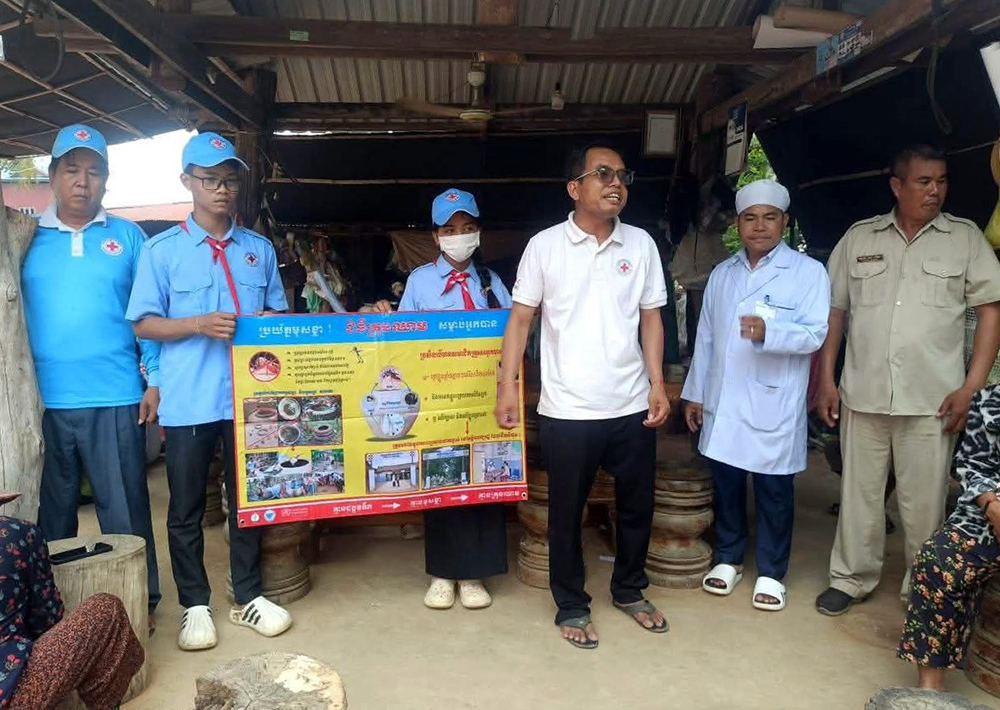
The Banteay Meanchey Provincial Red Cross, in collaboration with the local health center, conducted an educational campaign on dengue fever prevention for residents in Thompuok Commune, Banteay Meanchey Province. Residents learned about controlling mosquito breeding grounds and the importance of early detection and treatment.
Residents of Kassin village and Thompuok village in Thompuok Commune, Thompuok District, Banteay Meanchey Province, gained additional understanding of methods to prevent and control dengue fever through an educational campaign on dengue fever prevention organized by the Banteay Meanchey Provincial Red Cross Branch in collaboration with the Thompuok Commune Health Center on the morning of September 9, 2026. The campaign was organized with the attention of H.E. Ouk Ratry, President of the Red Cross Branch Committee of Banteay Meanchey Province, who assigned branch officials to lead a team of volunteers and Red Cross Youth to directly meet with residents to disseminate health knowledge and promote community participation in preventing dengue fever. According to Dr. Leck Chansangvat, Director of the Banteay Meanchey Provincial Health Department, during this educational activity, branch officials, volunteers, and Red Cross Youth focused on instructing residents to understand the causes of Aedes mosquitoes and methods to reduce larval sources around their homes. Specifically, they advised residents to regularly inspect and clean water jars, containers, stagnant water, or other objects that could become breeding grounds for Aedes mosquitoes, as well as to use abate in water tanks or jars as instructed by health officials. The dissemination also provided residents with knowledge about the importance of participation by each family in eliminating Aedes mosquito habitats. This is because dengue fever prevention cannot rely solely on treatment at hospitals or health centers but must begin with maintaining environmental hygiene around the home and the participation of all families. Red Cross Branch officials also instructed residents on what to do when a family member shows suspected dengue fever symptoms, emphasizing the need to closely monitor their health condition and seek examination and treatment services from health officials in a timely manner, avoiding allowing the disease to develop into a severe condition. Concurrently, the working group also disseminated information about residents' participation in maintaining a clean environment by encouraging the cleaning of yards, cutting grass, eliminating objects that can hold water, and reporting to health officials or local authorities if they discover Aedes mosquito breeding sources that could pose a risk to the community. This activity received active cooperation from the team of specialized doctors and colleagues from the Thompuok Health Center, who participated in providing guidance and technical health coordination to ensure that the dissemination was accurate and practically applicable in the daily lives of the residents. Through this activity, the Banteay Meanchey Provincial Red Cross Branch continues to demonstrate its important role in contributing to the promotion of public well-being, especially in providing knowledge and disease prevention in communities. Direct education to residents is considered a key measure to enhance understanding and translate knowledge into practical action. Dr. Leck Chansangvat added that dengue fever can have serious health impacts if not prevented and treated in a timely manner. Therefore, eliminating larval sources, protecting oneself from mosquito bites, maintaining environmental hygiene, and seeking health services when symptoms are suspected are important points that every resident can participate in implementing to collectively reduce the risk of dengue fever in families and communities.
Original source
AKP Khmer