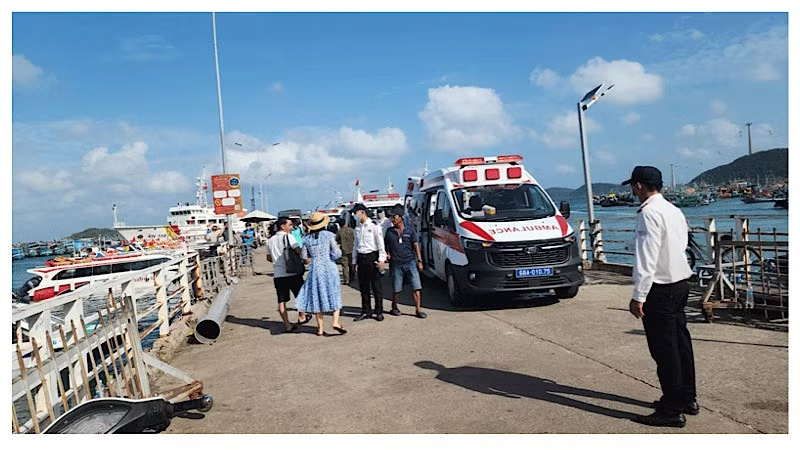
Phu Quoc Boat Capsizing Claims 15 Lives, Rescue and Investigation Underway
A tragic boat capsizing off the coast of Phu Quoc island, a popular Vietnamese resort destination, has resulted in 15 deaths, primarily Indian tourists. Authorities are urgently investigating the cause of the accident while continuing rescue efforts.
This article requires PRO
This article is outside the free access window or is a special report. PRO unlocks it and the full archive.
Related articles
- Indian tourists killed in Phu Quoc speedboat accident
Fifteen Indian tourists died and several were injured when a speedboat capsized off Phu Quoc Island, Vietnam. Rescuers battled high waves and strong currents in challenging weather conditions to save passengers.
- An Giang Tourism Department Reports on Canoe Capsize Tragedy Claiming 15 Lives
A tragic canoe capsize off Phu Quoc Island, Vietnam, resulted in the deaths of 15 Indian tourists. The An Giang Department of Tourism has submitted a report, recommending enhanced safety measures to prevent future incidents.
- Phu Quoc Canoe Capsize Claims 15 Lives, Primarily Indian Tourists
A tragic canoe capsize off Phu Quoc Island, Vietnam, resulted in 15 fatalities among 36 individuals on board, with 21 rescued. The majority of victims were Indian tourists. Vietnamese authorities have ordered an urgent response.
- Speedboat carrying Indian tourists capsizes off Vietnam's Phu Quoc, killing 15
A tourist speedboat carrying 32 Indian tourists and four crew members capsized off Phu Quoc Island, Vietnam, on July 11, resulting in 15 fatalities. Authorities are investigating the cause of the incident, which occurred as Phu Quoc sees a surge in tourism.