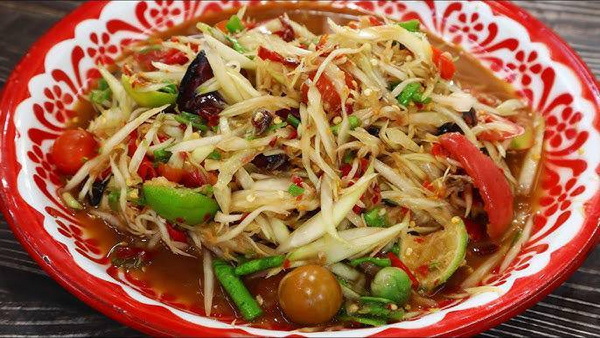
Thailand: Raw 'Plara' Ban Ordered Amid Liver Fluke Contamination Risk
In Thailand's northeastern Maha Sarakham province, the governor has ordered a ban on raw 'Plara' (fermented fish sauce) following the discovery of numerous liver fluke infections among university students. Strict enforcement is particularly mandated for Som Tum (papaya salad) vendors.
In Thailand's northeastern Maha Sarakham province, a significant public health concern has arisen due to the risk of liver fluke infection. Local media outlet MGR Online reported that a surprise inspection of university students in the province revealed a high number of infections, with nearly half testing positive for liver flukes. In response to this alarming discovery, the provincial governor has issued an urgent directive concerning the handling of 'Plara,' a staple fermented fish sauce in Thai cuisine. Plara, made by fermenting fish, is a key ingredient, particularly in the popular northeastern dish Som Tum (green papaya salad). However, Plara is often prepared using raw fish, carrying a known risk of containing liver fluke larvae. The governor's order specifically mandates that eateries, especially Som Tum vendors, must use only 'cooked Plara.' This measure aims to prevent the circulation of raw Plara, which is considered a potential source of infection, and to curb further spread of the parasite. This directive could have a notable impact on the traditional consumption of Plara, a dish deeply embedded in Thai culinary culture, and underscores the critical need for stringent food safety practices.
多角的分析
プララーはタイ東北部、特にイサーン地方の食文化の根幹をなす調味料であり、その消費量は膨大である。今回の「加熱調理済みプララーのみ使用」という指示は、プララー製造業者や販売業者、そしてソムタム店など外食産業に直接的な影響を与える。製造プロセスにおける衛生管理の強化や、加熱処理設備の導入コストが発生する可能性があり、これが製品価格に転嫁されれば、消費者の負担増につながる懸念がある。また、伝統的な製造方法を守る小規模事業者にとっては、新たな投資が経営を圧迫するリスクも考えられる。
今回の件は、直接的な投資機会の創出というよりは、タイの食品安全基準への意識の高まりを示す兆候と捉えられる。食品加工・衛生関連技術を持つ企業にとっては、タイ市場での事業拡大の機会となりうる。特に、プララーの加熱殺菌技術や、食品検査サービスを提供する企業は、需要の増加が見込まれる。一方で、伝統的なプララー製造に依存する企業や、外食産業への投資は、短期的なリスク要因となりうるため、慎重な評価が必要となるだろう。
マハーサラカーム県での肝吸虫感染確認は、タイの食文化と公衆衛生の間のデリケートなバランスを浮き彫りにした。特に、ソムタムはタイ国民に広く愛される国民食であり、その主要な風味付けであるプララーの安全性への懸念は、多くの人々の食生活に影響を与える。今回の知事の指示は、伝統的な食習慣を守ろうとする地域住民と、感染症予防という公衆衛生上の要請との間で、新たな摩擦を生む可能性も否定できない。特に、地方部では生食プララーへの依存度が高いため、指示の浸透と遵守には、啓発活動や支援策が不可欠となるだろう。
大学生の集団感染は、若者世代の健康への直接的な脅威であり、彼らの日常生活や学業に影響を及ぼす。また、プララーを日常的に食する多くのタイ国民にとって、食の安全に対する不安が増大する。特に、ソムタムは手軽な食事として広く親しまれており、その材料の変更や価格上昇は、家計に影響を与える可能性がある。地方部では、伝統的な食文化と衛生基準の遵守との間で、どのようにバランスを取るかが問われている。
背景・歴史的文脈
タイ、特に東北部(イサーン地方)では、プララーは食文化の根幹をなす調味料である。魚を発酵させて作るプララーは、独特の風味を持つが、製造過程で生魚を使用するため、肝吸虫などの寄生虫汚染のリスクが指摘されてきた。過去にも、プララーの衛生管理を巡る問題は度々取り沙汰されてきたが、国民的な食習慣との兼ね合いから、抜本的な対策は進んでこなかった。今回のマハーサラカーム県での集団感染は、この長年の課題が公衆衛生上の喫緊の問題として顕在化した事例と言える。
原文ソース
MGR Online (Regional)