General articles are free for 24 hours after publish.
BRICS 2026: India's Multi-Alignment Strategy in Focus
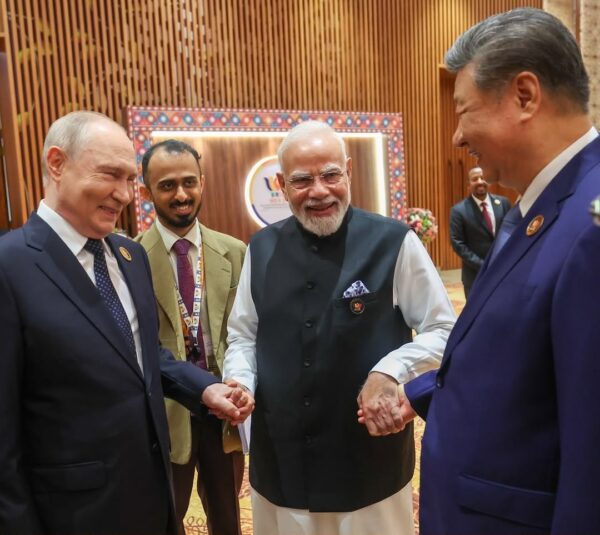
The 2026 BRICS Summit, marked by the presence of Chinese and Russian leaders, served for India not as an anti-Western bloc, but as a forum to secure its voice in a multipolar world. The declaration, notably omitting points of contention like the Middle East crisis and the Ukraine war, highlighted India's strategic multi-alignment.
The 2026 BRICS Summit in New Delhi garnered significant global attention with the presence of Chinese President Xi Jinping and Russian President Vladimir Putin. However, from the Indian government's perspective, the gathering was not merely a convergence of an anti-Western bloc, but rather one of several "forums" India utilizes to secure its voice in the unfolding multipolar world order. India, with its population of over 1.4 billion, cannot afford to simply align with a single camp amidst current geopolitical uncertainties. Instead, it pursues a strategy of "multi-alignment," engaging with different power centers while ensuring that no single relationship or grouping dictates all its strategic and economic choices. This is evident in India's simultaneous pursuit of a free trade agreement with the European Union, a tariff truce with the US under the Trump administration, and its current role as BRICS chair. The BRICS New Delhi Declaration, while addressing numerous points, notably omits specific references to issues like the closure of the Strait of Hormuz, Iran, Ukraine, or the US dollar. This reflects India's effort to navigate differing perspectives among member states – particularly between nations like Iran and Russia, and Saudi Arabia and the UAE, as well as its complex relationship with the US – by focusing on areas of common ground and avoiding contentious topics. Discussions on a BRICS currency and further expansion also appear to have been sidelined for now. Furthermore, the visit of President Xi Jinping, his first to India in seven years, drew attention amid the ongoing strained relations with China since the 2020 border clashes, which India views as an existential national security challenge. Despite the high-level engagement, approximately 50,000 troops from both sides remain in a standoff along their disputed border. India's stance is to treat the relationship with China as one of "permanent rivalry," managing competition through dialogue. India's message is clear: engagement does not equate to alignment, and managing rivalry is distinct from ending it.
Original source
The Diplomat Indonesia