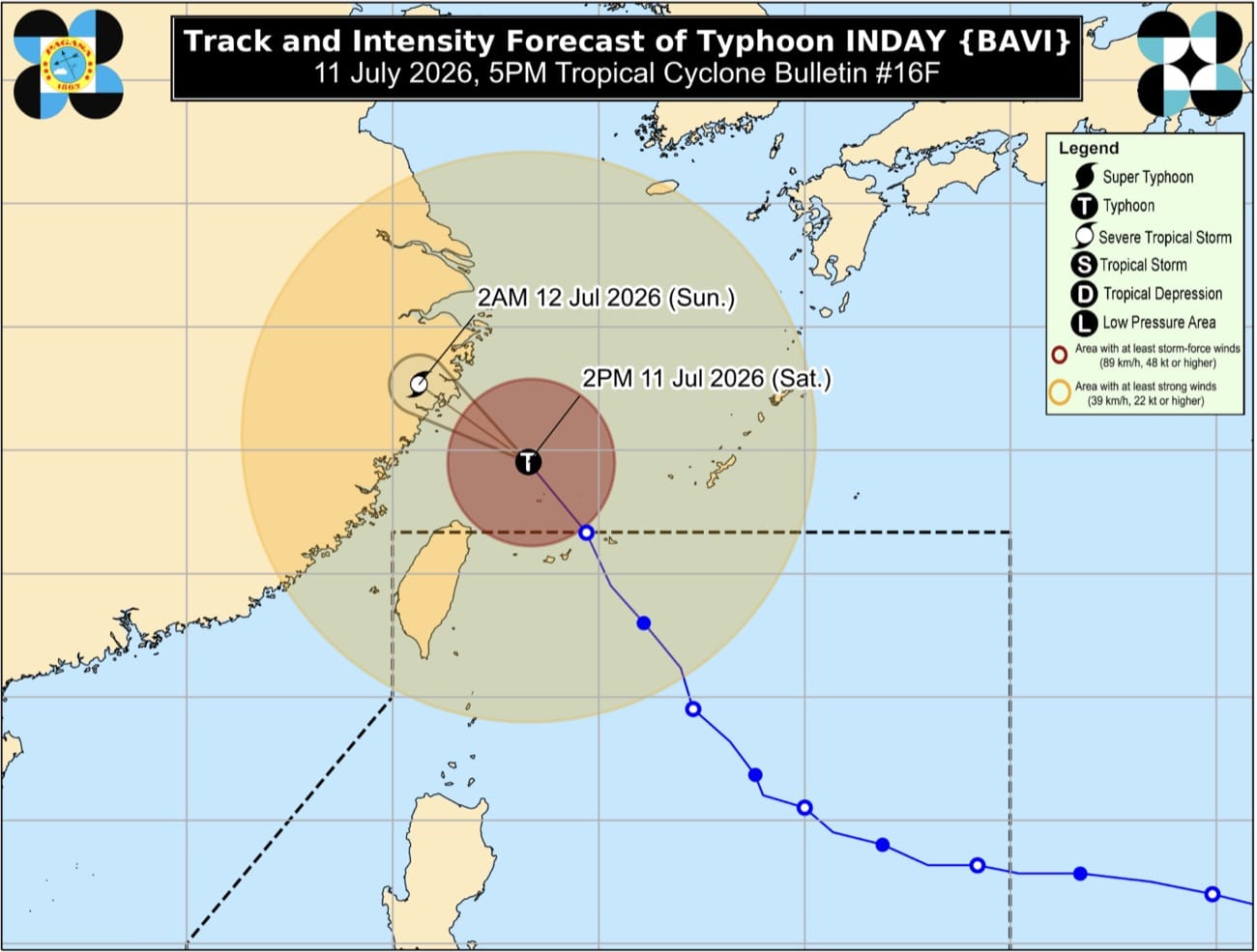
Habagat to drench PH as typhoon exits – Pagasa
Despite Typhoon Inday's exit from the Philippine area, the southwest monsoon (habagat) is expected to continue bringing heavy rains to various parts of the country, particularly western Luzon and western Mindoro. The weather bureau (Pagasa) forecasts rainfall up to 200 millimeters in some areas, urging caution.
This article requires PRO
This article is outside the free access window or is a special report. PRO unlocks it and the full archive.
Related articles
- Fair Weather Dominates Philippines, Isolated Showers Expected This Weekend
The Philippine Atmospheric, Geophysical and Astronomical Services Administration (Pagasa) forecasts generally fair weather across most of the country this weekend, with isolated thunderstorms expected in parts of Luzon. A tropical depression outside the Philippine area of responsibility has a low chance of entering.
- Pagasa: Fair Weather Dominates, Isolated Rains Expected; Southwest Monsoon to Intensify Over Weekend
The Philippine Atmospheric, Geophysical and Astronomical Services Administration (Pagasa) forecasts generally fair weather with isolated rains across the country on Thursday. However, the southwest monsoon is expected to strengthen over the weekend, affecting western parts of Northern and Central Luzon, prompting a call for vigilance.
- Southwest Monsoon to Affect Northern Luzon; Rain Showers Possible Nationwide
The Philippine Atmospheric, Geophysical, and Astronomical Services Administration (Pagasa) announced that the southwest monsoon (habagat) will affect extreme Northern Luzon for the next 24 hours, bringing isolated rain showers and thunderstorms. Localized thunderstorms are also possible nationwide.
- Pagasa: Habagat Weakens, Localized Thunderstorms to Affect PH
The Philippine Atmospheric, Geophysical and Astronomical Services Administration (Pagasa) announced that the southwest monsoon (habagat) has weakened, now affecting only western Northern Luzon. It is expected to further weaken due to a low-pressure area near Hong Kong. However, localized thunderstorms may continue to impact the entire country.