General articles are free for 24 hours after publish.
Philippines posts highest PISA scores yet in reading, math, science
The Philippines achieved its highest-ever mean scores in reading, mathematics, and science in the 2025 Programme for International Student Assessment (PISA). The nation was recognized as the fastest-improving country in reading performance globally.
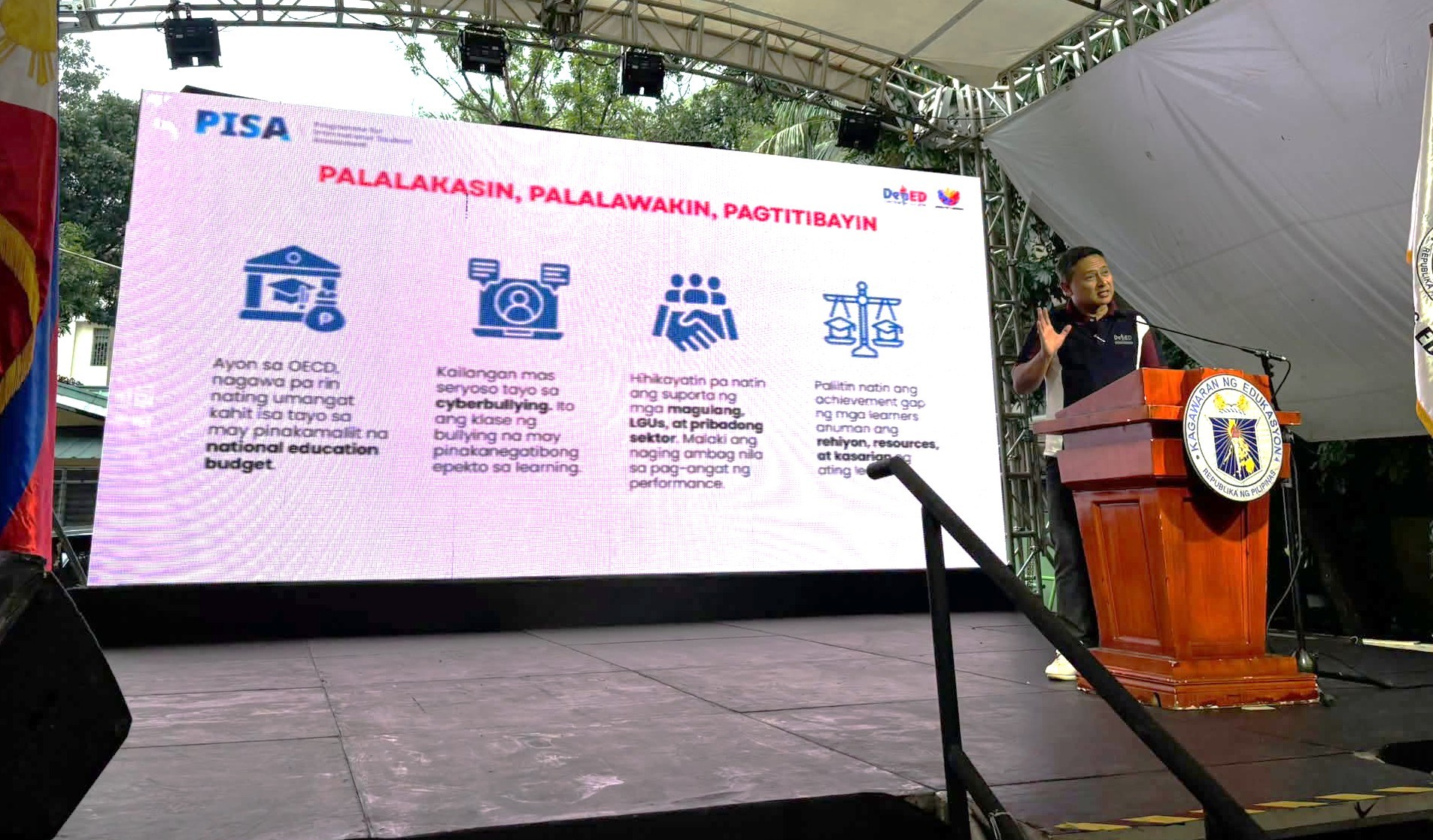
The Philippines has achieved its highest-ever mean scores in reading, mathematics, and science in the 2025 Programme for International Student Assessment (PISA), the Department of Education (DepEd) announced Tuesday. According to DepEd, the country recorded mean scores of 373 in science, 371 in mathematics, and 367 in reading—up 17 points, 16 points, and 20 points, respectively, from its 2022 results. The results were presented by Angara during the national launch of the PISA 2025 results at Caloocan City Science High School. The latest assessment also showed an increase in the share of Filipino learners who reached Level 2 or higher, the baseline proficiency level measured by PISA. In science, the proportion rose from 23% to 32%; in mathematics, from 16% to 21%; and in reading, from 24% to 31%. Based on mean scores, the Philippines ranked above 14 participating countries in science, 16 in mathematics, and 18 in reading, DepEd said. “This is a significant achievement for our learners and for the entire Philippine education system. But more than the numbers, we are seeing evidence that our learners are capable of making real and meaningful progress,” Angara said. He said the results should encourage the country to build on the gains while continuing to focus on learners who remain behind. “We should be proud of how far our learners and teachers have come, but we should be even more determined about how much farther we can go.” PH 'fastest-improving' in reading The Organisation for Economic Co-operation and Development (OECD)’s 10-year trend analysis identified the Philippines as the fastest-improving country in reading performance, according to DepEd. The OECD also identified the Philippines among the countries showing notable improvement in mathematics. In science, the Philippines recorded a positive long-term trend even as science performance declined globally. OECD Director for Education and Skills Andreas Schleicher congratulated Filipino teachers and school leaders on the results. “My warmest congratulations to the teachers and school leaders of the Philippines because what you have achieved in this latest round of OECD’s PISA assessment is not just good news for the Philippines, it’s a story that deserves to be noticed far beyond your borders,” he said. Angara: Gains must be sustained Angara said the improvement reflected the collective work of teachers, school leaders, parents, local governments, and other education partners. The PISA presentation also highlighted the roles of school readiness, parents, local government units, and the private sector in shaping learners’ performance. Despite the improved results, DepEd said the findings also pointed to areas that still need work, particularly equity and sustained efforts to improve learning outcomes and support teachers and schools. The department said it would also continue working with education partners on the responsible use of digital technology and addressing challenges such as cyberbullying and its effects on learning. Angara said the latest PISA results should serve as a starting point for a more ambitious effort to improve learning outcomes for every Filipino learner.—MCG, GMA News
Original source
GMA News Philippines