General articles are free for 24 hours after publish.
Micronesian Forum Strengthens Regional Cooperation Amidst Great Power Rivalry
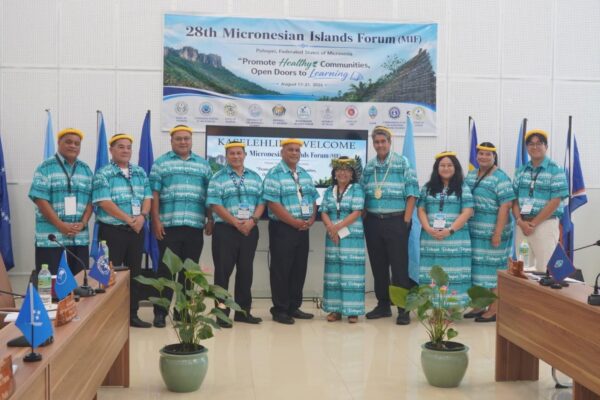
Micronesian nations are accelerating efforts to strengthen regional cooperation and identity at the 28th Micronesian Islands Forum (MIF) in Pohnpei, amidst intensifying great power competition. Key discussions focused on sustainable funding and establishing a permanent secretariat.
In the Micronesian subregion of the Pacific, governments are accelerating efforts to strengthen regional cooperation and their unique identity. The 28th Micronesian Islands Forum (MIF) was held in Pohnpei, Federated States of Micronesia (FSM), from August 17 to 21, where delegates discussed regional issues and areas for strategic collaboration under the theme “Promote Healthy Communities, Open Doors to Learning.” The forum convened weeks before the broader Pacific Islands Forum (PIF) Leaders Meeting, scheduled for August 30 to September 4 in Palau. The venue, the State of Pohnpei Administrative Building and Governor’s Office, was built by China in 2007 and renovated by the Chinese government, symbolizing the FSM's diplomatic relations with Beijing since 1989. FSM is the only Freely Associated State with the U.S. in Micronesia that maintains such relations. China and the United States are not the only development partners competing in Pohnpei. Japan is also demonstrating its presence through infrastructure development, investing approximately 4.6 billion yen ($30 million) in the expansion of the Pohnpei Port, the FSM’s primary maritime gateway. Australia is supporting the installation of solar mini-grids and battery storage systems for geographically disconnected island communities. These investments highlight the current situation where Micronesian nations skillfully balance relationships with multiple development partners, including the U.S., China, Japan, and Australia, building cooperative ties based on their domestic needs and priorities. Discussions at the MIF centered on the outcomes of its standing committees, including resolutions focused on U.S. deep-sea mining efforts in Micronesia, the development of competitive commercial fisheries in Guam and the Northern Mariana Islands, and the financial stability of the forum itself. The need for a permanent secretariat and sustainable funding was particularly emphasized. This is seen as a crucial step to reduce the burden on future host governments and enhance regional planning and implementation capabilities. Past events, such as the initiation of a formal process to withdraw from the PIF five years ago by five Micronesian countries, remain relevant. After reformation efforts, these nations rejoined the PIF, with the forum being held in the subregion for the first time since 2018. The MIF’s renewed focus on institutional sustainability is part of a broader effort to ensure that Micronesian governments have a regional mechanism to coordinate their interests. Concurrently, the subregion’s reintegration into the PIF underscores that a robust MIF serves to complement, rather than contradict, expansive Pacific multilateralism. The timing of this year’s MIF, held two weeks before the PIF Leaders Meeting, provided an opportunity for Micronesian governments to coordinate ahead of the larger regional gathering. The outcomes raised in Pohnpei can be carried into discussions and actionable lines of effort in Palau. The proximity of the two meetings is particularly relevant this year, as the PIF returns to Micronesia. For the MIF, member states must work diligently to make the regional forum more durable. The return of Micronesian states to the Pacific Islands Forum has restored their participation in the broader Pacific community, while the continued development of the Micronesian Islands Forum provides a concentrated platform for Micronesia’s concerns. How effectively the forum can maintain that balance will largely depend on whether its members and development partners can provide the necessary support.
Original source
The Diplomat Indonesia