General articles are free for 24 hours after publish.
Balisacan: PH economic growth hinges on leader selection, professional bureaucracy
Socioeconomic Planning Secretary Arsenio Balisacan emphasized the need to reform the country's electoral process and professionalize the bureaucracy to achieve faster economic growth and catch up with Southeast Asian neighbors, especially with the 2028 national elections approaching.
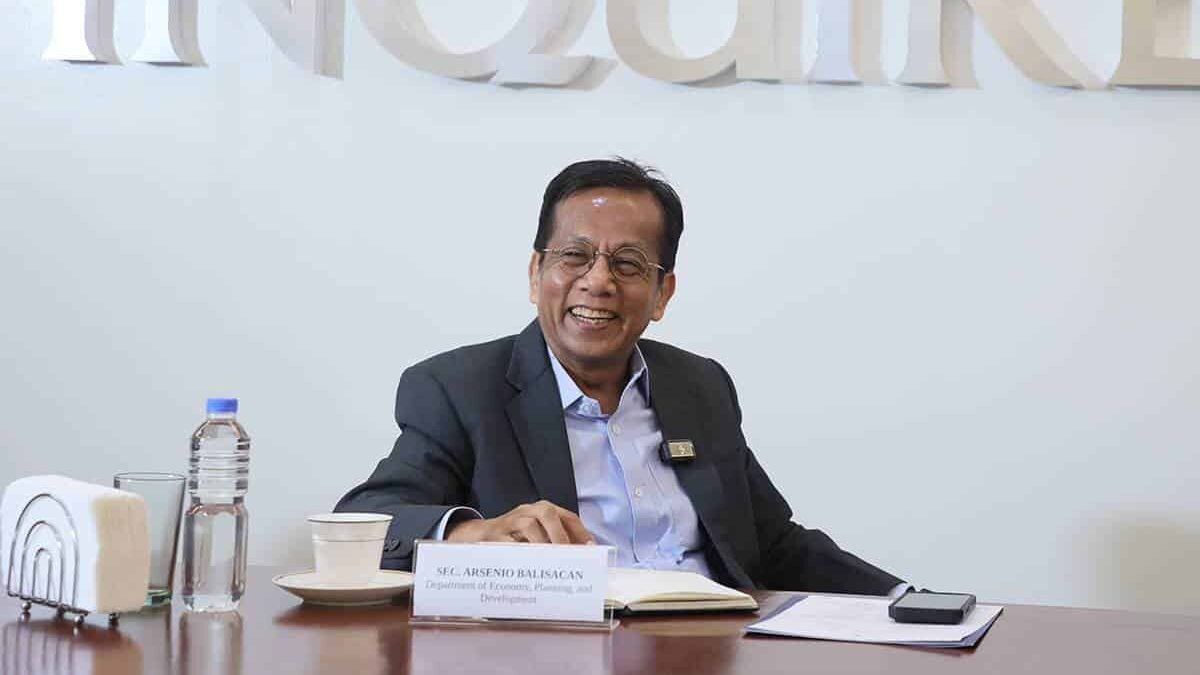
Socioeconomic Planning Secretary Arsenio Balisacan has called for a critical reevaluation of how leaders are chosen and for the professionalization of the bureaucracy to accelerate economic growth and catch up with Southeast Asian neighbors. Speaking at a roundtable discussion with Inquirer editors and reporters, Balisacan highlighted the need to reform the country’s electoral process, citing the current system's openness to virtually anyone running for president and the prevalence of political dynasties. "I am not a political scientist but it all boils down to how we select our leaders. We need to start with that. Reform our electoral processes. We need to push for institutional reforms," Balisacan stated. He noted that the Philippine economy has grown by an average of just over 5 percent in the past 15 years, and to catch up with regional peers, the country needs to achieve at least 6 percent growth annually. The chief economist also stressed the importance of a professional and stable bureaucracy capable of ensuring continuity in government programs, irrespective of political leadership changes. He illustrated this by questioning the effectiveness of assigning individuals from unrelated fields, such as a law firm, to lead critical sectors like railways, emphasizing the need for technical experts to ensure efficient governance. Balisacan further criticized the "family enterprise" nature of Philippine politics, where kin members often secure elected positions. He advocated for institutional reforms, including an anti-political dynasty law, and a strengthened education curriculum to foster patriotism among the youth. He believes that a strong sense of patriotism and love for country should guide leaders and elected officials, rather than personal or family interests. Comparing the Philippines to economies like Thailand and Singapore, Balisacan pointed out that in these countries, career officials and technical professionals remain in government even with leadership changes, preserving institutional knowledge and ensuring long-term program continuity. The call for better leaders and governance comes at a critical juncture, with the 2028 elections on the horizon amidst heightened political tensions, including the breakdown of the alliance between President Ferdinand Marcos Jr. and Vice President Sara Duterte. This is compounded by ongoing corruption scandals that have impacted the country's economic performance, with growth slowing and inflation remaining elevated. Despite these challenges, Balisacan expressed optimism, noting that Filipinos are increasingly aware of the country's standing relative to its neighbors, largely due to greater access to information via the internet. He believes this heightened public awareness and demand for accountability from leaders can positively influence the electoral process. — With a report from Luisa Cabato /das
Original source
Inquirer NewsInfo