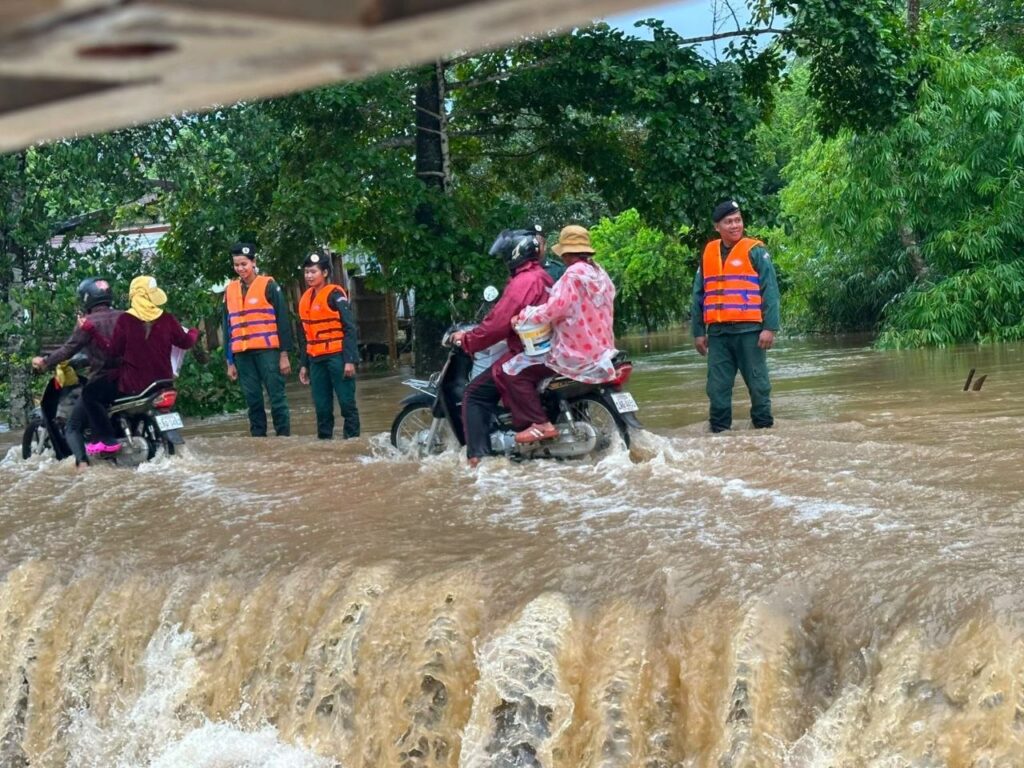
Heavy Flooding in Cambodia's Samlot District Amidst Torrential Rains, Authorities Urge High Alert
Environment
2026年7月12日
3
Kampuchea Thmey Local

Heavy Flooding in Cambodia's Samlot District Amidst Torrential Rains, Authorities Urge High Alert

AI サマリー

Torrential rains in Samlot District, western Cambodia, have caused significant river flooding, damaging crops and infrastructure. Authorities have issued a high alert for residents, with recently repaired bridges sustaining further damage.

Heavy and continuous rainfall in Samlot District, western Cambodia, has led to a significant rise in river levels and widespread flooding. The situation has worsened compared to previous periods, impacting crops and various infrastructure, particularly bridges that were recently repaired. On the morning of July 12, the Samlot District administration issued a new notification urging residents living along rivers and low-lying areas to exercise extreme caution. The persistent heavy rains have caused flash floods, submerging some homes, roads, bridges, and agricultural lands. According to Men Rim, the Chief of Police in Samlot District, this second wave of flooding has severely affected the O'Thum Bridge in Ta Toak Commune and the O'Kambor Bridge in Dun Trek Village, Ta Saing Commune. Water from spillways has flowed into low-lying areas, inundating the bridges. Notably, bridges that were recently renovated have once again been eroded by the water flow. The flooding has also spread to other communes. The district authorities' notification also warns residents in downstream areas, including Ratanamondol District, Banan District, Sangke District, Battambang City, and Ek Phnom District, to be highly vigilant. If the heavy rainfall continues, the Sangke River may face a sharp rise in water levels, which have not yet shown signs of receding. Fortunately, no human casualties have been reported so far. Information Source: Kampuchea Thmey Local

多角的分析

経済的影響

豪雨によるインフラ(特に橋)の被害は、物流コストの増加や地域経済活動の停滞を招く可能性がある。農作物への被害は、地域住民の収入源を直接的に脅かし、食料供給にも影響を与えかねない。復旧には追加の財政支出が必要となり、地方自治体の財政を圧迫する懸念がある。

投資家心理

インフラの脆弱性は、カンボジア国内の物流網全体のリスク要因となり得る。特に、被害が頻発する地域への投資や、それらの地域を通るサプライチェーンを持つ企業は、事業継続計画の見直しを迫られる可能性がある。短期的な被害だけでなく、気候変動による将来的なリスクも考慮する必要がある。

社会的影響

洪水は、サロート郡および下流域の住民の生活に直接的な影響を与える。家屋の浸水は避難を余儀なくさせ、衛生問題や感染症のリスクを高める。また、農作物の被害は食料不安につながり、特に脆弱な層への影響が大きい。インフラの損傷は、地域間の移動を困難にし、教育や医療へのアクセスを制限する可能性もある。

市民の声

サロート郡の住民は、度重なる洪水によるインフラ被害、特に最近修復されたばかりの橋が再び損壊したことに、インフラ整備の遅れや効果への疑問を感じている可能性がある。また、頻繁な災害は生活の安定を脅かし、将来への不安を増大させている。

背景・歴史的文脈

カンボジアでは、雨季(5月~10月)に頻繁に洪水が発生する。特に低地や河川沿いの地域では、インフラの未整備や排水能力の限界から、被害が深刻化しやすい。過去にも、2011年や2013年には全国規模で甚大な洪水被害が発生し、多数の死者と広範囲にわたるインフラ破壊を引き起こした。近年、政府はインフラ整備に力を入れているが、気候変動による異常気象の頻発化・激甚化が、これらの対策の効果を相殺する形で、被害を繰り返す要因となっている。

原文ソース

Kampuchea Thmey Local

原文を読む