DND Vows to Uphold 2016 Ruling, Bolstering Rights Defense in West Philippine Sea
The Philippines' Department of National Defense has pledged to continue enforcing the 2016 arbitral ruling and defend its territorial integrity, positioning itself as a "hub" for nations upholding international law and deepening partnerships.
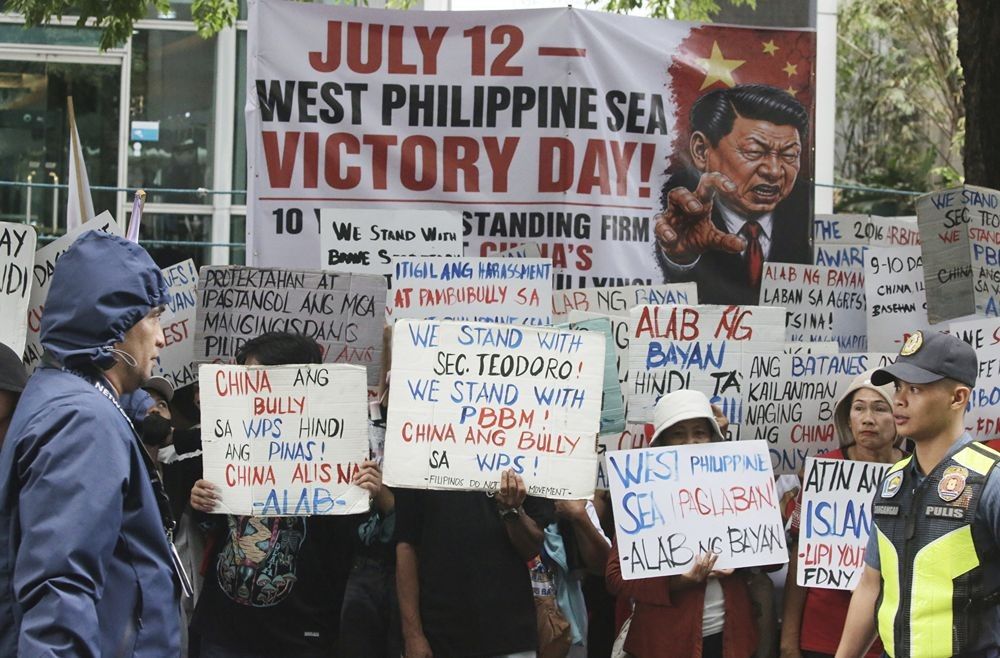
MANILA, Philippines — The Department of National Defense (DND) has vowed to continue enforcing the 2016 arbitral award and uphold the Philippines' territorial integrity. As the 10th anniversary of this landmark ruling approaches, the DND views it as an opportunity to strengthen public resolve and deepen partnerships with like-minded nations that uphold international law, particularly the United Nations Convention on the Law of the Sea (UNCLOS). Defense Secretary Gilberto Teodoro Jr. stated that the Philippines has become a "convergence hub" for countries that adhere to international law, as more nations rally behind Manila's maritime rights in the West Philippine Sea. "Given the importance of our location and the fundamental principles of international law we uphold, countries from all over the world have found common cause with us which we channel into purposive action," Teodoro said in a statement. He emphasized that these partnerships are based on "fundamental freedoms, transparency, and the rule of law," contrasting them with what he described as "sinister and cabalistic United Front Work and illegal, coercive, aggressive, and deceptive actions" by certain entities. Teodoro also highlighted the growing public awareness and ownership of the West Philippine Sea, citing a recent poll that found 86% of Filipinos support working with like-minded countries to defend it. "The Department of National Defense, together with the Armed Forces of the Philippines, will continue to be unstinting in the struggle to enforce this Award and to preserve our territorial integrity," he declared. He added that the DND aims not only to increase public knowledge of the West Philippine Sea but also to ensure that this knowledge strengthens national resolve and resilience. The DND remains focused on building a "strong, capable, responsive and deterrent defense system," with particular attention to capacitating the Armed Forces of the Philippines for the Comprehensive Archipelagic Defense Concept, while preserving gains in internal security operations. "Ultimately, we will resist and combat any attempt to deny our rights and entitlements in the West Philippine Sea, for these are not only ours to protect, but also those of future generations of Filipinos," Teodoro asserted. Last month, China imposed sanctions on Teodoro and his immediate family, barring them from entering mainland China, Hong Kong, and Macau over what Beijing called his "erroneous remarks." Chinese entities and individuals were also prohibited from engaging in business or exchanges with them. Teodoro's statement came as the Philippines and 13 other countries marked the 10th anniversary of the July 12, 2016 arbitral award by reaffirming that it remains "final, legally binding, and definitive between China and the Philippines" on the maritime entitlements and claims addressed by the tribunal. The joint statement was released by the governments of the Philippines, United States, Australia, Canada, Estonia, Germany, Italy, Japan, Latvia, Lithuania, New Zealand, Romania, Slovenia, and the United Kingdom. The countries reaffirmed their commitment to a free and open Indo-Pacific that is peaceful, stable, and rules-based. They also stated that there is no legal basis for China's expansive maritime claims in the South China Sea, including those based on "historic rights." Furthermore, they reiterated their opposition to destabilizing or unilateral actions, including by force or coercion, that threaten peace and stability in the region. They also opposed the use of coast guard, military, and maritime militia forces "to harass, obstruct, or intimidate lawful operations by other States at sea or in the air." The 2016 award was issued by an arbitral tribunal constituted under Annex VII of UNCLOS. It invalidated China's sweeping claims in the South China Sea that exceeded maritime entitlements under international law and affirmed the Philippines' sovereign rights and maritime entitlements within its exclusive economic zone. China has refused to recognize the award.
多角的分析
フィリピンの海洋権益の保護と国際法遵守の姿勢は、域内の経済的安定に寄与する。特に、南シナ海における航行の自由が確保されることは、国際貿易の円滑化に不可欠であり、フィリピン経済にとっても恩恵が大きい。しかし、中国との緊張が続けば、投資リスクとして認識され、直接的な経済的影響が生じる可能性もある。例えば、中国からの直接投資の減少や、中国市場へのアクセス制限などが考えられる。一方で、国際社会からの支援や連携強化は、新たな投資機会や経済協力の拡大につながる可能性がある。
フィリピンの強固な姿勢は、法の支配を重視する投資家にとって安心材料となる。特に、長期的な視点で東南アジア市場に投資する際には、地政学的な安定性が重要な判断基準となる。2016年の裁定を遵守し、国際法に基づいた行動を続けることは、投資環境の予測可能性を高める。しかし、中国との関係悪化が経済制裁や貿易摩擦に発展するリスクは、短期的な投資家にとっては懸念材料となりうる。投資判断においては、フィリピンの国内経済の強靭さと、国際社会との連携によるリスク分散能力を評価する必要がある。
西フィリピン海におけるフィリピンの権利主張は、国民の愛国心を刺激し、国家の一体感を醸成する側面がある。テオドロ国防相が言及した国民の86%が協力に賛成しているという世論調査結果は、この傾向を裏付けている。しかし、この問題は、国民生活に直接的な影響を与える可能性も秘めている。例えば、漁業従事者は、安全な操業海域の確保を強く求めており、彼らの生計は直接的に影響を受ける。また、ナショナリズムの高まりが、中国系住民への差別や摩擦を引き起こさないか、社会的な監視も必要となる。
フィリピン国民、特に沿岸地域に住む漁民や、海外で働くフィリピン人労働者(OFW)にとって、西フィリピン海における領有権問題は、自国の主権と将来世代の権利に関わる重大な問題である。2016年の仲裁判断の執行を求める国防省の姿勢は、国民の権利が守られることへの期待を高める。しかし、中国からの経済的圧力や、それに伴う生活必需品の価格変動、あるいは海外での就労機会への影響といった、より身近な経済的・社会的な懸念も同時に存在しており、国民は主権擁護と経済的安定の両立を求めている。
背景・歴史的文脈
2016年7月12日、常設仲裁裁判所は、南シナ海における中国の主張の大部分を否定し、フィリピンの排他的経済水域(EEZ)内での権利を認める裁定を下した。これは、フィリピンと中国の間で長年続いてきた南シナ海における領有権紛争における画期的な出来事だった。中国はこの裁定を認めず、その後も同海域での活動を活発化させている。フィリピンは、この裁定を国際法に基づいた権利の根拠として、その執行を求めてきた。近年、フィリピンは米国、日本、オーストラリアなど、国際法とルールに基づく秩序を支持する国々との安全保障協力を強化しており、これは中国への対抗姿勢を強める動きと見られている。
原文ソース
Philstar Nation