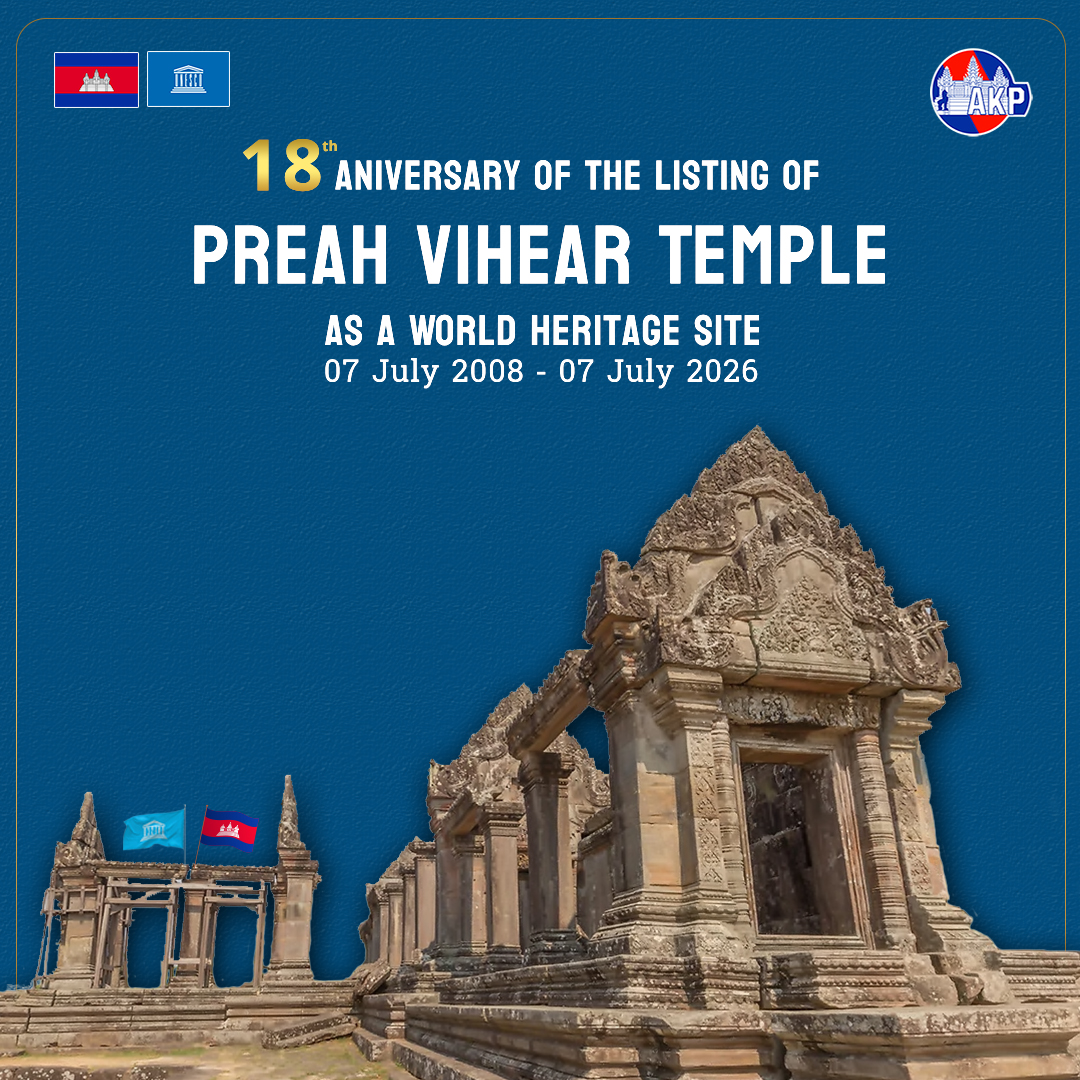
18th Anniversary of Preah Vihear Temple's World Heritage Listing Celebrated
Cambodia marks the 18th anniversary of Preah Vihear Temple's inscription as a UNESCO World Heritage Site. The occasion underscores the importance of preserving this invaluable cultural heritage and promoting sustainable tourism.
PHNOM PENH, July 07, 2026 -- Cambodia is celebrating the 18th anniversary of the listing of Preah Vihear Temple as a UNESCO World Heritage Site. This milestone serves as a crucial moment to reaffirm the nation's commitment to safeguarding its invaluable cultural heritage for future generations. Inscribed on the World Heritage List in 2008, Preah Vihear Temple is renowned for its distinct architectural style, differing from the Angkorian complex, and its harmonious integration with the breathtaking natural landscape. Since its designation, the Cambodian government has consistently invested in the preservation and restoration of the temple. The Ministry of Culture and Fine Arts, in particular, has spearheaded numerous initiatives aimed at preventing deterioration and preserving the site's integrity. Its status as a World Heritage Site has attracted significant international attention, contributing to an increase in tourist arrivals. This influx has generated economic benefits, including regional economic stimulation and job creation. However, these developments also present challenges, such as managing growing visitor numbers, mitigating the impact on the ancient structures, and ensuring the equitable distribution of economic benefits to local communities. To strike a balance between heritage conservation and tourism development, the Cambodian government is actively collaborating with international organizations and experts to foster a sustainable tourism model. The case of Preah Vihear Temple exemplifies the contemporary challenges Cambodia faces in navigating development alongside the crucial imperative of cultural heritage protection.
多角的分析
プレア・ビヒア寺院の世界遺産登録は、カンボジア経済にとって重要な観光資源となっている。登録以降、国内外からの観光客が増加し、地域経済の活性化に貢献してきた。しかし、増加する観光客に対応するためのインフラ整備や、環境負荷の軽減、そして観光収入の地域住民への公平な分配が今後の課題となる。持続可能な観光モデルの確立は、経済的恩恵を最大化しつつ、文化遺産を長期的に保護するために不可欠である。
プレア・ビヒア寺院周辺への投資は、観光インフラ(ホテル、レストラン、交通網)の整備に集中する傾向にある。世界遺産としてのブランド力は、投資リスクを低減させ、安定した収益を見込める可能性がある。しかし、政治的安定性や、文化遺産保護規制の厳格化といったリスク要因も考慮する必要がある。長期的な視点では、周辺地域への波及効果を見込んだ複合的な投資戦略が求められる。
プレア・ビヒア寺院の保護は、カンボジア国民のアイデンティティと誇りの源泉となっている。世界遺産登録は、国民の文化遺産に対する意識を高め、保全活動への参加を促す契機となった。一方で、観光客増加に伴う生活環境の変化や、文化財保護と地域開発との間で生じる摩擦は、地元住民の懸念事項となる可能性がある。住民参加型の保全・観光計画の策定が、社会的な調和を保つ鍵となる。
プレア・ビヒア寺院は、カンボジア国民にとって歴史的・精神的に重要な場所であり、その世界遺産登録18周年は、自国の文化遺産への誇りを再確認する機会です。観光客の増加は、地元経済に恩恵をもたらす一方で、インフラの整備や環境への配慮が追いついていない地域もあるかもしれません。政府には、文化遺産を守りながら、地元住民の生活も豊かになるような、バランスの取れた開発を進めてほしいと願っています。
背景・歴史的文脈
プレア・ビヒア寺院は、カンボジア北部のダンレック山脈に位置し、11世紀から12世紀にかけてクメール帝国によって建設されたヒンドゥー教寺院である。その独特な建築様式と、山頂からの壮大な眺望で知られる。2008年7月7日、ユネスコ世界遺産委員会により、その顕著な普遍的価値が認められ、世界遺産リストに登録された。登録の背景には、カンボジア政府による長年の保存活動と、国際社会の支援があった。しかし、寺院の所有権を巡るタイとの国境紛争が、世界遺産登録後も国際的な注目を集める要因となった時期もあった。
原文ソース
AKP Cambodia