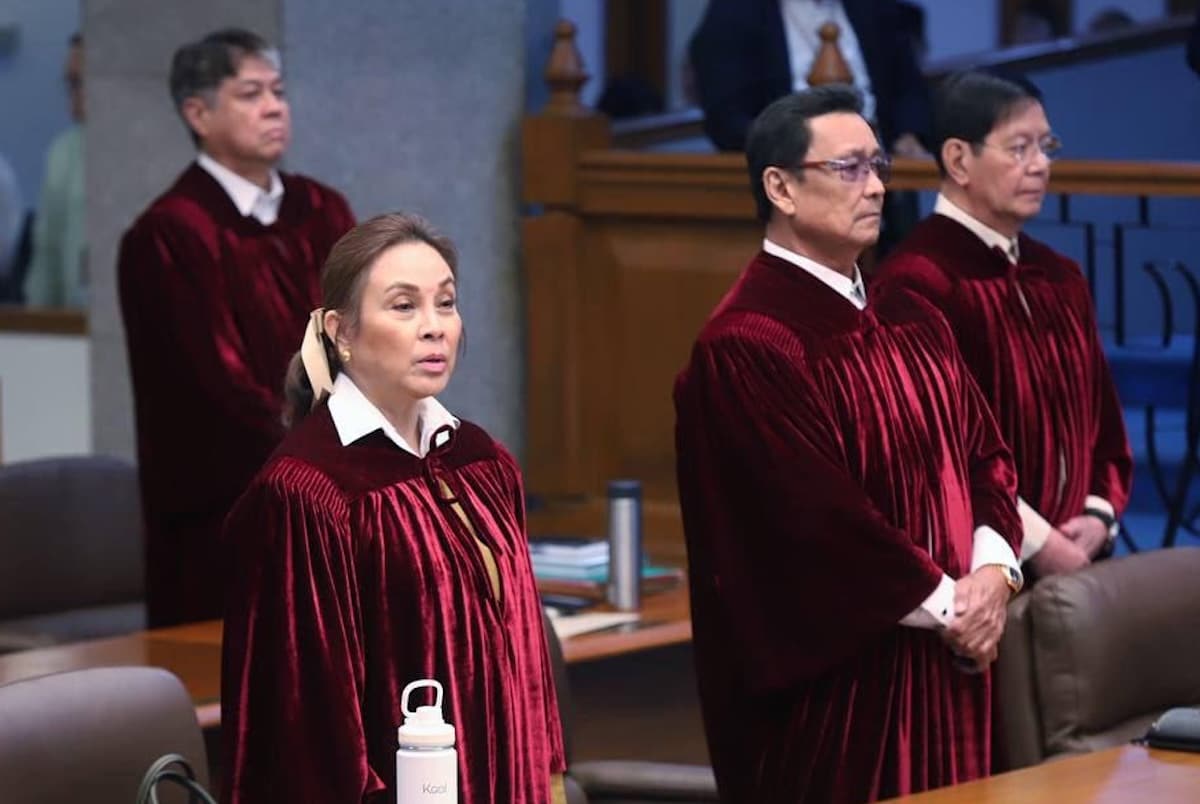
VP impeachment trial a test of conscience, duty – senator
Politics
2026年7月8日
3
Inquirer NewsInfo

VP impeachment trial a test of conscience, duty – senator

AI サマリー

Senator Loren Legarda described the impeachment trial of Vice President Sara Duterte not just as a legal exercise, but as a "test of judgment, conscience, and institutional duty." Drawing from her experience in three prior impeachment trials, she emphasized the need to rise above political factions and personal attacks, focusing solely on evidence and the Constitution.

MANILA, Philippines — Senator Loren Legarda stated that preparing for the impeachment trial of Vice President Sara Duterte is "not merely a legal exercise." She described it as a "test of judgment, conscience, and institutional duty." Legarda, a four-term lawmaker, has been part of three impeachment trials: against President Joseph Estrada from November 2000 to January 2001, Chief Justice Renato Corona from December 2011 to May 2012, and the upcoming trial of the Vice President in July 2025. She noted that impeachment trials "test the strength of our institutions and the resolve of those who serve." "The process must rise above political factions and personal attacks, and focus only on the evidence, the Constitution, and whether the alleged acts warrant conviction," she added. During the first day of the trial, Legarda manifested that the question of who presides over the impeachment court must be resolved with fidelity to the intent of the framers of the 1987 Constitution. She warned that any departure from the traditional arrangement could cast doubt on the validity and legitimacy of the trial, stressing that constitutional design should guide the Senate in exercising its duty. She also placed on record a pending challenge before the Supreme Court involving the June Senate proceedings and Senate Resolution No. 430, including questions on the authority of the body that adopted it. Legarda clarified that her position in the impeachment court is without prejudice to the final determination of the Supreme Court, affirming that she was not waiving any of her arguments in the case under judicial review. The impeachment court will hold sessions until July 22, before resuming on July 28.

多角的分析

経済的影響

副大統領の弾劾裁判は、フィリピン経済に直接的な影響を与える可能性は低いが、政治的不安定さが増すシナリオは、国内投資や外国直接投資(FDI)のセンチメントに悪影響を及ぼす可能性がある。特に、裁判の長期化や結果の不確実性は、市場のボラティリティを高める要因となりうる。過去の政治的混乱期には、フィリピンペソの減価や株式市場の低迷が見られた事例があり、同様の傾向が懸念される。

投資家心理

投資家にとって、弾劾裁判は政治リスクの増大を意味する。特に、司法制度の独立性や政治的安定性に対する懸念が高まる場合、ポートフォリオからの資金流出や新規投資の延期につながる可能性がある。フィリピンのBPO(ビジネス・プロセス・アウトソーシング)産業や、インフラ開発プロジェクトなど、長期的な視点で投資を行っている企業は、政治的動向を注視する必要がある。過去の事例では、大統領弾劾の動きが市場に一時的な動揺をもたらしたことがある。

社会的影響

弾劾裁判は、フィリピン社会における政治的分断をさらに深める可能性がある。レグアルダ議員が指摘するように、裁判が証拠と憲法に焦点を当てるべきであるという理想とは裏腹に、実際には政治的駆け引きや世論操作が展開されることも少なくない。これにより、国民の間で政治への不信感が高まり、社会的な緊張が増幅される恐れがある。特に、地方のコミュニティでは、中央の政治的混乱が生活への不安につながりやすい。

市民の声

市民の視点からは、弾劾裁判は政治への関心を高める一方で、そのプロセスや結果に対する不満や疲労感も生じさせる。特に、インフレや雇用といった日々の生活に直結する問題への対応が遅れるのではないかという懸念がある。レグアルダ議員が強調する「良心と義務」が、実際の政治的判断においてどれだけ反映されるのか、市民は注視している。マニラ首都圏の交通渋滞や物価高騰といった問題が、政治的混乱によってさらに悪化するのではないかという不安も存在する。

背景・歴史的文脈

フィリピンにおける弾劾制度は、1987年憲法によって導入され、大統領、副大統領、最高裁判所長官、憲法裁判官、監察官などの高官に対する責任追及の手段として位置づけられている。過去には、ジョセフ・エストラーダ大統領(2001年)やレナト・コロナ最高裁判所長官(2012年)が弾劾手続きに直面し、それぞれ辞任や罷免に至った。これらの事例は、フィリピンの政治において弾劾が強力な政治的ツールとなりうることを示している。今回のサラ・ドゥテルテ副大統領に対する弾劾裁判は、現政権下での政治的緊張と、権力闘争の一環として位置づけられる。

原文ソース

Inquirer NewsInfo

原文を読む