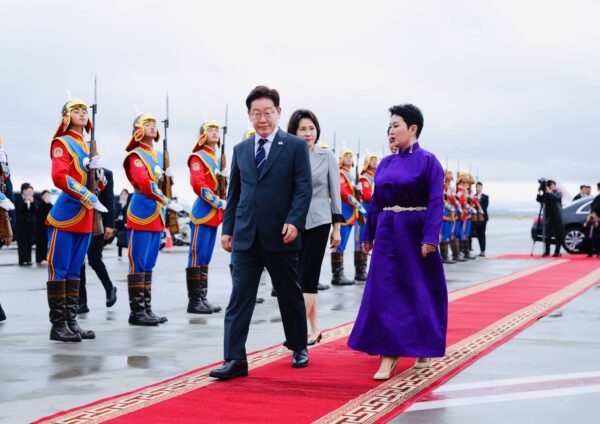
South Korea and Mongolia Enter a ‘Golden Era’ of Partnership
South Korean President Lee Jae-myung's state visit to Mongolia has ushered in a 'New Golden Era' for bilateral ties, marked by 21 cooperation agreements including a Comprehensive Economic Partnership Agreement (CEPA). The focus is on strengthening collaboration in critical minerals, health, education, and regional peace and security.
South Korean President Lee Jae-myung paid a state visit to Mongolia from July 9-11, marking a significant elevation in bilateral ties and heralding a 'New Golden Era' of partnership. The visit underscored a strategic deepening of cooperation, particularly in critical minerals, health, education, and the peace and security environment of Northeast Asia. Key outcomes included the signing of 21 cooperation agreements, notably a Comprehensive Economic Partnership Agreement (CEPA), which functions as a de facto free trade agreement. Under the CEPA, South Korea will eliminate or reduce tariffs on Mongolian minerals like copper and molybdenum, while Mongolia will lower tariffs on South Korean cosmetics, trucks, and construction equipment. This move aligns with South Korea's strategic objective to secure raw materials for its advanced manufacturing industries and Mongolia's efforts towards economic diversification through foreign investment. The economic dimension was highlighted by a Mongolia-South Korea Business Forum, attended by a large South Korean business delegation and approximately 300 representatives from 40 entities. The forum facilitated discussions on future opportunities in critical minerals, supply chains, logistics, and investments. Beyond economics, agreements were signed across sectors including healthcare, education, agriculture, and clean energy transition. South Korea pledged support for establishing Mongolia's second national cancer center and will deepen cooperation in scientific, technological, and digital development. Mutual recognition of driver's licenses was also agreed upon, reflecting the strong people-to-people exchanges. In terms of diplomacy and security, both nations share a vision for a peaceful Northeast Asia and seek regional cooperation. South Korea views Mongolia's role in maintaining dialogue channels with North Korea as crucial for mitigating inter-Korean tensions. To further solidify this 'Golden Era' partnership, future efforts will focus on increasing South Korean investment in Mongolia's infrastructure, clean energy, and development projects, moving beyond Mongolia's current role as a consumer hub. Mongolia's administration is committed to fostering a more business-friendly environment to attract continued investment from South Korea across diverse sectors.
多角的分析
韓国とモンゴルの包括的経済パートナーシップ協定(CEPA)締結は、両国間の貿易構造の再構築を意味する。韓国は高純度モリブデン粉末のような特定鉱物の輸入関税を撤廃することで、サプライチェーンの安定化とコスト削減を目指す。これは、韓国の半導体や自動車産業にとって、原材料の安定供給という点で極めて重要である。一方、モンゴルは韓国からの化粧品や建設機械への関税引き下げにより、国内消費市場の活性化と関連産業の育成を図る。しかし、モンゴル経済は依然として鉱業への依存度が高く、韓国からの投資が鉱業セクターに集中するリスクがある。経済多角化というモンゴルの目標達成には、インフラやクリーンエネルギーといった非鉱業分野への投資拡大が不可欠であり、CEPAの具体的な履行状況が鍵となる。
韓国・モンゴル間のCEPA締結は、両国企業にとって新たな投資機会をもたらす。特に、韓国のハイテク産業が求める重要鉱物の供給安定化は、関連企業の収益性向上に寄与する可能性が高い。モンゴル側では、韓国からの投資が鉱業以外のインフラ、クリーンエネルギー、デジタル開発といった成長分野にどれだけ広がるかが、投資家にとっての魅力度を左右する。GS25やCUのような韓国の小売・サービス業がモンゴルで成功している事例は、消費市場における韓国ブランドの浸透度を示唆しており、新たなサービス分野への投資ポテンシャルを示唆している。ただし、モンゴルの政治的安定性や規制緩和の進捗は、投資リスク評価において引き続き注視すべき点である。
韓国とモンゴルの関係強化は、両国民の生活に直接的な影響を与える可能性がある。例えば、韓国の化粧品や建設機械の輸入関税引き下げは、モンゴル国内の消費者や建設業界にとって恩恵となりうる。また、韓国によるモンゴルでの二つ目の国立がんセンター設立支援は、モンゴルの医療サービス向上に貢献すると期待される。運転免許証の相互承認は、両国間の人的交流をさらに促進し、旅行や居住の利便性を高めるだろう。一方で、韓国企業のモンゴル市場への進出拡大は、現地の雇用創興や消費パターンの変化をもたらす可能性があるが、文化的な摩擦や競争激化といった側面も考慮する必要がある。
韓国とモンゴル間の「新黄金時代」は、国民生活の様々な側面に影響を与える。韓国からの消費財、特に化粧品や建設機械の価格低下は、モンゴル国民の購買力を高める可能性がある。また、韓国が支援する国立がんセンターの設立は、モンゴル国民の医療アクセス改善に直接貢献するだろう。運転免許証の相互承認は、両国間の移動を容易にし、観光やビジネスでの往来を活発化させる。しかし、韓国企業のモンゴル市場へのさらなる進出は、国内の小売業やサービス業に競争をもたらし、一部の地元事業者に影響を与える可能性も否定できない。モンゴル政府が進める「Unlock Mongolia」のようなビジネス環境改善策が、国民生活の向上にどう結びつくかが注目される。
背景・歴史的文脈
韓国とモンゴルの関係は、1990年代初頭の国交樹立以来、着実に発展してきた。特に2010年代以降、韓国の「新南方政策」やモンゴルの「グラスルート外交」のもとで、経済協力や人的交流が活発化。韓国のチャイボル(財閥)はモンゴル市場でのプレゼンスを拡大し、GS25やCUといった小売業はモンゴルの都市部で広く展開している。今回の「新黄金時代」宣言は、こうした長年の関係構築の積み重ねと、変化する地域情勢(特に中国・ロシアの影響力増大)への対応という文脈で理解できる。韓国は資源確保と地域における影響力拡大、モンゴルは経済多角化と投資誘致をそれぞれ目指している。
原文ソース
The Diplomat Indonesia