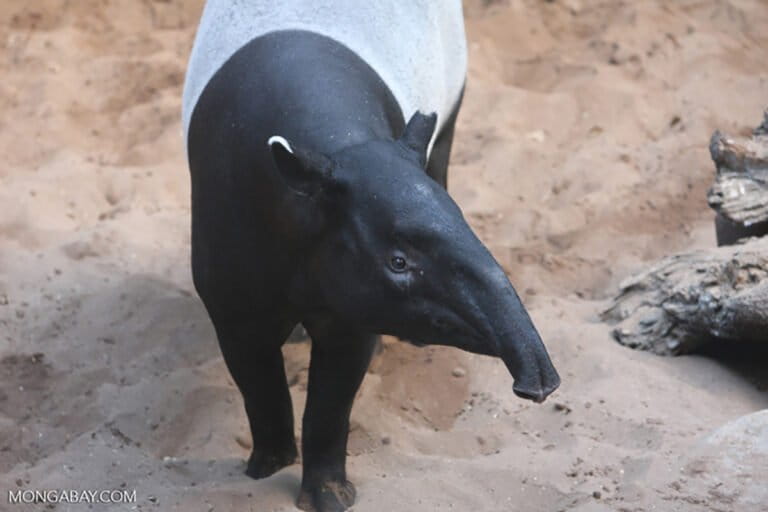
Protected Tapir Killed, Cooked as 'Rica-rica' on Sumatra Highway
A protected tapir appeared on a highway in Sumatra, only to be killed and consumed. While authorities arrested four individuals, the incident highlights concerns over poaching and habitat loss due to development.
A tragic incident has occurred in Mesuji, Sumatra, Indonesia, where a protected species, the Asian tapir (Tapirus indicus), was found on a highway and subsequently killed and consumed. The event highlights the severe challenges facing Indonesia's biodiversity conservation, including habitat destruction due to development, increased human-wildlife conflict, and poaching. The incident took place on the afternoon of July 2nd on the Trans-Sumatra Highway in Mesuji, Lampung. Video footage showed a bewildered tapir on the road. As it was nearing the time for tapirs, which are nocturnal, to forage, onlookers attempted to guide the animal off the road. However, hours later, when authorities arrived, the tapir was found dead with its head severed. Its meat was reportedly distributed among some residents and cooked as 'rica-rica,' a spicy dish. Authorities have arrested four out of six suspects, with two still at large. The Indonesian Biology Consortium (KOBI) strongly condemned the act, with its chairman, Budi Setiadi Daryono, expressing deep regret. "Tapirus indicus is the only species of tapir in Asia that is protected by law. The killing of a tapir is a violation of the law and a setback for Indonesia's biodiversity conservation efforts. This act cannot be justified for any reason," Budi stated. The Indonesian Ministry of Forestry also expressed profound concern, noting that the loss of a single tapir is a significant blow to the nation's biodiversity and ecosystem balance. Tapirs, often called 'gardeners of the forest' due to their unique snout and role in maintaining forest vegetation, are crucial for ecosystem health. Development, particularly oil palm plantations, has been expanding in the Mesuji area in recent years, leading to the fragmentation of wildlife habitats. The appearance of the tapir on the road and its tragic end are believed to be linked to this habitat loss and increased human-wildlife encounters. The possibility of poaching is also strong, and authorities are conducting a thorough investigation. This incident underscores the current state of wildlife protection in Indonesia and the difficulty of balancing development with conservation. The poaching and killing of protected species represent not only a legal violation but also the loss of Indonesia's rich natural heritage.
多角的分析
アブラヤシ農園などの開発は、地域経済に短期的な雇用と収益をもたらす一方で、土地利用の軋轢を生じさせ、野生生物の生息地を破壊する。これにより、生態系サービス(例えば、森林による水源涵養や土壌保全)が損なわれ、長期的には地域経済の持続可能性を脅かす可能性がある。保護種の殺害は、環境規制の不十分さや執行力の弱さを示唆しており、持続可能な開発モデルへの転換が経済的にも求められている。
この事件は、インドネシアにおける持続可能な投資環境に対する懸念を提起する。特に、天然資源への依存度が高い産業(アブラヤシ、パーム油など)への投資は、環境規制の遵守や地域社会との関係構築が不十分な場合、ESG(環境・社会・ガバナンス)リスクを高める。投資家は、サプライチェーンにおける環境破壊や人権問題のリスクを評価し、より責任ある投資判断を行う必要がある。
保護種のバクが殺害され食用にされた事件は、地域住民の野生動物に対する認識や、違法行為への関与という社会的な側面を浮き彫りにする。開発による生息地の縮小は、野生動物と住民との接触機会を増やし、保護意識の欠如や経済的困窮から密猟や食用目的での捕獲につながる可能性がある。地域社会への教育や、代替収入源の提供といった、より包括的なアプローチが求められる。
スマトラ横断道路で保護種のバクが殺害された事件は、ジャカルタ市民のような都市住民にとっては、遠い出来事のように感じられるかもしれない。しかし、これはインドネシア全土で進行している開発と自然保護の間の緊張関係を示している。都市部では、環境問題への関心が高まっているが、地方では、生活必需品や収入源の確保が優先される場合がある。この事件は、全国民が共有すべき生物多様性の損失であり、開発のあり方について、より広い議論が必要であることを示唆している。
背景・歴史的文脈
スマトラ島における森林破壊は、特に20世紀後半からアブラヤシ農園開発が急速に進んだことに起因する。これにより、トラ、ゾウ、サイ、オランウータンなど、多くの野生生物の生息地が縮小・分断され、人間との衝突が増加した。過去にも同様の事件は発生しており、保護種の密猟や違法取引も後を絶たない。政府は保護法を制定しているが、広大な国土と地方での執行力の限界、そして経済開発との両立という課題に直面している。
原文ソース
Mongabay Indonesia