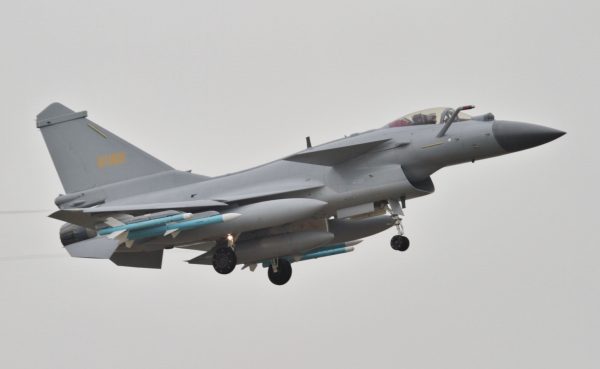
Indonesia's Chinese Fighter Gamble Will Test ASEAN Trust
Diplomacy
2026年7月30日
5
The Diplomat Indonesia
Relations
🇮🇩Indonesia🇨🇳China🇷🇺Russia🌐United Nations / ASEAN

General articles are free for 24 hours after publish.

Indonesia's Chinese Fighter Gamble Will Test ASEAN Trust

Share
AI Summary

Indonesia's plan to acquire Chinese J-10C fighter jets is creating ripples of distrust within ASEAN. While pursuing a multi-aligned foreign and defense policy, concerns are rising about the impact of equipment diversification on military cooperation and regional stability.

President Prabowo Subianto's administration in Indonesia has announced plans to acquire at least 42 Chinese-made J-10C fighter jets. Reports also indicate advanced talks with Pakistan for more than 40 JF-17s, jointly developed by Pakistan and China, signaling that Chinese-origin combat aircraft are a serious consideration in Indonesia's military modernization. This comes as Indonesia is already in the process of acquiring French Rafales and has agreed to procure Turkish KAAN fighters long-term, while a proposed F-15EX program with Boeing has stalled. President Prabowo's strategy appears to be a hyper-hedging approach, seeking platforms from diverse suppliers across Europe, the United States, Türkiye, China, and Pakistan to modernize an aging force without becoming dependent on any single provider. While politically astute, this strategy presents unique challenges for military operations. Indonesia has been actively balancing its relationships. It joined BRICS in 2025, deepened defense ties with Japan, and participated in U.S.-led exercises. Concurrently, Jakarta has expanded security engagement with Beijing, including resuming joint military training and being the first recipient of China's "2+2" dialogue format. Economically, Chinese capital underpins Indonesia's boom in nickel processing, EV supply chains, and battery manufacturing ambitions. However, this multi-alignment approach poses significant operational complexities. Integrating Chinese and Turkish fighters into an existing inventory of Russian, American, French, and Korean-origin equipment could lead to interoperability issues in maintenance, spare parts, and training. Secure data links and effective mission planning across disparate systems are critical concerns, especially during prolonged crises. Allies might also be hesitant to share sensitive information if Indonesia integrates Chinese aircraft into its air force. While diversifying suppliers can offer benefits like bargaining power and reduced risk from sanctions, an extreme level of diversification can lead to inefficiencies. Redundant infrastructure, separate maintenance facilities, and smaller spare parts pools could outweigh procurement cost savings, potentially reducing the number of mission-ready aircraft compared to a more integrated force. Furthermore, the regional implications of acquiring Chinese fighter jets are significant. Countries like the Philippines, Vietnam, and Malaysia, which have maritime disputes with China, may perceive this move differently. Such a purchase could influence their threat perceptions and potentially strain ASEAN's internal trust and cohesion, as each nation navigates its own complex relationship with Beijing.

0

Original source

The Diplomat Indonesia

原文を読む