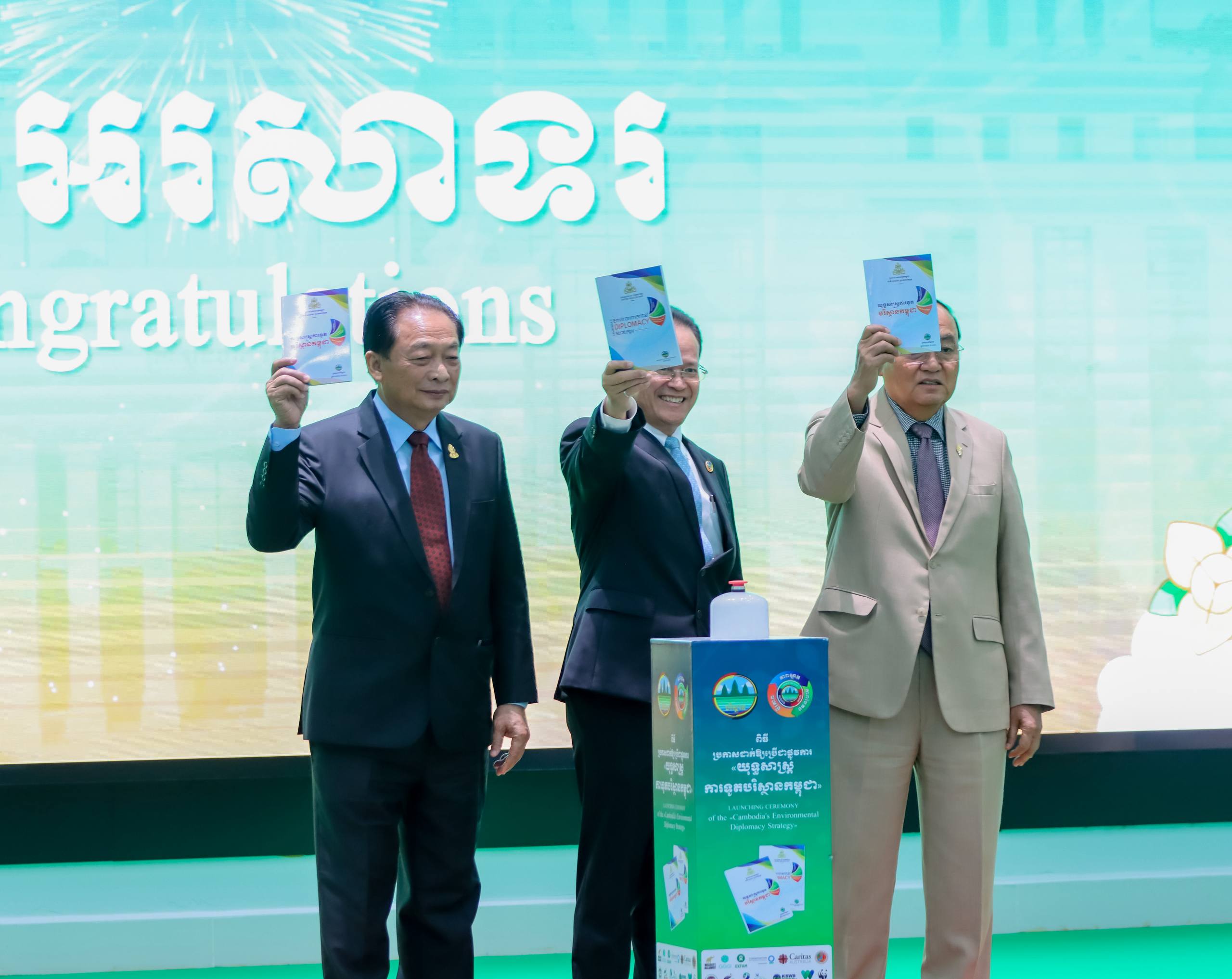
Cambodia Officially Launches Environmental Diplomacy Strategy 2026-2030
Environment
2026年7月7日
4
CPP Cambodia
Relations
🇰🇭Cambodia🇨🇳China🇯🇵Japan

Cambodia Officially Launches Environmental Diplomacy Strategy 2026-2030

AI サマリー

Cambodia has officially launched its Environmental Diplomacy Strategy (CEDS) for 2026-2030, under the auspices of the Minister of Environment. The strategy, built on three pillars—climate change, ecosystem conservation, and pollution control—aims to strengthen international cooperation in addressing environmental crises.

Cambodia has officially launched its "Cambodian Environmental Diplomacy Strategy (CEDS) 2026-2030," presided over by H.E. Dr. Eang Sophalleth, Minister of Environment. The launch ceremony for this significant national policy framework was attended by leaders and members of the Senate and National Assembly of Cambodia, representatives from various ministries and institutions, the UNDP Resident Representative, international organizations, and numerous national and international distinguished guests, held at the Ministry of Environment. H.E. Dr. Eang Sophalleth stated that the strategy's rollout coincides with a crucial juncture in human history, as the world grapples with complex environmental crises. He emphasized the growing need for closer international cooperation, strengthened trust, and more robust collective action among all nations. The Minister added that environmental diplomacy serves as a vital bridge connecting economic development with ecological preservation. The Cambodian Environmental Diplomacy Strategy (CEDS) is structured around three strategic pillars: 1. Addressing Climate Change through mitigation, adaptation, and governance. This pillar focuses on reducing greenhouse gas emissions via forest protection, transitioning to clean energy, promoting climate-smart agriculture, and attracting green investments. It also emphasizes building resilience through infrastructure development, community preparedness, strengthening institutional frameworks, fostering public-private partnerships, and mobilizing climate finance. 2. Promoting Ecosystem Conservation through the protection of biodiversity, forest restoration, and support for community livelihoods. This involves strengthening law enforcement in protected areas, collaborating with key stakeholders, and providing resources for conservation. It also aims for active forest restoration through nurseries and tree planting, and promoting sustainable community livelihoods through green economic goals and natural resource management. 3. Protecting the Environment through air, soil, and water. This pillar tackles pollution management by strengthening regulations and law enforcement, enhancing public awareness, and promoting the use of clean energy and clean transportation. It also focuses on improving wastewater treatment, managing agricultural soil erosion, increasing public education on water pollution, and enhancing waste management through strengthened collection and landfill systems, promoting recycling, and developing waste-to-energy solutions. Source: CPP Cambodia

多角的分析

経済的影響

カンボジアが発表した環境外交戦略は、経済発展と環境保全の両立を目指す姿勢を示している。特に、クリーンエネルギーへの移行、グリーン投資の誘致、気候スマート農業の推進は、持続可能な経済成長への道筋を示唆する。これにより、国際的な環境基準を満たすことで、欧米諸国や日本からの投資を呼び込みやすくなる可能性がある。一方で、これらの目標達成には大規模なインフラ投資と技術移転が必要であり、その資金調達と実行能力が今後の課題となる。特に、廃棄物処理や水質改善といった具体的な汚染対策は、経済活動の活発化に伴う環境負荷の増大を抑制するために不可欠であり、これが遅れれば、経済成長の持続可能性が損なわれるリスクも孕んでいる。

投資家心理

この環境外交戦略は、カンボジアにおけるグリーン投資の機会を拡大する可能性を秘めている。特に、再生可能エネルギー分野や、持続可能な農業、廃棄物管理、水処理といった環境技術への投資が促進されると予想される。国際社会からの支援や、環境基準を満たす企業へのインセンティブ付与が期待されるため、ESG投資(環境・社会・ガバナンス)に関心のある投資家にとって、カンボジアは魅力的な市場となり得る。しかし、戦略の実行には透明性と安定した法制度が不可欠であり、これらの整備状況が投資判断の重要な要素となる。現地の規制や許認可プロセス、そして汚職のリスクを慎重に評価する必要がある。

社会的影響

環境外交戦略は、国民の生活環境の向上に直接的な影響を与える可能性がある。特に、大気、土壌、水質汚染の管理強化は、人々の健康リスクを低減し、より安全な飲料水や食料供給に繋がる。また、森林再生や生物多様性の保全は、地域コミュニティの生計維持や、自然資源へのアクセスを安定させる上で重要である。しかし、これらの取り組みが具体的にどのような形で地域社会に還元され、環境破壊の恩恵を受けてきた産業やコミュニティの生活にどのような影響を与えるかが問われる。特に、開発と環境保全のバランスをどのように取るか、そしてその過程で生じる可能性のある社会的な摩擦をどう管理するかが、戦略の成否を左右する鍵となる。例えば、保護地域の設定による土地利用の制限や、新たな環境規制による既存産業への影響などが考えられる。

市民の声

カンボジア市民、特に地方や都市部の住民にとって、この環境外交戦略は生活の質に直接関わる重要な動きである。大気汚染や水質汚染の改善は、健康被害の軽減や安全な飲料水の確保に繋がるため、歓迎されるべき進展と言える。また、森林再生や生態系保全は、伝統的な生計手段を維持しているコミュニティや、自然の恵みに依存する人々の生活基盤を支える可能性がある。しかし、戦略の実行が、土地利用の制限や新たな規制の導入といった形で、一部の市民の経済活動や生活様式に影響を与える可能性も否定できない。そのため、政策決定プロセスへの市民参加を確保し、その懸念や意見を反映させることが、社会的な受容性を高める上で不可欠である。特に、環境保全の恩恵が一部の層に偏らず、広く国民に行き渡るような配慮が求められる。

背景・歴史的文脈

カンボジアは、過去数十年にわたり急速な経済成長を遂げる一方で、森林破壊、水質汚染、廃棄物問題など、深刻な環境課題に直面してきた。特に、経済発展を優先する中で、環境規制の整備や執行が遅れてきた側面がある。近年の気候変動の影響の顕在化は、環境問題への対策を喫緊の課題として浮上させた。2023年のCOP28では、カンボジアも気候変動対策へのコミットメントを表明しており、今回の環境外交戦略は、その国際的な公約を実行に移すための具体的な枠組みとなる。これは、中国主導のインフラ開発が進む中で、欧米や日本との関係を維持・強化し、環境分野での協力を通じて国際社会での発言力を高めようとする、カンボジアの外交戦略の一環とも考えられる。

原文ソース

CPP Cambodia

原文を読む