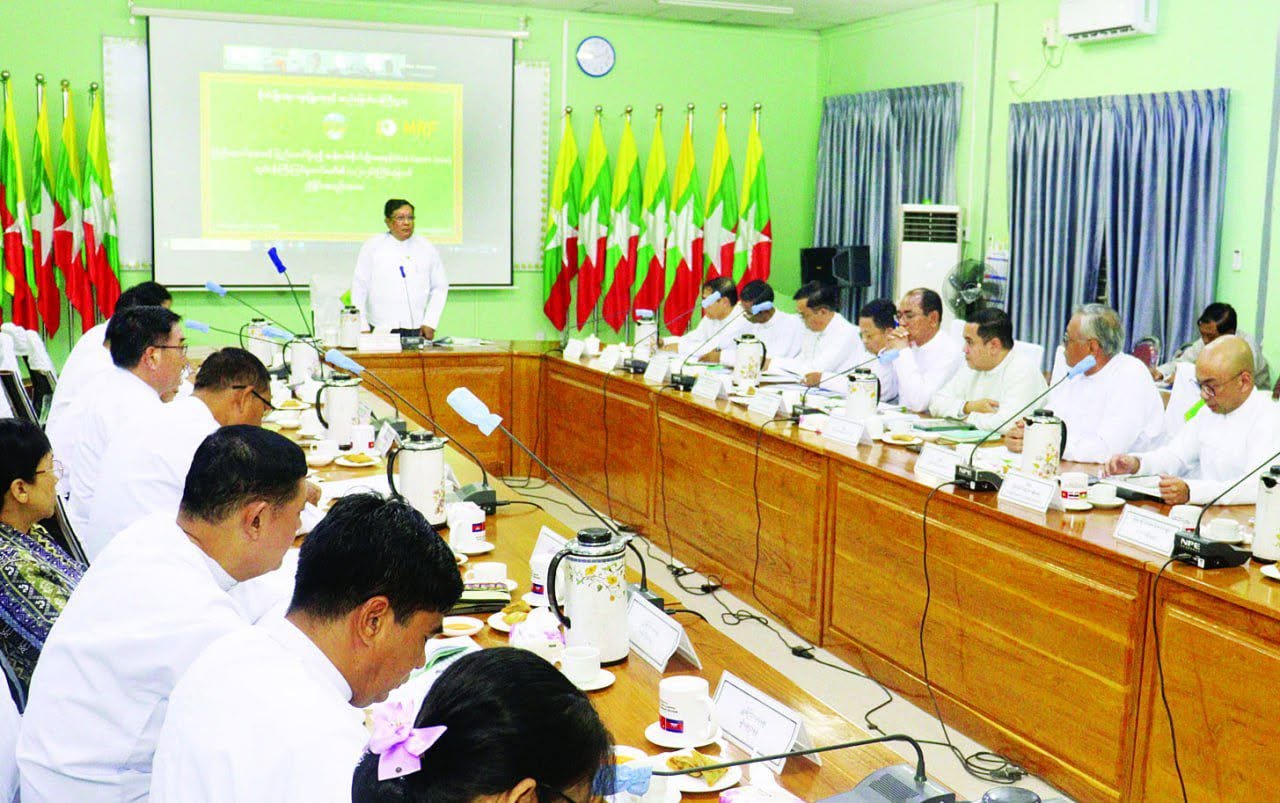
Rice Export Zone program to be implemented in 2026-2027 monsoon paddy season in Nay Pyi Taw, Bago, Yangon and Ayeyarwady regions
Economy
2026年7月5日
1
Eleven Media

Rice Export Zone program to be implemented in 2026-2027 monsoon paddy season in Nay Pyi Taw, Bago, Yangon and Ayeyarwady regions

AI サマリー

It has been learned from the coordination meeting (1/2026) of the Union-level Rice Export Zone Steering Committee, held online on July 4, that the Rice Export Zone program for the 2026-2027 monsoon paddy season will be i

It has been learned from the coordination meeting (1/2026) of the Union-level Rice Export Zone Steering Committee, held online on July 4, that the Rice Export Zone program for the 2026-2027 monsoon paddy season will be implemented in Nay Pyi Taw, Bago, Yangon, and Ayeyarwady regions. At the meeting, Committee Chairman Deputy Minister Dr. Ye Tint Htun delivered a speech, and committee members and attendees presented and discussed matters sector-wise. It is learned that the Union-level Rice Export Zone Steering Committee, jointly implemented by the Ministry of Agriculture, Livestock and Irrigation and the Myanmar Rice Federation, is carrying out its duties, including formulating policies, regulations, directives, and standard operating procedures from time to time, providing guidance on the plans and contracts drawn up for the Rice Export Zone, supervising and monitoring compliance with financial rules and regulations related to loans, and resolving disputes that arise between exporter companies and farmers. The Rice Export Zone program to be implemented in the 2026-2027 monsoon paddy season will be carried out in the Nay Pyi Taw Council area, Bago Region, Yangon Region, and Ayeyarwady Region, covering a total of over 340,000 acres. It has been learned that the Rice Export Zone program will be successfully implemented by providing support of K300,000 per acre from the Myanma Agricultural Development Bank, K200,000 per acre from the participating exporter companies, and K250,000 per acre from the State Economic Promotion Fund, to support farmers participating in the plan at a rate of K750,000 per acre.

多角的分析

経済的影響

銀行部門の協議は、決済、信用供与、企業活動に波及します。金融制度への信頼が弱い環境では、小さな制度変更でも企業の資金繰りや貿易実務に影響します。

投資家心理

投資家は金融規制の透明性と国際決済の安定性を重視します。協力関係の拡大は前向きですが、制裁・通貨・流動性リスクを同時に見なければなりません。

社会的影響

金融の話は専門的に見えますが、エーヤワディ管区の家計や小規模商店には、送金、給与、仕入れ、貯蓄の安心として届きます。農家の対応が生活上のリスクを和らげるかが社会的な焦点です。

市民の声

市民にとっては、預金、送金、給与受け取り、商売の決済が滞らないことが最も切実です。公式協議が利用者保護に結びつくかを見たいところです。

背景・歴史的文脈

このニュースは、ミャンマーの金融制度や銀行部門が対外関係・制度運用の中で調整を迫られている流れにあります。金融は市民の預金、企業決済、貿易の実務に直結するため、公式会談の中身が制度安定にどうつながるかが焦点です。

原文ソース

Eleven Media

原文を読む