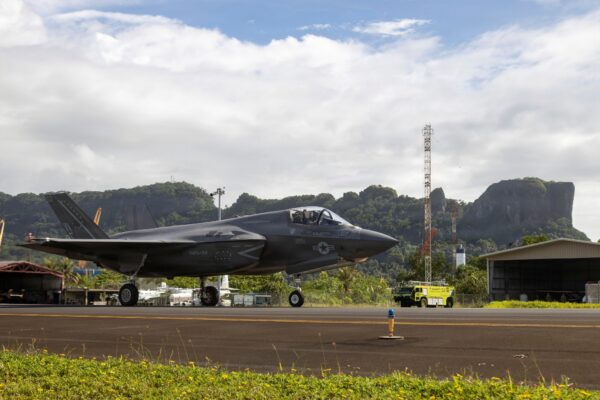
US Pacific Command Considers Relocating Billions in Planned Infrastructure Out of Micronesia
Diplomacy
2026年8月6日
5
The Diplomat Indonesia

General articles are free for 24 hours after publish.

US Pacific Command Considers Relocating Billions in Planned Infrastructure Out of Micronesia

Share
AI Summary

The U.S. Pacific Command is considering relocating a planned $2 billion infrastructure investment in Yap, Federated States of Micronesia, citing an unreasonable compensation demand from the state. This marks the second major issue in recent U.S. defense negotiations with a Compact of Free Association (COFA) partner.

The U.S. Pacific Command (PACOM) is exploring alternative locations for a planned $2 billion Department of Defense infrastructure investment in Yap, Federated States of Micronesia (FSM). This move comes after Admiral Samuel Paparo, PACOM commander, informed FSM President Wesley Simina that Yap's demand for a "$1.3 billion compensation package is unreasonable, unanchored to demonstrable costs, and divergent from the spirit of our partnership under the Compact of Free Association (COFA)." Admiral Paparo stated PACOM intends to "move forward by assessing alternative locations across the region to meet the needs of Pacific defense." Yap, a group of over a hundred islands, holds strategic importance as part of the Second Island Chain. It was a major American naval base after World War II. In the post-war era, Yap joined with neighboring island groups to form the FSM, which then signed the COFA with the United States. This agreement allows FSM citizens to live and work freely in the U.S. and grants the U.S. full authority and responsibility for security and defense matters in or relating to the FSM. However, this negotiation deadlock is the second major issue in recent U.S. defense negotiations with a COFA partner. Previously, U.S. defense access negotiations in neighboring Palau also fell apart. There are at least three interconnected reasons why such problems are likely to persist unless corrective measures are taken. Firstly, the "Lure of Money." The perception among locals that the U.S. government is a "bottomless piggy bank" is fueled by the comparatively lavish lifestyles of visiting U.S. officials and the high rates paid to consultants and contractors. Yap's demand of $1.3 billion translates to over $185,000 per resident for the island's approximately 7,000 inhabitants, an exorbitant sum. Secondly, the "China Factor." In the FSM, Chinese political warfare operations are a significant concern. A former FSM president has described how bribery and silence contribute to the success of Chinese political warfare. This suggests that when the U.S. negotiates at the national level in FSM, individuals influenced by China may be present. While the U.S. has taken action against individuals involved in corruption on behalf of China-based actors in Palau and the Marshall Islands, similar efforts have been lacking in the FSM. Thirdly, the "Failure to Understand the Operating Environment." The interplay of these factors creates a risk that negotiations between the U.S. and COFA partners could proceed in a manner detrimental to the national interests of both allies. Source: The Diplomat Indonesia

0

Original source

The Diplomat Indonesia

原文を読む