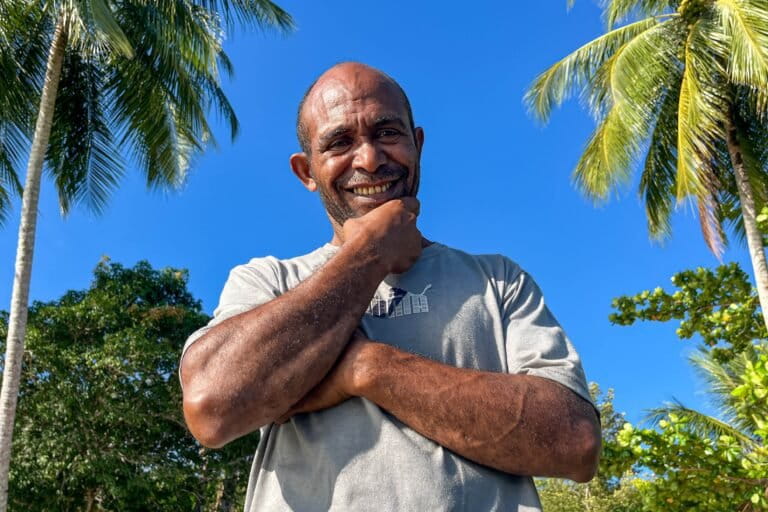
Papua Man Tends Giant Clams for 17 Years, Saving Them from Extinction
Diplomacy
2026年7月30日
4
Mongabay Indonesia

General articles are free for 24 hours after publish.

Papua Man Tends Giant Clams for 17 Years, Saving Them from Extinction

Share
AI Summary

A man in West Papua, Indonesia, has been protecting giant clams, known locally as 'kima,' from extinction for 17 years. He cultivates hundreds of these clams in a protected area he calls his 'clam garden,' contributing to the marine ecosystem.

Adolof Olof Wonemseba is more than just a fisherman. In between catching fish and tending his garden to support his family, this resident of Mena Village, Roon District, Teluk Wondama Regency, West Papua, is undertaking a monumental mission: saving giant clams from extinction. Known locally as 'kima' or 'bia,' these large-shelled mollusks play a crucial role in the marine ecosystem. They act as natural filters, helping maintain water clarity, supporting coral growth, and attracting fish. However, their slow reproduction rate, coupled with overfishing and habitat destruction, has led to a significant decline in their populations. As a native of Roon Island who lives by the sea, Adolof has directly witnessed the increasing difficulty in finding kima, with many being caught for consumption. Concerned that future generations might not know these creatures, he began his conservation efforts in 2008. Adolof brought several kima from Auri Island and placed them in the waters of Rouwno. He established a protected area he calls his "clam garden," a form of self-initiated conservation practice known locally as 'yadup.' Initially, the garden was only about 10x20 square meters. By 2024, after 17 years, its estimated area has expanded to approximately 100x100 square meters. Hundreds of kima from seven different species now inhabit this area. Among the initial group brought by Adolof were twelve giant clams and eight king clams. Kima that were originally about 15–20 centimeters in diameter now reach 70–80 centimeters. The number of giant clams has grown to over 20 individuals. Other species have reproduced more rapidly and spread into crevices among the coral rocks, making them difficult to count. Adolof urges residents not to catch or consume kima within this "clam garden" and its surrounding waters. His dedicated efforts serve as a community model for protecting these valuable marine creatures and the rich ecosystem they support.

0

Original source

Mongabay Indonesia

原文を読む