General articles are free for 24 hours after publish.
Blurry 2008 Photo Becomes Key to New Monkey Species Discovery in 2026
A blurry photograph taken in 2008 has become a crucial clue leading to the discovery of a new monkey species in the Democratic Republic of Congo, a significant find in a field where new large mammal discoveries are rare.
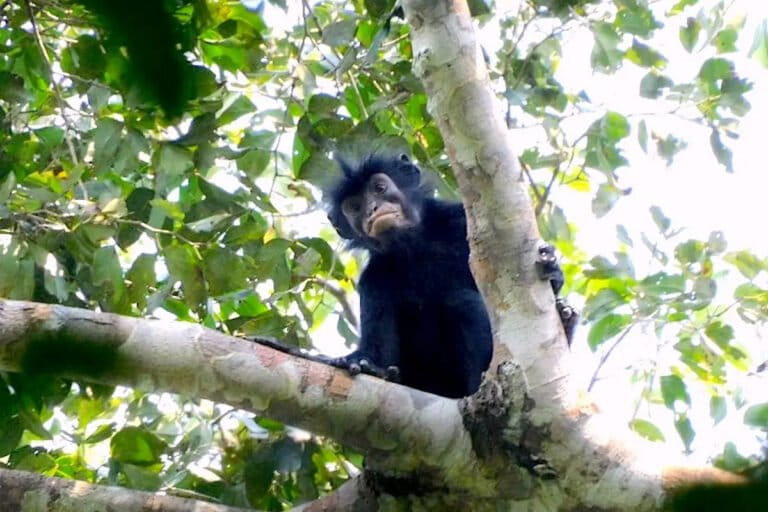
A blurry photograph taken in 2008 has become a crucial clue leading to the discovery of a new monkey species in the Democratic Republic of Congo (DRC). The discovery of new large mammal species is exceedingly rare in the scientific world; most large mammal groups, including primates, have been mapped and classified after more than a century of research. Therefore, the confirmation of a new monkey species in the DRC's rainforests is considered one of the most significant primate discoveries in recent decades. The story of this discovery dates back to 2008, when a photograph captured the figure of a monkey with dense black fur in the canopy of the DRC's dense forests. The photo only showed the monkey's back and a portion of its tail, as the animal had its back to the camera. However, this partial image was enough to spark the curiosity of Junior Amboko, a primatologist from Florida Atlantic University in Boca Raton, USA, and other researchers. They began to suspect the possibility of an undocumented species. This monkey belongs to the genus Colobus, a group of leaf-eating monkeys found in tropical forests across Africa, known for lacking thumbs on their hands. Before this research, the genus already included several species distributed across central and western Africa, including... Over the next few years, Amboko and his team returned to the densely canopied forest, an area that also serves as the habitat for seven other monkey species and bonobos. Between 2018 and 2022, the team recorded dozens of encounters with the mysterious monkey. They observed its distinctive characteristic of orange patches around its mouth and recorded its deep, unique roar. These observations confirmed that the 2008 photograph was not just a fluke but indicated the presence of an undocumented species. This discovery highlights the patience in scientific inquiry and how crucial even small, early evidence can be. Detailed scientific descriptions of this new monkey species are expected to be published soon, shedding new light on biodiversity research. Source: Mongabay Indonesia
Original source
Mongabay Indonesia