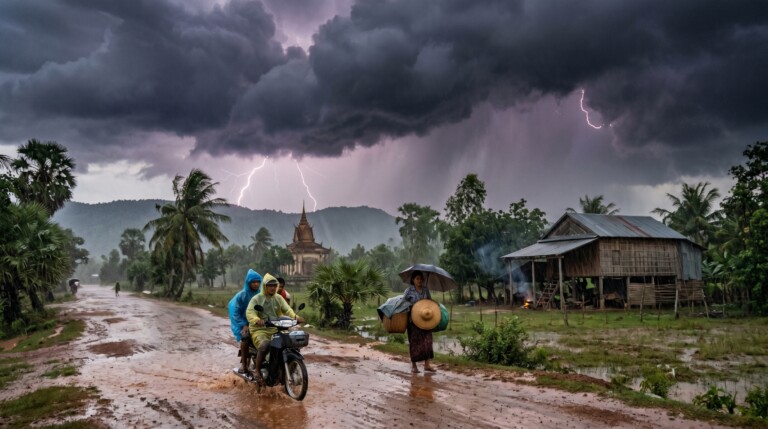
Cambodia Under Influence of Two Tropical Depressions: Caution Advised for Rain, Gusts, and Thunderstorms
Environment
2026年7月4日
5
Koh Santepheap Khmer

Cambodia Under Influence of Two Tropical Depressions: Caution Advised for Rain, Gusts, and Thunderstorms

AI サマリー

Cambodia is experiencing the influence of two tropical depressions, Bavi and Maysak, leading to widespread rainfall, strong winds, and thunderstorms. Coastal and highland areas are particularly advised to exercise caution, as per the Ministry of Water Resources and Meteorology.

Cambodia is currently under the influence of two weather systems: Tropical Depression Bavi (T2609) and Tropical Depression Maysak (T2610). The Ministry of Water Resources and Meteorology has issued a warning, indicating that these depressions are impacting the monsoon winds over the Bay of Bengal, the South China Sea, the Mekong River basin, the Gulf of Cambodia, and the Kingdom of Cambodia. However, Cambodia is not directly in the path of these storms. Tropical Depression Maysak, named by Cambodia, is expected to dissipate by July 6, 2026. Tropical Depression Bavi is forecast to continue its influence until July 12, 2026. According to the Ministry's bulletin for July 4, 2026, the lowlands will experience average temperatures ranging from a minimum of 25°C to a maximum of 36°C. Winds from the southwest and northwest will blow at an average speed of 3 meters per second. Areas including Banteay Meanchey, Battambang, Poipet, Siem Reap, Kampong Chhnang, Kampong Thom, Kampong Cham, Tboung Khmum, Svay Rieng, Prey Veng, Takeo, Kandal, and Phnom Penh may experience rain, gusty winds, and thunderstorms covering approximately 50% of their land area. In the highland regions, average temperatures will range from 24°C to 35°C, with winds from the southwest and west at an average speed of 3 meters per second. Provinces such as Kampong Thom, Pailin, Otdar Meanchey, Preah Vihear, Kratie, Stung Treng, Ratanakiri, Mondulkiri, and areas around the Dangrek and Cardamom mountains could face rain, gusty winds, and thunderstorms covering about 60% of their land area. Coastal areas will see average temperatures between 25°C and 35°C, with winds from the southwest and southeast blowing at an average speed of 2 meters per second. Provinces like Koh Kong, Preah Sihanouk, Kampot, Kep, and areas around Mount Bokor may experience rain accompanied by gusty winds and thunderstorms covering approximately 70% of their land area. Sea waves are expected to range from an average minimum of 0.50 meters to a maximum of 1.50 meters. Source: Koh Santepheap Khmer

多角的分析

経済的影響

熱帯低気圧の影響による降雨や強風は、農業セクターに直接的な打撃を与える可能性があります。特に稲作などの主要作物は、収穫時期や生育段階によっては、洪水や強風による被害を受けやすく、食料供給や農家の収入に影響を及ぼす懸念があります。また、インフラへの被害(道路の寸断、電力供給の停止など)が発生した場合、物流の停滞や復旧コストの増大につながり、経済活動全体に遅延をもたらす可能性があります。沿岸部での高波は、漁業や観光業にも一時的な影響を与えるでしょう。

投資家心理

投資家にとっては、短期的なインフラ被害や農業への影響による経済活動の停滞リスクを考慮する必要があります。特に、農業関連企業やインフラ事業への投資は、天候リスクを評価する上で重要な要素となります。一方で、復旧需要や、長期的には気候変動への適応策に関連するインフラ投資(例:治水対策、再生可能エネルギー)への関心が高まる可能性も考えられます。ただし、現時点では影響は局地的かつ一時的であると見られ、広範な市場への影響は限定的と推測されます。

社会的影響

今回の熱帯低気圧の影響は、特に脆弱なコミュニティに大きな影響を与える可能性があります。河川沿いや低地の居住者は洪水のリスクに晒され、住居や生活基盤を失う恐れがあります。また、強風による家屋の損壊や、停電による日常生活への支障も懸念されます。農村部では、農業への依存度が高いため、収穫への影響は直接的な収入減につながり、食料不安を引き起こす可能性があります。当局による迅速な情報提供と避難勧告、そして被災者への支援が重要となります。

市民の声

カンボジア市民、特に農村部や沿岸部に住む人々にとって、今回の気象情報は生活に直結するものです。農作物の被害は家計を圧迫し、インフラの損壊は移動や通信を困難にします。当局からの正確な情報に基づいた早期の避難や対策が、被害を最小限に抑える鍵となります。また、SNSなどを通じた情報共有や、地域コミュニティ内での助け合いが、困難な状況を乗り越える上で重要となるでしょう。

背景・歴史的文脈

カンボジアは熱帯モンスーン気候に属しており、雨季(5月から10月頃)にはしばしば豪雨や洪水に見舞われます。特に、近年の気候変動の影響により、極端な気象現象が増加傾向にあります。過去にも、熱帯低気圧やモンスーンの活発化が原因で、大規模な洪水が発生し、農業やインフラに甚大な被害をもたらした事例があります。2020年には、熱帯低気圧「モラ」がカンボジアに大きな影響を与え、広範囲で浸水被害が発生しました。今回の「バビ」と「メーイサック」は、これらの過去の気象パターンと、気候変動による影響の増幅という文脈で理解する必要があります。命名された熱帯低気圧は、その影響範囲や強さによっては、社会経済活動に無視できない影響を与える可能性があります。

原文ソース

Koh Santepheap Khmer

原文を読む