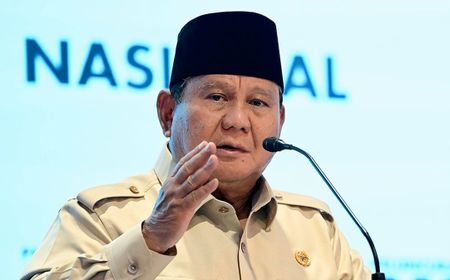
Prabowo Urges Masela LNG Project to Prioritize Mutual Benefit and Public Welfare
President Prabowo Subianto, speaking at the groundbreaking ceremony for the Masela LNG Project, emphasized the principle of "mutual benefit," calling for a balance between investor profits and improved public welfare. He strongly urged that the benefits of natural resources reach the Indonesian people.
President Prabowo Subianto has urged companies involved in the Masela LNG Project to operate on the principle of "mutual benefit," emphasizing that while investors must profit, the natural wealth of Indonesia must also demonstrably improve the lives of its people. Speaking at the groundbreaking ceremony for the project, which was held online from Jakarta, Prabowo stated, "Run this project as best as possible on the basis of mutual benefit. Investors must profit." This directive was aimed at the consortium involved, including Japan's INPEX, Malaysia's Petronas, and Indonesia's state-owned Pertamina. While acknowledging and respecting foreign partners who invest capital and cooperate openly, the President stressed that such partnerships should not overlook the interests of the local community. "We have a great responsibility to our people. There are still many people who live in hardship," he remarked, highlighting the imperative to uplift public welfare. Prabowo asserted that Indonesia is open to cooperation with all nations on fair terms, but firmly rejected any relationship that could harm national interests. "All parties must also understand that Indonesia is now an adult. Indonesian leaders are not stupid leaders, not naive leaders, not cowardly leaders," he declared, signaling a new era of assertive national leadership. He further refuted any notion that Indonesian hospitality should be mistaken for weakness or that Indonesian workers are lazy. The President pointed to the strenuous daily labor of fishermen, farmers, and various workers who toil from predawn hours until late at night. The Masela project, with an investment of US$20.9 billion, is projected to produce over 9 million tons of LNG, condensate, and other products annually. Prabowo called for this investment to support energy needs, downstream processing, industrialization, and public services, stating, "We need this energy to carry out the transformation of the nation." He concluded by emphasizing that the benefits for investors and the benefits for the people are not mutually exclusive but must be pursued concurrently in the project that the community has awaited for nearly three decades. Information Source: VOI English
多角的分析
マセラLNGプロジェクトは209億ドルという巨額の投資であり、インドネシアのエネルギー供給と工業化に大きく貢献する潜在力を持つ。プルワボ大統領の「国民への恩恵」という要求は、単なる理想論ではなく、プロジェクトから得られる収益の一部を国内のインフラ整備、雇用創興、さらには地域社会への還元といった形で具体化することを求めていると考えられる。これは、過去の資源開発プロジェクトでしばしば見られた、一部の富裕層や外国人投資家のみが恩恵を受け、地域経済や国民生活への波及効果が限定的であったという批判への対応であり、より包摂的な経済成長を目指す姿勢の表れである。
プルワボ大統領の「投資家は利益を上げるべきだ」という発言は、プロジェクトの経済的実行可能性と、投資家との良好な関係維持の重要性を認識していることを示している。しかし、「国民もその成果を感じるべき」という条件付きの利益追求は、投資家にとって新たなリスク要因となり得る。具体的には、プロジェクトの収益分配に関する追加的な交渉や、地域社会との関係構築におけるより大きな責任が求められる可能性がある。過去の類似プロジェクトでの社会的反発や、政府による介入事例を考慮すると、投資家は、単なる経済的リターンだけでなく、ESG(環境・社会・ガバナンス)の観点からの配慮を一層強化する必要があるだろう。
プルワボ大統領の国民生活向上への言及は、インドネシア社会における経済格差への強い懸念を反映している。マセラLNGプロジェクトのような大規模開発が、一部の地域や層に富を集中させるだけでなく、周辺地域住民の生活環境改善、雇用機会の創出、さらには教育や医療へのアクセス向上に具体的に貢献することが期待されている。特に、ジャカルタのような大都市圏から離れた地域では、インフラ整備の遅れや貧困問題が深刻な場合が多く、こうしたプロジェクトが地域社会の持続的な発展に資するかどうかが、国民のプロジェクトに対する受容度を左右する重要な要素となる。大統領は、国民の「成熟」を強調することで、自国の国益を主張する姿勢を示し、国際社会との関係においても、対等かつ公正なパートナーシップを求めている。
プルワボ大統領の国民生活向上への言及は、インドネシア国民、特に地方や貧困層が長年抱いてきた、天然資源からの恩恵が自分たちの生活に直接届かないという不満に応えるものだ。マセラLNGプロジェクトのような国家的な大規模開発が、単に輸出収益を増やすだけでなく、電力供給の安定化、地域経済の活性化、そして雇用創出を通じて、国民一人ひとりの生活水準向上に繋がることを期待している。大統領が「インドネシアの指導者は愚かでも、ナイーブでも、臆病でもない」と述べたことは、国民の権利と国益を断固として守るという強い意志の表れであり、国民は政府が国際社会や大企業との交渉において、より有利な条件を引き出し、国民全体の利益を最大化することを期待しているだろう。
背景・歴史的文脈
マセラLNGプロジェクトは、インドネシア東ヌサ・トゥンガラ州沖のガス田開発であり、その開発は長年にわたり遅延してきた。特に、2010年代初頭から本格化したが、開発計画の承認、地元コミュニティとの合意形成、そして技術的・経済的な課題により、プロジェクトの実行は困難を極めた。過去のインドネシアにおける資源開発プロジェクトでは、しばしば開発による利益が一部の富裕層や外国人投資家に偏り、地元コミュニティや国民全体への恩恵が限定的であるという批判があった。プルワボ大統領の今回の発言は、こうした過去の教訓を踏まえ、より包摂的で国民全体の利益に資する開発を目指す姿勢を示したものと考えられる。
原文ソース
VOI English