General articles are free for 24 hours after publish.
Lam Dong steps up efforts to retain UNESCO Global Geopark status
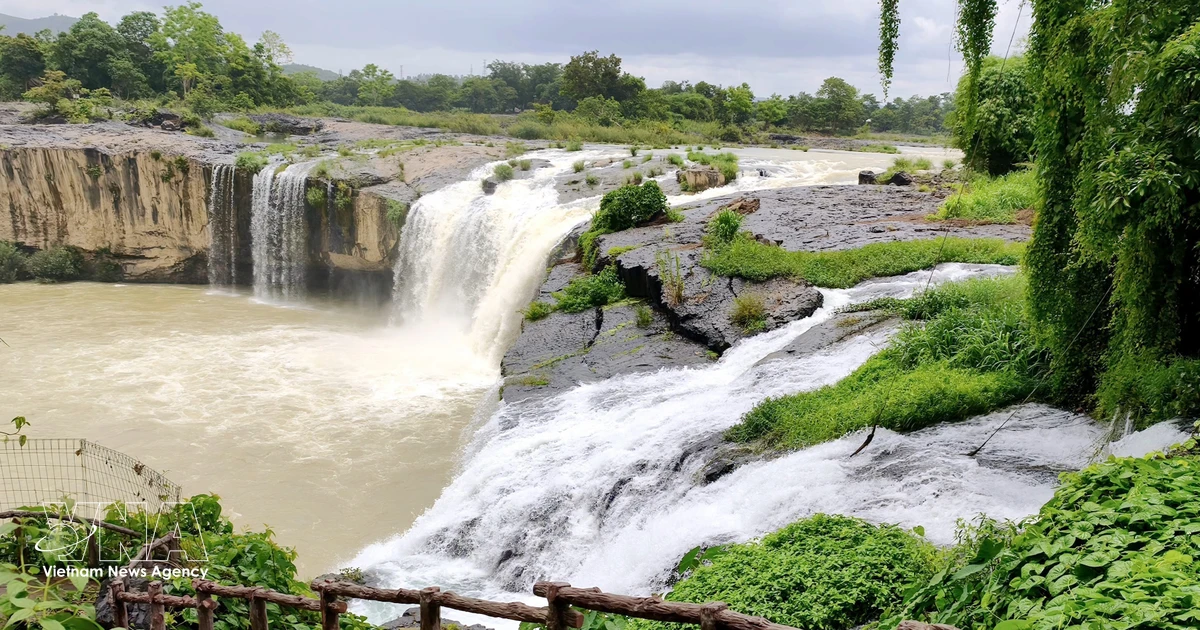
Lam Dong province is intensifying efforts to conserve and develop tourism at the Dak Nong UNESCO Global Geopark in the Central Highlands to maintain its status. Prioritizing heritage value protection, infrastructure development and community engagement are key focus areas.
Nestled in the heart of the Central Highlands, the Dak Nong UNESCO Global Geopark, now part of Lam Dong province, is often described as a vast open-air museum, where outstanding geological, natural and cultural values come together. Lam Dong province aims to retain its UNESCO Global Geopark status by strengthening efforts in both conservation and tourism development. Alongside conservation efforts, Lam Dong aims to tap the geopark's tourism potential through geological, ecological, and community-based tourism. The provincial Department of Culture, Sports and Tourism, in collaboration with the Vietnam UNESCO Global Geoparks Network and relevant agencies, surveyed 41 geological, cultural, and tourism sites across the geopark. This survey identified several issues requiring urgent attention to safeguard the site's outstanding values. Infrastructure and tourism development projects must ensure that heritage values, landscapes, and the natural environment are preserved. Vietnam views sustainable forest management as the fundamental, long-term solution to building self-regenerating forests that adapt to climate change while continuing to deliver essential ecosystem services to citizens. Furthermore, the Nui Chua – Phuoc Binh National Park Management Board in the south-central province of Khanh Hoa has taken a series of measures to develop the Nui Chua World Biosphere Reserve, while preserving its rich biodiversity, supporting local livelihoods, and promoting tourism potential. Park authorities believe continued cooperation with international cave experts will not only uncover more geological treasures but also enhance the site's appeal as a world-class destination for adventure tourism, scientific research, and nature conservation. Vietnam is also advancing the management of animals listed in Appendix II of the Convention on International Trade in Endangered Species of Wild Fauna and Flora (CITES). Recent efforts have focused on protecting and managing numerous wildlife species, including two species classified under Group IB of Vietnam's protected wildlife list: the Bengal slow loris and the Sunda pangolin. These animals are protected under Vietnamese law and their commercial exploitation or use is prohibited. Additionally, efforts to tackle plastic pollution in Vietnam have primarily focused on waste collection, recycling, and disposal. However, as sustainable development and green trade standards become increasingly important, specialists argue that a broader approach is needed, covering everything from product design and material selection to production, consumption, and recycling. These initiatives demonstrate Lam Dong province's commitment to retaining its UNESCO Global Geopark status, aiming for sustainable tourism and regional economic development while protecting its unique natural heritage. Source: VietnamPlus English
Original source
VietnamPlus English