Road Closures in Manila for Anti-Corruption Rally
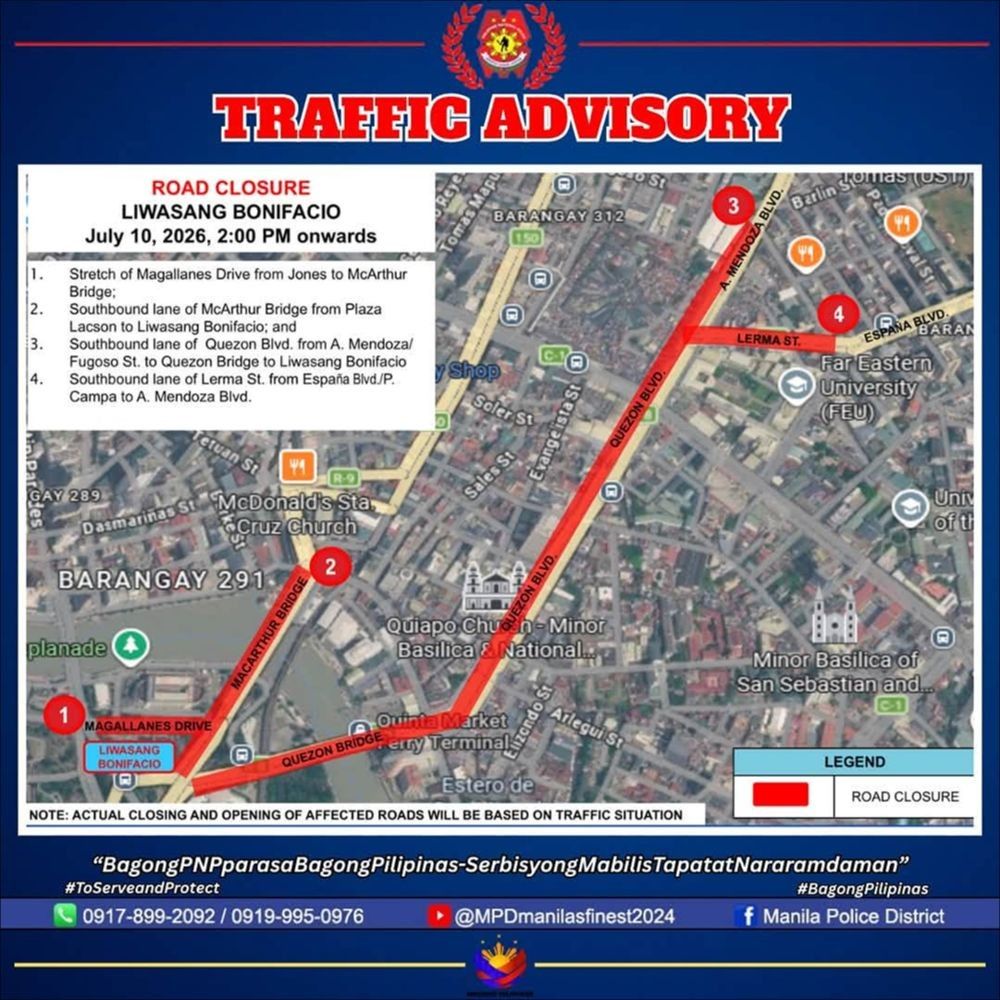
Temporary road closures are set around Liwasang Bonifacio in Manila on July 10 due to an anti-corruption rally organized by the United People's Initiative, a group of retired military and police personnel.
Motorists in Manila should brace for temporary road closures around Liwasang Bonifacio, Mendiola, and Ayala Bridge on Friday, July 10, as an "anti-corruption" rally is slated to take place. The Manila Police District has advised the public about the potential for traffic congestion and urged commuters to utilize alternative routes. The demonstration is set to be led by the United People's Initiative (UPI), a group comprising retired military and police personnel. This group has been previously identified in protest coverage as having participated in rallies alongside pro-Duterte factions. In November 2025, UPI spearheaded an anti-corruption protest at the People Power Monument, which saw participation from figures aligned with former President Rodrigo Duterte, including officials from the Partido Demokratiko Pilipino (PDP), chaired by Duterte. The specific roads designated for temporary closure include sections of CM Recto Avenue, Ayala Bridge, and areas surrounding Liwasang Bonifacio. The Manila Police District has provided a list of recommended alternative routes to mitigate the impact on traffic flow. For northbound traffic, drivers are advised to use Quezon Avenue and then detour to Ayala Avenue. Southbound traffic is recommended to take Taft Avenue and proceed towards Makati Avenue. These closures are expected to exacerbate the already challenging traffic conditions in Metro Manila, potentially affecting daily commuters and economic activities in the central business districts. Political rallies are a recurring feature in the Philippines, often leading to significant disruptions in public transportation and urban mobility. The impact of such events on the daily lives of citizens and the broader economy remains a consistent concern.
多角的分析
反汚職デモに伴う交通規制は、マニラ首都圏の物流や通勤に一時的な遅延をもたらし、小規模ながら経済活動に影響を与える可能性がある。特に、デモ現場周辺の商業施設やサービス業への影響が懸念される。過去の同様の集会では、数時間の交通麻痺が経済的損失を招いた事例もある。
短期的な視点では、デモによる交通麻痺は物流コストの増加やサプライチェーンの寸断リスクを高める。しかし、フィリピン経済の構造的な課題である汚職問題への関心が高まることは、長期的に見ればガバナンス改善への期待につながる可能性もある。投資家は、こうした政治的イベントが日常化していることを認識し、リスク管理を徹底する必要がある。
リワサン・ボニファシオ周辺は、政府機関や歴史的建造物が集まるマニラの中心部であり、デモは市民の政治参加の場となる。しかし、交通規制は多くの市民の日常生活に影響を与え、特に公共交通機関を利用する低所得者層にとって負担となる。また、UPIのような退役軍人・警察官グループの動向は、治安や政治的安定性に対する市民の不安を増幅させる可能性がある。
マニラ市民、特にデモが行われる7月10日にリワサン・ボニファシオ周辺を通過する予定のある人々は、深刻な交通渋滞に直面するだろう。通勤時間の大幅な増加は、仕事や家庭生活に影響を及ぼす。また、UPIのような退役軍人・警察官グループが主催する集会は、治安への懸念を抱かせる可能性がある。市民は、SNSなどで最新の交通情報を入手し、迂回ルートを事前に確認する必要がある。
背景・歴史的文脈
フィリピンでは、政治的集会が頻繁に行われ、特にマニラ首都圏では交通規制が日常的に実施されている。これは、市民の表現の自由の行使であると同時に、交通渋滞や経済活動への影響という課題も生じさせている。UPIのような退役軍人・警察官グループの政治活動への関与は、過去のドゥテルテ政権下で顕著になり、現政権下でもその影響力は無視できない。汚職問題はフィリピン社会が長年抱える根深い問題であり、市民の政治への関心を高める要因となっている。
原文ソース
Philstar Nation