Cambodian Embassy in Japan Rejects Nikkei Asia Op-Ed on Democracy
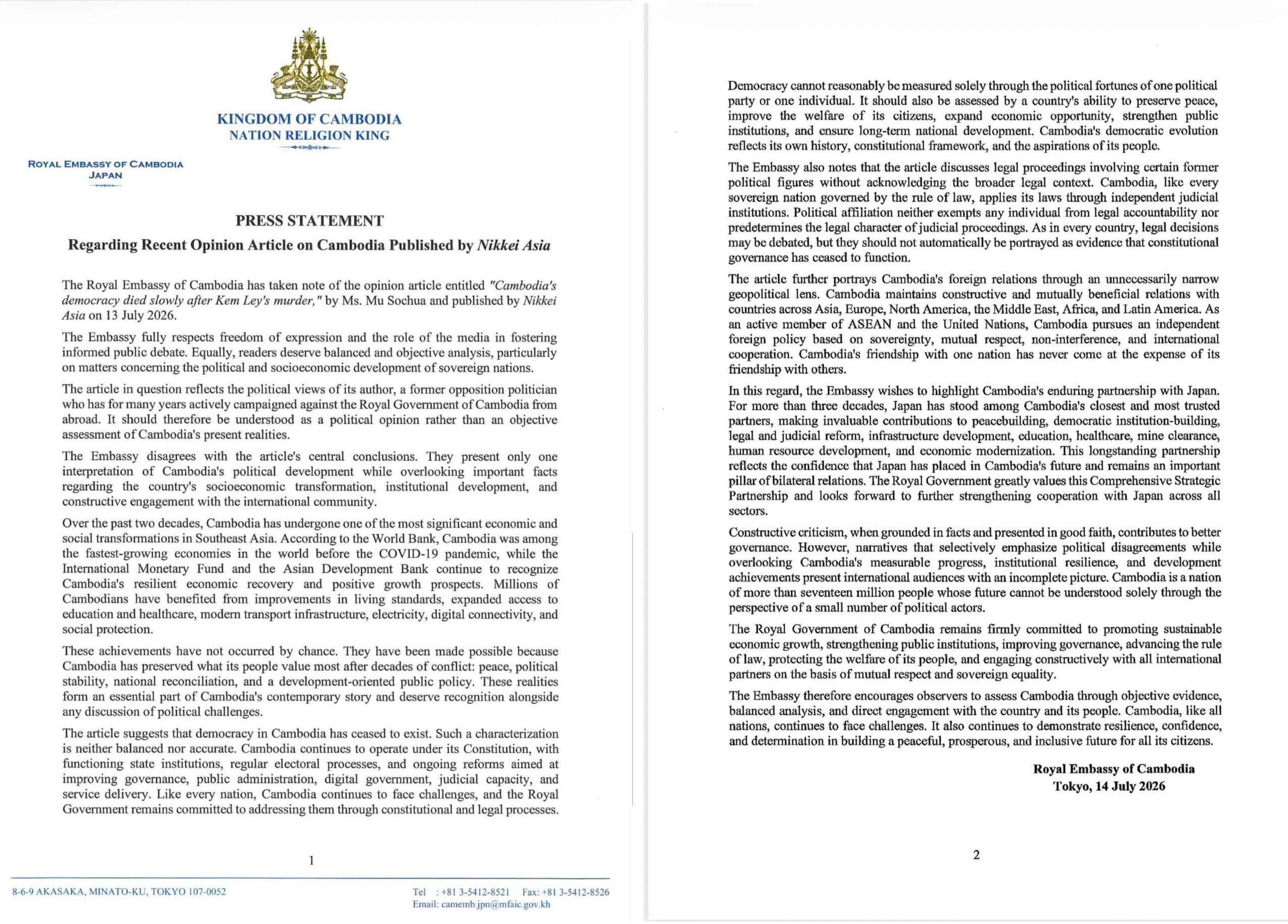
The Royal Embassy of Cambodia in Japan has strongly rejected an opinion piece published by Nikkei Asia regarding democracy, calling it "inaccurate." The embassy argued the piece presented a one-sided view of Cambodia's political landscape, highlighting the nation's constitutional governance and economic development.
The Royal Embassy of Cambodia in Japan has strongly rejected an opinion piece published by Nikkei Asia, calling its characterization of the country’s political landscape unbalanced and inaccurate. In a press statement issued Tuesday, July 14, 2026, the embassy addressed the July 13 op-ed titled "Cambodia's democracy died slowly after Kem Ley's murder," authored by self-exiled former opposition politician Mu Sochua. The embassy stated that the article represents a "political opinion rather than an objective assessment of Cambodia's present realities," pointing to the author's long-standing campaigns against the Royal Government of Cambodia from abroad. While affirming its respect for freedom of expression and the media's role in public debate, the embassy explicitly disagreed with the piece's central conclusion that democracy has ceased to exist in the Southeast Asian nation. "Cambodia continues to operate under its Constitution, with functioning state institutions, regular electoral processes, and ongoing reforms," the embassy stated, adding that democracy should be measured by comprehensive national development and institutional resilience rather than the political fortunes of a single individual or party. The embassy highlighted Cambodia's rapid socioeconomic transformation over the past two decades, citing recognition from the World Bank, International Monetary Fund, and Asian Development Bank regarding its resilient economic recovery. It also defended the independence of the nation's judicial processes, stating that legal accountability applies to all individuals regardless of political affiliation. Turning to international relations, the embassy rejected assertions that its foreign policy is narrow, emphasizing constructive ties globally and reiterating its 30-year Comprehensive Strategic Partnership with Japan. The statement underscored Tokyo's long-standing contributions to Cambodia's infrastructure, education, healthcare, and peacebuilding efforts as a cornerstone of its modern diplomacy. The embassy concluded by urging international observers and media outlets to evaluate the country based on objective evidence rather than selective narratives from a small number of political actors.
多角的分析
カンボジア日本大使館は、日経アジアの記事がカンボジアの政治状況を不正確に描写していると主張し、代わりに同国の経済回復力と包括的な国家開発を強調した。これは、カンボジア政府が国際社会に対して、特に経済発展と制度的安定を通じて、国の進歩を客観的に評価するよう促す意図があることを示唆している。世界銀行、IMF、ADBといった国際機関からの経済的評価を引用することは、政府の経済政策の正当性を裏付け、投資家や国際経済関係者に対して、安定した投資環境と成長の可能性をアピールする狙いがあると見られる。
カンボジア日本大使館による日経アジアの記事への反論は、投資家に対してカンボジアの政治的安定性と経済的機会を強調するメッセージを送っている。記事が指摘する「民主主義の衰退」といった政治的リスクを否定し、代わりに「憲法に基づく国家運営」「定期的な選挙」「進行中の改革」を挙げることで、法治と制度的安定への信頼を表明している。これは、特に日本との長年にわたる包括的戦略的パートナーシップを強調し、インフラ、教育、医療への日本の貢献を例示することで、日本からの投資や経済協力の継続を期待する姿勢を示唆している。国際的な評価を「客観的証拠」に基づかせるよう求めることで、投資判断における政治的言説の影響を抑制しようとしていると考えられる。
カンボジア日本大使館は、日経アジアの記事が「ケム・レイ殺害後、カンボジアの民主主義はゆっくりと死んだ」と論じたことに対し、民主主義の定義を個々の政治的出来事や人物ではなく、「包括的な国家開発と制度的回復力」に広げることで、社会的な議論の焦点を移そうとしている。これは、国内の政治的言説が特定の事件や人物に集中し、それが社会の分断を招く可能性を懸念していることを示唆する。大使館は、経済発展や司法の独立性を強調することで、社会全体の安定と進歩を訴え、国民生活の向上というより広範な課題に目を向けるよう促している。ただし、元野党政治家による国外からの批判という構図は、国内の政治的自由や言論空間のあり方についての根本的な問いを、水面下で提起し続けているとも言える。
カンボジア日本大使館は、日経アジアの記事がカンボジアの民主主義の現状を一方的に描写していると主張し、国民に対して、自国の発展を客観的な証拠に基づいて評価するよう求めている。これは、国外からの批判が国内の政治状況を正確に反映していないという政府の立場を代弁するものである。大使館は、経済成長やインフラ整備といった国民生活に直結する成果を強調することで、政府の統治能力と国民の福祉向上への貢献をアピールしている。しかし、元野党政治家による批判は、一部の国民にとっては、政府の公式発表だけでは捉えきれない政治的・社会的な側面への懸念を抱かせる可能性もある。特に、若年層や都市部の住民は、SNSなどを通じて多様な情報に触れる機会が増えているため、政府の主張と批判的な意見との間で、複雑な受け止め方をするかもしれない。
背景・歴史的文脈
カンボジアにおける民主主義を巡る議論は、2013年の総選挙後、野党勢力の台頭とそれに対する政府の強硬な対応を契機に、国際的な注目を集めるようになった。特に、2016年の著名な社会活動家ケム・レイ氏の殺害事件は、政治的弾圧への懸念を一層高めた。元野党政治家であるム・ソチュア氏のような国外に拠点を置く批判勢力は、カンボジアの政治状況について、国内とは異なる視点からの情報発信を続けている。これに対し、カンボジア政府は、自国の憲法に基づく統治、定期的な選挙、そして経済発展を民主主義の指標として強調し、国外からの批判を「政治的意見」として退ける姿勢を一貫して取ってきた。日本との関係は、カンボジアにとって長年にわたる重要な外交・経済的パートナーであり、政府はこの関係を自国の安定と発展の正当性を国際社会に示すための重要な要素として位置づけている。
原文ソース
AKP Cambodia