General articles are free for 24 hours after publish.
Vietnam and Canada Elevate Comprehensive Partnership to New Level
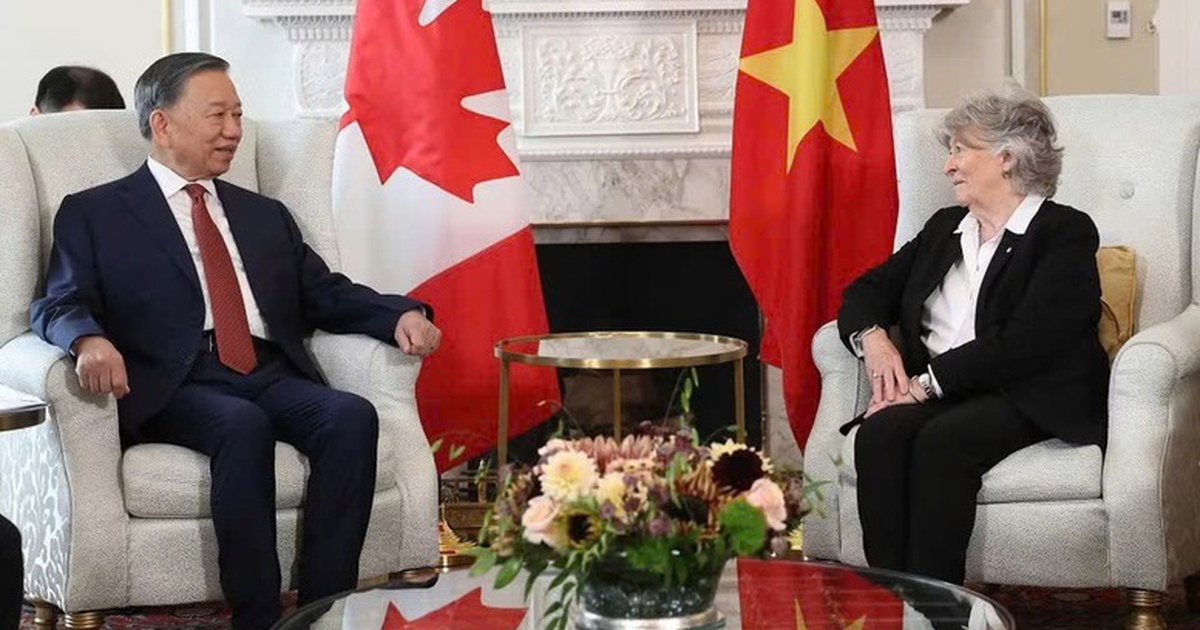
Vietnamese President To Lam and Canadian Governor General Louise Arbour agreed to elevate bilateral relations to a new stage of comprehensive partnership, aiming to strengthen cooperation across various sectors including economy, science-technology, and security.
Vietnamese President To Lam met with Canadian Governor-General Louise Arbour in Ottawa on September 24 (local time), agreeing to elevate bilateral relations to a new stage of comprehensive partnership. Arbour congratulated Vietnam on its impressive socio-economic development achievements and growing role in the international arena, noting that Canada regards Vietnam as an important partner in the region. She emphasized that Canada stands ready to leverage its strengths in resources, technology, education, energy, agriculture, and finance to enhance cooperation with Vietnam. For his part, To Lam reaffirmed Vietnam's consistent importance attached to its relations with Canada and highly valued the progress made since the establishment of the Comprehensive Partnership in 2017. Both sides confirmed their commitment to continue increasing high-level exchanges, consolidating political trust, effectively utilizing cooperation mechanisms, and strengthening coordination in regional and multilateral forums. Regarding economic, trade, and investment cooperation, To Lam urged for effective utilization of existing cooperation and economic integration frameworks, market expansion, supply-chain connectivity enhancement, and encouragement of long-term Canadian investments in Vietnam. He also proposed further deepening cooperation in transport, infrastructure, logistics, and connectivity. New growth drivers are to be created by fostering stronger ties in science and technology, innovation, digital transformation, and artificial intelligence (AI) and other advanced technologies, while expanding collaboration in areas such as energy, green development, environmental protection, climate change response, healthcare, high-tech agriculture, food security, and sustainable development, as suggested by the Canadian side. In terms of defense and security cooperation, the focus will be on enhancing cooperation consistent with the respective interests and needs of both countries, with an emphasis on training and capacity building, UN peacekeeping operations, maritime security, war legacy remediation, search and rescue, combating transnational crime, and addressing non-traditional security challenges. Education and training, culture, and people-to-people exchanges will continue to serve as an important foundation for the long-term development of bilateral relations, stated President To Lam. Amid a world facing complex changes and challenges, both sides reaffirmed the importance of strengthening dialogue and cooperation, upholding multilateralism, and respecting the UN Charter and international law. Enhanced coordination within frameworks such as the UN, ASEAN, APEC, the Francophonie, and the CPTPP was also confirmed. Both countries expressed their support for ASEAN centrality and Canada's efforts to deepen engagement and cooperation with the Asia-Pacific region, and their intention to jointly address common challenges and promote peace, stability, cooperation, and development in the region and around the world.
Original source
Bao Chinh Phu