Philippines Inflation Eases to 6.4% in June on Cooling Fuel, Food Prices
Inflation in the Philippines eased to 6.4% in June from 6.8% in May, driven by lower fuel and some food prices. However, rising costs for rice and dining out continue to fuel inflation, remaining well above the government's target.
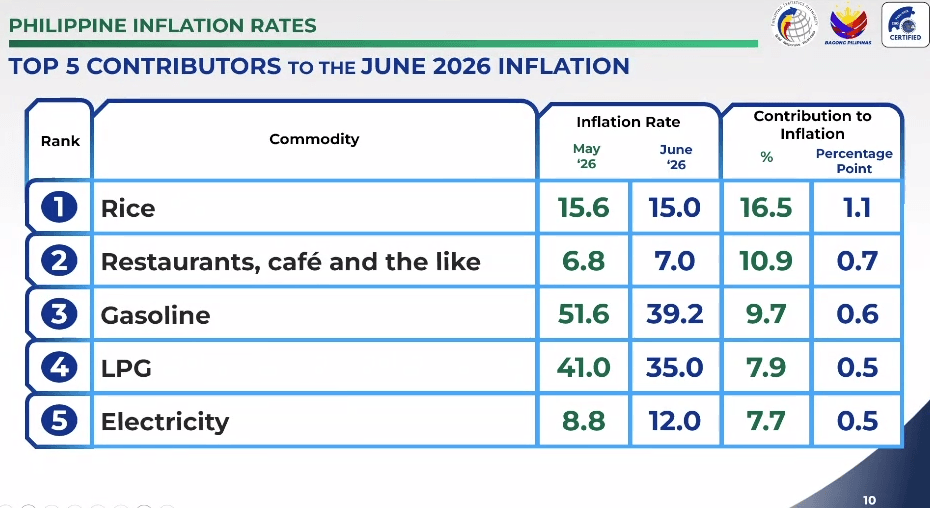
MANILA, Philippines – Inflation in the country eased to 6.4% in June as lower prices of fuel and some food items helped temper overall price increases, the Philippine Statistics Authority (PSA) reported on Tuesday, July 7. This was slower than the 6.8% recorded in May, marking the second straight month of easing inflation after the rate hit a three-year high of 7.2% in April. Average inflation for the first half of 2026 stood at 4.8%, well above the government’s target range of 2% to 4%. The PSA said the main sources of the June slowdown were transport, and food and non-alcoholic beverages. Transport inflation eased to 12.8% in June from 16.2% in May. Gasoline inflation slowed to 39.2% from 51.6%, while diesel inflation fell to 39% from 58.5%. Food and non-alcoholic beverage inflation also eased to 5.2% in June from 5.7% in May. Meat prices fell faster at -4.2% from -2.5% in May, while cereals and cereal products eased to 12.1% from 12.6%. Fish and other seafood inflation also slowed to 7.8% from 8.8%. Even with the easing, several items continued to keep inflation elevated. Rice remained the top contributor to overall inflation, with a 15% inflation rate in June. It was followed by restaurants, cafés, and similar establishments, which saw inflation quicken to 7% from 6.8%; gasoline at 39.2%; liquefied petroleum gas (LPG) at 35%; and electricity at 12%. Core inflation, which excludes selected volatile food and energy items, rose further to 4.4% in June from 4.1% in May. During the PSA briefing, National Statistician Claire Dennis Mapa said some non-core items such as rice, meat, gasoline, and diesel were already moving lower. However, some items in the core basket were still rising, including bread and other bakery products, housing and utilities, health, education, and restaurants and accommodation services. Asked whether the second straight month of easing marked a sustained disinflation trend, Mapa struck a cautious tone. “The fact is, it’s slowing down, but moving forward, there are still risks. So, we cannot tell really that the trend will continue,” he said. Mapa identified three items at risk: transport, electricity, and restaurants. Electricity inflation hit 12% in June, the highest in close to three years, while inflation for restaurants, cafés, and similar establishments has been rising since January and is now at the highest point since September 2023. These establishments are also vulnerable to higher input costs, including food, electricity, LPG, and labor. Besides these three, Mapa said the PSA would monitor the possible impact of the “historic” P85 minimum wage hike for workers in the National Capital Region, which will take effect in the second half of July, especially on items with a substantial labor component such as restaurants, carinderias or eateries, and fast-food outlets. The Middle East conflict may also continue to affect inflation through energy-related items. Mapa pointed to transport inflation remaining in double digits, while electricity and LPG are also exposed to global energy price movements. (READ: Fuel prices rise again with diesel, kerosene hikes on July 7) “This external factor, [the] Middle East conflict, would still be a major factor to our overall inflation moving forward,” he said. High, but within expectations The Bangko Sentral ng Pilipinas (BSP) earlier projected inflation would settle between 6% and 7%. The central bank said lower domestic oil prices and cheaper major food items — such as rice and meat — could temper inflation for June, although higher electricity rates and vegetable prices could partly offset these downward pressures. Department of Economy, Planning, and Development Secretary Arsenio Balisacan had expected the June inflation print to show another “improvement,” but warned that price pressures would likely remain above the government’s 2% to 4% target for the rest of the year. (READ: The Philippines is now upper-middle income. Why doesn’t it feel that way?) “We’ll still be challenged by the inflation, but we are determined to get that inflation come down as fast as we can,” Balisacan said on Monday, July 6. He added that some risks remain beyond the government’s control, particularly oil-related shocks from the Middle East. “Hopefully this crisis in the Middle East will find a final solution so that there will be stability there because we depend a lot on our oil from that region,” he said. Bank of the Philippine Islands lead economist Jun Neri had also expected headline inflation to ease to 6.5% in June, helped by the continued pass-through of fuel rollbacks and lower rice prices. However, he warned that the pace of disinflation may be fading, as most of the pump-price rollbacks may have already been reflected in retail prices. The Monetary Board raised the benchmark interest rate by 25 basis points to 4.75% in June — its second straight hike — as the BSP sought to keep still-elevated inflation risks under control. BSP Governor Eli Remolona Jr. has said the economy could still absorb another 25-basis-point increase. – Rappler.com
多角的分析
6月のインフレ率鈍化は、国際的なエネルギー価格の落ち着きと国内の食料品価格の緩和という、一時的な要因に大きく依存している。しかし、コアインフレ率の上昇や、米、外食、電気料金といった生活必需品・サービスの値上がりが続いていることは、家計の購買力を依然として圧迫していることを示唆する。特に、最低賃金引き上げが労働集約型産業に波及し、さらなる物価上昇を招くリスクは、フィリピン経済の持続的な安定にとって大きな懸念材料となる。
インフレ率の鈍化は、中央銀行による利上げペースの減速期待につながる可能性があるが、コアインフレ率の上昇や外部リスクの存在は、金融政策の正常化を遅らせる要因となりうる。投資家にとっては、インフレに強いセクター(例:インフラ、一部の消費財)への選別的な投資が引き続き重要となる。また、中東情勢のような地政学的リスクは、エネルギー関連企業やサプライチェーンに影響を与えるため、注意深いモニタリングが必要である。
インフレ率の鈍化は朗報だが、米や外食といった日常的な支出の価格上昇は、低所得者層の家計に深刻な影響を与え続けている。最低賃金の引き上げは、労働者の所得向上に繋がる一方で、そのコストが物価に転嫁されれば、実質的な購買力の改善は限定的になる可能性がある。特に、地方都市や農村部では、米の価格動向が生活に直結するため、その動向が注目される。
「インフレが少し落ち着いたのは嬉しいけれど、毎日食べる米の値段は全然下がらないわ。外食も高くて、家族で出かけるのもためらってしまう。最低賃金が上がっても、物価も一緒に上がったら、結局何も変わらないのかもしれない。電気代も高止まりしているから、節約しないとね。」(マニラ首都圏在住の主婦、マリアさん)
背景・歴史的文脈
フィリピンでは、過去数年にわたりインフレが国民生活の大きな課題となっている。特に2022年から2023年にかけて、ロシア・ウクライナ戦争に端を発する世界的なエネルギー・食料品価格の高騰が、フィリピン経済に大きな打撃を与えた。フィリピンは、エネルギー資源の多くを輸入に依存しており、国際市場の価格変動の影響を受けやすい構造にある。また、米は国民の主食であり、その価格変動は家計に直結するため、政府は米の国内生産能力向上や輸入政策を通じて価格安定に努めてきたが、気候変動による天候不順や、国際市場の動向に左右される場面も少なくない。今回のインフレ鈍化は、一時的な要因によるものと見られており、根本的な構造問題の解決には至っていない。
原文ソース
Rappler Business