General articles are free for 24 hours after publish.
Anak Krakatau Volcano Ash Moves Away from Indonesia, Air Safety Ensured
Volcanic ash from the Anak Krakatau eruption has moved away from Indonesian airspace, ensuring air safety. Multiple airports have reopened, and meteorological authorities continue their monitoring efforts.
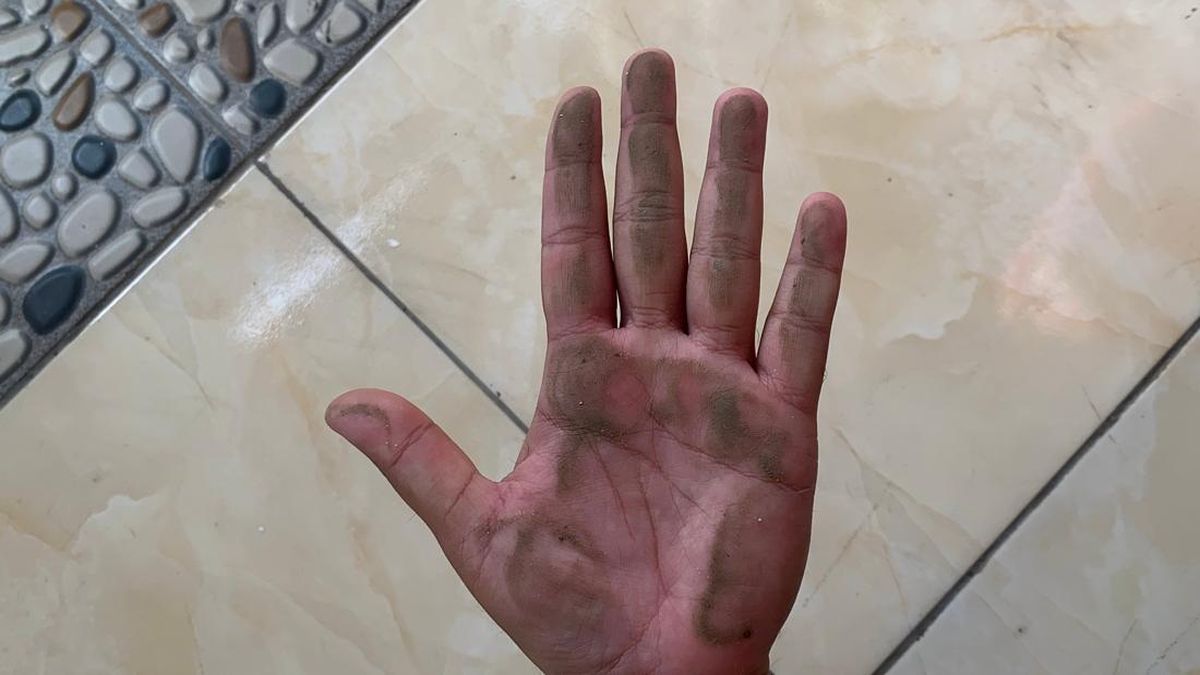
The volcanic ash from the eruption of Mount Anak Krakatau has moved away from Indonesian airspace, ensuring air safety. The Meteorology, Climatology, and Geophysics Agency (BMKG) announced that the ash cloud was projected to move away from Indonesian territory as of Tuesday (8/9) at 04:00 Western Indonesian Time (WIB). According to BMKG's official statement, the volcanic ash plume, extending from the surface up to an altitude of 6,000 feet (1.8 km), was observed moving towards the South-Southwest, encompassing the Indian Ocean northwest of Banten. At present, BMKG stated that while the volcanic ash is moving away, some ash distribution remains, potentially affecting air quality and visibility. At certain altitudes, it could still disrupt flight operations. BMKG explained that they have been conducting regular paper tests at several points to complement satellite imagery monitoring and aviation meteorological data. The results indicated that eight airports, which had been temporarily closed, were reopened after the paper tests showed negative results for volcanic ash. "The results of the paper test observations as of 06:00 WIB stated that the eight airports whose operations were previously closed were declared negative from volcanic ash exposure. BMKG continues to monitor ash movement in real-time to ensure all flights operate safely," said Faisal, as quoted from the BMKG official website on Tuesday (8/9). The airports that have resumed operations include Soekarno-Hatta International Airport, Halim Perdanakusuma International Airport, Husein Sastranegara International Airport, Budiarto Curug Airport, Pondok Cabe Airport, Taufiq Kiemas Airport, Radin Inten II Airport, and Salakanagara Tanjung Lesung Airport. Acting Deputy for Meteorology at BMKG, Andri Ramdhani, mentioned that the volcanic ash is generally observed at altitudes up to 7,000 feet (2.13 km). He stated that the ash is now moving towards the south-southwest, covering parts of northwestern Banten and the Indian Ocean northwest of Banten, with speeds up to 18.5 km/h as of September 8, 2026, 09:00 WIB. "Weather monitoring around GAK (Gunung Anak Krakatau) and the Sunda Strait waters tends to be clear to partly cloudy from morning to night," said Andri. Furthermore, Acting Deputy for Geophysics at BMKG, Ardhasena Sopaheluwakan, reported that monitoring via 20 tsunami gauges and the HF Radar Array in Carita and Tanjung Lesung showed no anomalies in sea level fluctuations. BMKG assesses the probability of a tsunami occurring to be low. The agency forecasts wave heights in the Sunda Strait area for the next 7 days to range between 0.5 to 3 meters. BMKG, referencing the latest information from PVMBG at 07:49 WIB, observed a new eruption at Anak Krakatau with a maximum amplitude of 48 mm and a duration of 19 seconds, categorized as a Strombolian eruption or small-scale eruption. BMKG also monitors geomagnetic disturbances and lightning strikes due to Anak Krakatau's activity through its geomagnetic sensors and lightning detectors. The BMKG recorded minor geomagnetic disturbances and volcanic lightning strikes starting from 21:00 to 23:00 WIB last night. The intensity of this activity shows a decrease compared to previous days. BMKG, in collaboration with the National Disaster Management Agency (BNPB), the Ministry of Transportation, and other relevant parties, continues the weather modification operations (OMC) that have been ongoing since September 7, 2026. Deputy for Weather Modification at BMKG, Tri Handoko Seto, explained that the OMC team is employing cloud seeding methods and water mist spraying using two Cessna Caravan aircraft from the command posts at Pondok Cabe and Halim Perdanakusuma Airports. "To date, OMC has conducted five sorties, one sortie using NaCl powder as a seeding agent, one sortie using liquid CaCl2, and three sorties using spraying/water mist. Operations will continue to adapt to atmospheric conditions and volcanic ash distribution, so the concentration of ash in the air is expected to decrease, and atmospheric conditions will gradually become cleaner," explained Seto. BMKG urges the public to remain vigilant and calm regarding the impacts of the Anak Krakatau eruption. Residents in areas affected by volcanic ash distribution are advised to pay attention to their health by limiting outdoor activities. Those venturing outdoors are encouraged to always wear masks and glasses. Source: Detik
Original source
Detik