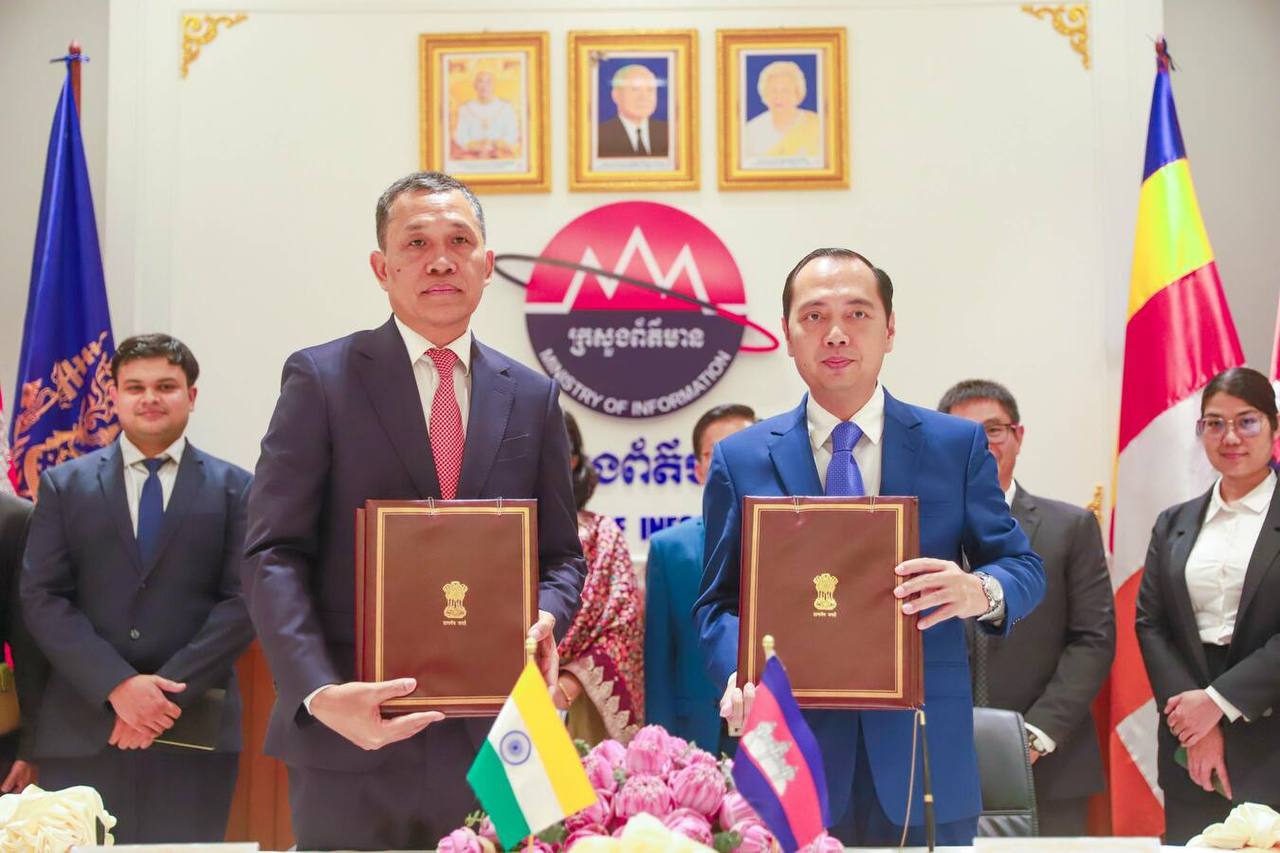
India Signs Two 'Quick Impact' Projects to Aid Cambodian Rural Communities
India's Ministry of External Affairs, through its embassy in Cambodia, signed two MoUs with the Cambodian Ministry of Information for implementing Quick Impact Projects (QIPs) under the Mekong-Ganga Cooperation (MGC) framework. The projects aim to benefit rural communities in Kratie province, focusing on beekeeping and student support.
Phnom Penh: The Ministry of External Affairs of the Republic of India, through its Embassy in the Kingdom of Cambodia, and the Ministry of Information of the Kingdom of Cambodia signed two Memoranda of Understanding (MoUs) on July 10, 2026, for the implementation of two Quick Impact Projects (QIPs) under the framework of the Mekong-Ganga Cooperation (MGC). The signing ceremony was presided over by H.E. Net Pheaktra, Minister of Information of the Kingdom of Cambodia, and H.E. Vanlalvawna Bawitlung, Ambassador of the Republic of India to the Kingdom of Cambodia. These two projects aim to directly benefit rural communities in O' Krieng Sen Chey district, Kratie province. The "Climate-Resilient Smart Beekeeping Project for Smallholder Farmers" will provide vocational training, materials, and technical equipment to 30 smallholder farmers, prioritizing women and youth. It will also establish 10 model apiaries, promoting climate-resilient agricultural practices to increase household income by at least 30 percent through the production of honey and other bee products. Meanwhile, the "Community Support for Education Project – Phase 2" will provide bicycles, safety helmets, and reusable water bottles to 200 underprivileged students in grades 5 and 6 who face difficulties with long commutes to school. This project is a continuation of Phase 1, aiming to improve school enrollment, reduce dropout rates, enhance travel safety, and promote environmental awareness. The Kingdom of Cambodia remains a valued partner for India under its "Act East Policy" and within the MGC framework. Annually, India implements 10 QIPs in Cambodia across various priority sectors, including education, health, women's empowerment, sanitation, agriculture, and climate change resilience. To date, a total of 72 QIPs have been approved, with 55 projects successfully completed and 17 others currently in the implementation phase. All these projects align with the development priorities set by the Royal Government of Cambodia. These new initiatives clearly reflect the strong and growing development partnership between India and Cambodia, focusing on delivering direct benefits to local populations, human resource development, and promoting sustainable livelihoods.
多角的分析
インドによるカンボジアの農村部支援は、直接的な経済効果をもたらす。特に養蜂プロジェクトは、小規模農家の収入を30%以上増加させる目標を掲げており、地域経済の活性化に寄与する。これは、カンボジアが経済成長を持続させる上で不可欠な、底上げ型の開発戦略の一環と言える。また、教育支援は長期的な人的資本の向上につながり、将来的な経済発展の基盤を強化する。
インドからの直接的な開発支援は、カンボジアの投資環境における安定性と信頼性を高める要因となり得る。特に、インフラや人的資本開発に焦点を当てたプロジェクトは、外国投資家にとって、より安定した事業運営や将来的な市場拡大の可能性を示唆する。MGCのような地域協力枠組みの活用は、地政学的な安定性への期待も高め、投資リスクの低減につながる可能性がある。
このプロジェクトは、クラチェ州の農村部、特に経済的に困難な家庭の子供たちと小規模農家を直接支援する。養蜂プロジェクトは、女性や若者を優先することで、ジェンダー平等の推進と若者の雇用創ちにも貢献する。学童支援では、自転車やヘルメットの提供により、通学の物理的・経済的負担を軽減し、教育機会の均等を促進する。これは、カンボジア社会における格差是正と持続可能な開発目標(SDGs)達成に向けた具体的な一歩となる。
クラチェ州の農村住民、特に小規模農家や経済的に困難な家庭の子供たちは、このプロジェクトの恩恵を直接受ける。農家は、新しい技術と支援により収入増加が期待でき、子供たちは通学の負担軽減と安全性の向上により、より教育に集中できるようになる。これは、地方の生活水準向上と教育機会の均等化に貢献し、住民の生活実感にポジティブな影響を与えると考えられる。
背景・歴史的文脈
インドとカンボジアの関係は、メコン・ガンジス協力(MGC)やインドの「東方政策(Act East Policy)」といった枠組みを通じて強化されている。MGCは、2000年に設立された、インドと東南アジア諸国(カンボジア、ラオス、ミャンマー、タイ、ベトナム)間の協力枠組みであり、文化、観光、教育、交通、通信、経済など多岐にわたる分野での協力を推進している。インドは、カンボジアに対して、教育、保健、女性のエンパワーメント、農業、気候変動への強靭性といった分野で、毎年「クイックインパクト・プロジェクト(QIPs)」を実施してきた。これらのプロジェクトは、地域社会に直接的な恩恵をもたらすことを目的としており、カンボジア政府の開発優先事項と合致するように設計されている。今回の養蜂と学童支援プロジェクトは、これらの継続的な協力関係の一環として実施されるものである。
原文ソース
Koh Santepheap Khmer